
 Source:
Coral Eye (Phlox subulata ‘Coral Eye’) short overview
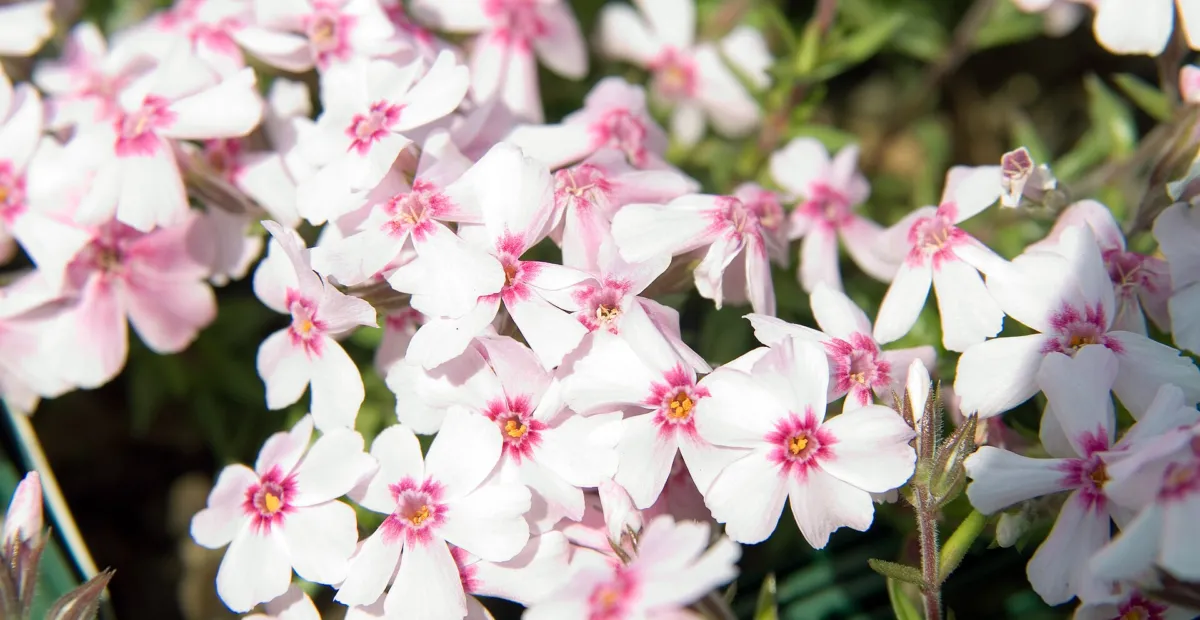
Phlox subulata 'Coral Eye' is a low, evergreen, mat-forming perennial selected for its delicate pale pink to blush-white flowers with sharply contrasting coral eyes. It blooms mainly in spring and works especially well in sunny rock gardens, edging, dry slopes, retaining walls, and containers. Give it excellent drainage and avoid wet winter soil; established plants tolerate short periods of drought.
Taxonomic classification
Coral Eye (Phlox subulata ‘Coral Eye’) care guide
Light and placement
Grow in full sun for the densest mat and strongest flowering; east-, south-, or west-facing sites are suitable. Light afternoon shade is tolerated, especially in hot climates, but deep shade causes open growth and fewer flowers. Excessive reflected heat can scorch foliage, while insufficient light commonly produces lanky stems and reduced bloom.
Watering and humidity
Water deeply when the upper few inches of soil become dry during establishment, then reduce frequency once roots are established. In summer, water during prolonged drought rather than on a fixed daily schedule. Keep winter crowns from sitting in saturated soil. Humidity is not usually a problem if drainage and air circulation are good.
Soil and growing medium
Use sandy, gritty, rocky, or loamy soil that drains rapidly after rain. Average garden soil is suitable if it is not compacted or persistently wet. A slightly acidic to slightly alkaline reaction is tolerated; drainage is more important than exact pH. Avoid heavy clay unless amended substantially with mineral material and planted on a raised site.
Feeding
Apply a thin layer of compost or a light, balanced slow-release fertilizer in early spring if growth is weak. Avoid heavy nitrogen feeding, which can produce softer foliage and fewer flowers. Do not fertilize drought-stressed, newly transplanted, or waterlogged plants; restore suitable moisture and drainage first.
Growth and habit
This cultivar forms a low, spreading cushion or trailing mat that can drape slightly over stones and wall edges. It remains evergreen in much of its hardiness range. Keep surrounding growth open enough for air movement, and trim lightly after flowering rather than cutting deeply into old woody stems.
Planting and repotting
Plant in spring or early fall, setting the root ball level with the surrounding soil rather than burying the crown. Space plants about 12–18 inches apart for a continuous mat. Water regularly during the first growing season, especially in the first month, while keeping the crown and winter soil well drained.
Container plants can be shifted in early spring or just after flowering when roots fill the pot. Move them into a wider, shallow container with a gritty, well-drained mix and drainage holes. Handle the mat gently and water once thoroughly after transplanting, then allow the surface to dry moderately between waterings.
Propagation and pruning
Propagation
Propagate vegetatively by softwood or semi-ripe cuttings, or by dividing rooted sections of an established mat. Layering of stems that contact the soil can also work. Take cuttings during active growth or divide in early fall after flowering; seed is not the preferred method for preserving cultivar traits.
Pruning
Trim lightly immediately after flowering to remove spent stems and maintain a dense outline. Avoid hard late-season pruning, which can reduce the evergreen cushion and remove developing growth. Remove winter-damaged tips in spring only as needed.
Overwintering
Usually overwinter outdoors in USDA Zones 3–9. Good drainage is the main winter protection; saturated crowns are more dangerous than cold. In colder or exposed sites, use a light, airy mulch after the ground freezes, keeping material away from the crown. Container plants are more vulnerable and may need a sheltered, unheated location.
Uses
Use as a low evergreen ground cover, rock-garden plant, edging, wall or slope plant, and shallow container specimen. It can help soften stonework and stabilize small dry slopes, but it is not a turf substitute for regular foot traffic. No culinary or medicinal use is supported here.
Appearance
The plant has narrow, needle-like evergreen leaves on fine, branching stems. Dense foliage creates a cushion-like surface, while the stems may trail over rocks or container edges. The cultivar is identified by pastel pink or blush-white flowers with a conspicuous coral-colored central eye.
Flowering
Small, five-lobed flowers appear in dense seasonal displays over the mat. In the United States, the usual peak is mid- to late spring, with timing earlier in warm regions and later in cool regions. Light trimming immediately after flowering helps preserve a compact, dense surface and avoids removing next year's growth late in the season.
Pollination and visitors
The open spring flowers of Phlox subulata are documented as resources for bees, butterflies, and other flower-visiting insects. This cultivar is likely to function similarly, but published visitor records specific to 'Coral Eye' are limited. Avoid insecticides during bloom to protect visiting insects.
Diseases and pests
Diseases
Watch for powdery mildew, root or crown rot in poorly drained soil, and occasional leaf or stem spotting. Improve air circulation, water at the soil line, avoid overhead irrigation late in the day, and remove badly affected material. The species is generally less troubled by powdery mildew than taller garden phlox, but wet or crowded conditions still increase risk.
Pests
Spider mites can increase during hot, dry weather; caterpillars, aphids, and occasional foliar-feeding insects may occur. Inspect new growth and undersides of leaves, wash off minor infestations, and protect beneficial insects. Avoid routine broad-spectrum insecticides during bloom.
Toxicity and pollen
ASPCA lists the species Phlox subulata as non-toxic to dogs and cats. No reliable evidence was found indicating distinctive human toxicity for the 'Coral Eye' cultivar. Normal gardening hygiene is still sensible because plant material can cause irritation or stomach upset if eaten in quantity, and individual sensitivities vary.
- Typical season
- Spring
- Pollination / pollen
- Heavy, insect-carried pollen; not primarily wind-dispersed
Phlox is generally considered a low-airborne-pollen garden choice because its pollen is primarily presented to visiting insects rather than released broadly by wind. This does not guarantee zero allergy risk: close contact, cut stems, or individual sensitivity may still cause symptoms.
Native habitat
The species is native to central and eastern North America, where it occurs in open, sunny, often rocky or dry habitats. It is adapted to mineral soils, exposed slopes, woodland edges, and sites with rapid drainage. The cultivar is a cultivated selection rather than a wild population, so local ecological behavior may differ from the species in some regions.
Interesting fact
The cultivar is associated with classic selections attributed to Linc Foster. Its strongest visual feature is the coral eye contrasting with pastel petals. The species is native to central and eastern North America and naturally occupies open, often rocky habitats. Evergreen needle-like foliage keeps the plant useful outside its flowering period.
Frequently asked questions (FAQ)
The most relevant questions about this plant, with short and direct answers.
🌱Quick care
What is Phlox subulata 'Coral Eye commonly called?⌄
Phlox subulata 'Coral Eye' is commonly called creeping phlox or moss phlox. It is a low, mat-forming perennial with pale pink flowers marked by a coral-red eye.
How much sun does Phlox subulata 'Coral Eye' need?⌄
Phlox subulata 'Coral Eye' grows best in full sun, although it tolerates light partial shade. More sun generally supports denser growth and heavier flowering.
How often should I water Phlox subulata 'Coral Eye'?⌄
Water it regularly while newly planted, then reduce watering once the plant is established. Mature plants prefer average to dry conditions and can tolerate drought when grown in sharply drained soil.
Is Phlox subulata 'Coral Eye' evergreen?⌄
Phlox subulata 'Coral Eye' is generally evergreen or semi-evergreen, retaining its fine, dark green foliage through much of winter. Foliage may thin or suffer damage in severe cold or wet conditions.
🌤️Environment and placement
What USDA hardiness zones are suitable for Phlox subulata 'Coral Eye'?⌄
Phlox subulata 'Coral Eye' is generally suitable for USDA Zones 3 through 9. Performance can vary with winter wetness, drainage, snow cover, and the specific local microclimate.
Where should I plant Phlox subulata 'Coral Eye'?⌄
Plant it in a sunny rock garden, border edge, slope, retaining wall, or other location with excellent drainage. Its spreading habit also works well as a low ground cover or in a container.
Can Phlox subulata 'Coral Eye' grow in partial shade?⌄
Phlox subulata 'Coral Eye' can grow in light partial shade, especially where it receives several hours of direct sun. Heavy shade usually produces looser growth and fewer flowers.
Does Phlox subulata 'Coral Eye' tolerate drought?⌄
Yes, Phlox subulata 'Coral Eye' is drought-tolerant once established. It still needs supplemental water during prolonged heat or drought, particularly in containers and shallow soil.
What soil is best for Phlox subulata 'Coral Eye'?⌄
Use sandy, loamy, rocky, or gritty soil that drains quickly. The plant tolerates a broad pH range, but persistently wet or compacted soil can cause root and crown problems.
💧Care and problems
How do I care for Phlox subulata 'Coral Eye' after planting?⌄
Keep newly planted Phlox subulata 'Coral Eye' evenly watered until roots establish, then allow the soil to dry somewhat between waterings. Avoid heavy fertilizer and maintain good air circulation around the foliage.
Why is my Phlox subulata 'Coral Eye' turning brown?⌄
Browning may result from winter injury, drought, excessive moisture, poor drainage, or aging interior growth. Check the soil and roots first, remove dead material, and improve drainage or watering consistency as needed.
Why is Phlox subulata 'Coral Eye' not blooming?⌄
The most common causes are insufficient sunlight, excessive nitrogen, young plants, or overly wet conditions. Move or thin surrounding plants if necessary and provide well-drained soil with several hours of direct sun.
Does Phlox subulata 'Coral Eye' get powdery mildew?⌄
Phlox subulata 'Coral Eye' can be susceptible to powdery mildew, especially in humid, crowded, or poorly ventilated sites. Full sun, good air circulation, and watering at the soil level help reduce the risk.
Is Phlox subulata 'Coral Eye' deer resistant?⌄
Phlox subulata 'Coral Eye' is often considered somewhat deer resistant, but deer may still browse it when preferred food is scarce. Protection may be needed in areas with heavy deer pressure.
🪴Planting and repotting
When is the best time to plant Phlox subulata 'Coral Eye'?⌄
Plant Phlox subulata 'Coral Eye' in spring or early fall when temperatures are moderate. Fall planting allows root establishment before winter, while spring planting gives the plant a full growing season to spread.
How far apart should I plant Phlox subulata 'Coral Eye'?⌄
Space plants about 12 to 18 inches apart, depending on how quickly you want them to form a continuous mat. Individual plants commonly spread roughly 12 to 24 inches under suitable conditions.
Can Phlox subulata 'Coral Eye' grow in a container?⌄
Yes, Phlox subulata 'Coral Eye' grows well in containers with drainage holes and a gritty, sharply drained potting mix. Containers dry out faster than garden soil, so check moisture during hot weather.
How do I plant Phlox subulata 'Coral Eye' in a rock garden?⌄
Set it where the crown is level with the surrounding soil and use a gritty mix that drains rapidly. Leave room for the plant to spread over rocks or edges without burying its low stems.
✂️Propagation and pruning
How do I propagate Phlox subulata 'Coral Eye'?⌄
Propagate Phlox subulata 'Coral Eye' by softwood cuttings in early spring or by division. Division is practical for established clumps, while cuttings help produce new plants without disturbing the parent plant.
Can I divide Phlox subulata 'Coral Eye'?⌄
Yes, divide established clumps in early fall or after flowering when conditions are mild. Separate rooted sections carefully and replant them at the original depth in well-drained soil.
Should I prune Phlox subulata 'Coral Eye' after flowering?⌄
Lightly shear or trim Phlox subulata 'Coral Eye' after flowering to maintain a dense, tidy mat and remove spent flower stems. Avoid severe fall pruning because the foliage helps protect the plant through winter.
⚠️Toxicity and safety
Is Phlox subulata 'Coral Eye' toxic to dogs and cats?⌄
Phlox subulata 'Coral Eye' is considered non-toxic to dogs and cats. No cultivar-specific human toxicity is documented, but ordinary plant-eating precautions are still appropriate.
🌸Flowering and special interest
When does Phlox subulata 'Coral Eye' bloom?⌄
Phlox subulata 'Coral Eye' typically blooms in mid to late spring, often from April into May in much of the United States. The exact timing depends on climate and local spring temperatures.
What color are the flowers of Phlox subulata 'Coral Eye'?⌄
The flowers are very pale pink to blush pink with a distinctive coral-pink or coral-red center. Color intensity can vary with light, temperature, and growing conditions.
Does Phlox subulata 'Coral Eye' attract pollinators?⌄
Yes, the spring flowers of Phlox subulata 'Coral Eye' can provide nectar for early-season pollinators. Its value is greatest when planted in sunny groups with other spring-blooming plants.
Similar plants
 Creeping phlox (Phlox subulata ‘Candy Stripe’)Phlox subulata 'Candy Stripe'
 Cherry Caramel (Phlox drummondii ‘Cherry Caramel’)Phlox drummondii 'Cherry Caramel'
 Atropurpurea (Phlox subulata ‘Atropurpurea’)Phlox subulata 'Atropurpurea'
 Drummond’s phlox (Phlox drummondii) care guidePhlox drummondii
 Amazing Grace (Phlox subulata ‘Amazing Grace’)Phlox subulata 'Amazing Grace'
 Sugar Stars (Phlox drummondii ‘Sugar Stars’)Phlox drummondii 'Sugar Stars'