
 Source:
Creeping phlox (Phlox subulata ‘Candy Stripe’) short overview
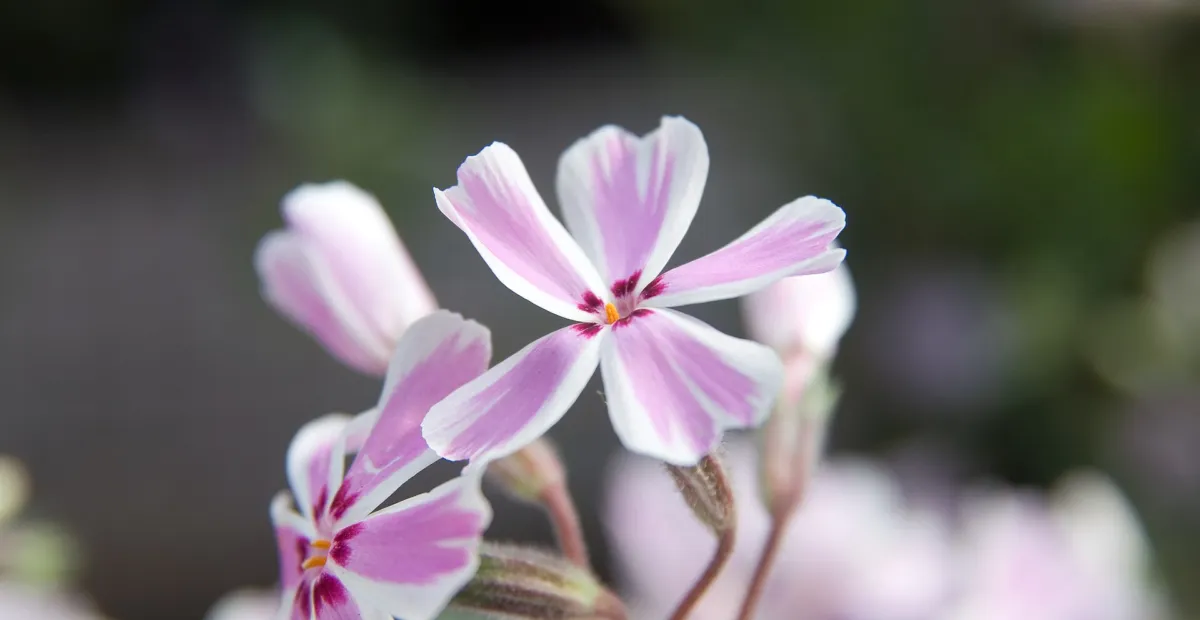
Phlox subulata 'Candy Stripe' is a low, spreading perennial that forms a dense carpet of narrow, needle-like evergreen leaves. In spring, it produces star-shaped white flowers marked with pink stripes and darker eyes, creating a distinctive candy-cane effect. Give it full sun, excellent drainage, and lean to moderately fertile soil. It is especially useful for rock gardens, sunny borders, slopes, walls, and drought-tolerant groundcover plantings.
Taxonomic classification
Creeping phlox (Phlox subulata ‘Candy Stripe’) care guide
Light and placement
Choose an open site with full sun, ideally receiving at least 6 hours of direct light. South- or west-facing slopes, rock gardens, raised beds, and wall tops suit it well. Too little light can produce sparse growth and fewer flowers; excessive heat is usually tolerated if drainage is excellent, but drought stress may cause dull foliage or premature browning.
Watering and humidity
Water deeply when the upper few inches of soil dry during the first growing season, then gradually reduce frequency as roots establish. In mature plantings, water during prolonged heat or drought rather than on a fixed schedule. Keep water off the foliage when possible and never leave containers standing in water.
Soil and growing medium
Use sharply drained soil that does not remain wet around the crown. Sandy, gravelly, rocky, or loamy ground is suitable, while heavy clay should be amended or avoided. Neutral to slightly alkaline conditions are well supported. Excess winter moisture is a greater risk than moderate dryness once plants are established.
Feeding
Phlox subulata generally performs well in lean soil and does not require heavy fertilization. Incorporate a small amount of finished compost before planting if soil is poor, then apply a balanced slow-release fertilizer in early spring only if growth is weak. Avoid high-nitrogen feeding, which can produce soft foliage and fewer flowers.
Growth and habit
This cultivar forms a low, dense, spreading carpet from trailing stems that root or anchor along the mat. It is useful for covering open ground and spilling over rocks or walls. Keep the crown and stems from sitting in persistently wet soil, since winter moisture can weaken otherwise hardy plants.
Planting and repotting
Plant in spring or early fall when soil can be worked. Set the crown level with the surrounding soil rather than burying the stems. Space plants about 12–18 inches apart for a continuous mat, and water regularly during the first growing season while roots establish.
Container plants rarely need frequent repotting. Move them into a slightly larger pot when roots fill the container, using a gritty, fast-draining perennial mix. Repot in spring or early fall, keep the crown at its original level, and avoid waterlogged saucers.
Propagation and pruning
Propagation
Propagate vegetatively by softwood or stem cuttings in late spring or early summer, or by separating rooted stems along the mat edges. Division is possible but less commonly emphasized than cuttings or rooted stem separation. Maintain even moisture while new roots develop.
Pruning
After flowering, shear or trim the plant lightly by up to about one-half to remove spent flower stems and encourage denser growth. Do not cut deeply into old, leafless woody material, and avoid late-season heavy pruning that may reduce winter coverage.
Overwintering
Leave the evergreen mat in place through winter. In colder regions, a light, airy mulch can protect exposed crowns, but avoid heavy wet mulch that traps moisture. Container plants are more vulnerable than those in the ground; place pots in a sheltered spot and keep the mix only lightly moist during dormancy.
Uses
Use as a sunny groundcover, rock-garden plant, edging perennial, slope planting, wall or bank spiller, and container accent. Its dense mat can help reduce bare soil and minor erosion, but it is not a substitute for structural erosion control on unstable slopes.
Appearance
The plant has fine, stiff, needle-like leaves on trailing stems that form a dense evergreen mat. In bloom, numerous five-lobed flowers cover the foliage. 'Candy Stripe' is identified by white petals carrying broad pink stripes and a darker central eye, giving the flowers a sharply bicolored appearance.
Flowering
This cultivar flowers in late spring, generally April through May in much of the United States, with the timing shifting earlier in warm regions and later in cool climates. Flowers are borne in dense clusters above the foliage. Cutting back lightly after bloom can improve density and may encourage limited rebloom.
Pollination and visitors
The open, nectar-bearing flowers are visited by bees and butterflies, including generalist spring flower visitors. Exact visitor species and the relative attractiveness of this named cultivar are not well documented, so the pollinator rating is moderate rather than high.
Phlox subulata 'Candy Stripe' photos
Click any photo for a larger view. Source, author and license are shown separately.
Diseases and pests
Diseases
Poor drainage can contribute to crown or root problems. Powdery mildew and fungal leaf spotting are more likely where air circulation is poor or foliage stays wet. Improve drainage, avoid overhead irrigation, thin congested growth after flowering, and remove affected debris. Use labeled treatments only when cultural measures are insufficient.
Pests
Spider mites can become troublesome in hot, dry conditions, while root-feeding insects may affect stressed plants. Inspect foliage for stippling, webbing, or distorted growth. Reduce stress with appropriate watering, improve air circulation, and use strong water sprays or targeted labeled controls only when necessary.
Toxicity and pollen
ASPCA lists Phlox subulata as non-toxic to dogs, cats, and horses. As with any ornamental plant, eating large quantities may still cause mild gastrointestinal upset, and plant material should not be intentionally consumed. Seek veterinary or medical advice if symptoms occur after ingestion.
- Typical season
- Spring, mainly April–May
- Pollination / pollen
- Primarily insect-dispersed pollen
Phlox is generally regarded as a low-airborne-pollen garden choice because pollen is primarily presented within insect-visited flowers rather than released in large windborne clouds. Individual sensitivity is still possible, especially during close contact with flowering plants, so allergy-prone gardeners should avoid rubbing the eyes or handling flowers unnecessarily.
Native habitat
The species occurs naturally in open, sunny habitats such as dry rocky slopes, thin woods, and well-drained ground in parts of the eastern United States. It is adapted to mineral soils, seasonal dryness, and good air movement rather than shaded, water-retentive conditions.
Interesting fact
The cultivar’s flowers have a distinctive striped, candy-cane appearance.
Its narrow leaves remain evergreen in many climates.
The species is native to parts of the eastern United States.
Light shearing after bloom can help maintain a dense mat.
Frequently asked questions (FAQ)
The most relevant questions about this plant, with short and direct answers.
🌱Quick care
What is Phlox subulata 'Candy Stripe'?⌄
Phlox subulata 'Candy Stripe' is a low-growing, cold-hardy perennial ground cover with white flowers marked by pink stripes. It typically forms a mat about 4–6 inches tall and spreads roughly 18–24 inches wide.
How much sun does Phlox subulata 'Candy Stripe' need?⌄
Plant Phlox subulata 'Candy Stripe' in full sun for the strongest growth and best flowering. It can tolerate some afternoon shade, but too much shade may reduce blooms and make the plant less dense.
Is Phlox subulata 'Candy Stripe' drought tolerant?⌄
Yes, Phlox subulata 'Candy Stripe' is drought tolerant once established. Water it during its first growing season and during prolonged heat or drought, but avoid keeping the soil constantly wet.
🌤️Environment and placement
What soil is best for Phlox subulata 'Candy Stripe'?⌄
Use sandy, gravelly, rocky, or loamy soil that drains sharply. Heavy, poorly drained soil is a common cause of root problems, especially during wet winters.
Can Phlox subulata 'Candy Stripe' grow in rock gardens?⌄
Yes, Phlox subulata 'Candy Stripe' is well suited to rock gardens, gravel beds, slopes, and sunny edging. Its low matting habit works especially well where drainage is excellent.
Can Phlox subulata 'Candy Stripe' grow in containers?⌄
Yes, it can grow in containers or hanging baskets if the pot has drainage holes and the mix drains quickly. Container plants usually need more frequent watering than plants grown in the ground.
What USDA hardiness zones can grow Phlox subulata 'Candy Stripe'?⌄
Phlox subulata 'Candy Stripe' is generally listed as hardy across much of USDA Zones 3–9, although exact performance depends on drainage, winter moisture, and local conditions.
How far apart should Phlox subulata 'Candy Stripe' plants be spaced?⌄
Space plants about 12–18 inches apart to allow the mats to knit together without excessive crowding. Wider spacing fills in more slowly, while closer spacing provides quicker ground cover.
💧Care and problems
How often should I water Phlox subulata 'Candy Stripe'?⌄
Water newly planted Phlox subulata 'Candy Stripe' when the soil begins to dry, then reduce watering after the roots are established. During extended summer heat, give it a deep drink rather than frequent shallow watering.
Should Phlox subulata 'Candy Stripe' be fertilized?⌄
Usually, only light feeding is needed because Phlox subulata 'Candy Stripe' performs well in lean, well-drained soil. If growth is weak, apply a balanced or slow-release fertilizer according to the product label in late winter or early spring.
Why is my Phlox subulata 'Candy Stripe' turning brown in the center?⌄
A brown or thin center can result from age, poor air circulation, drought stress, or excess moisture around the crown. Improve drainage, remove dead material, and divide or replant the outer healthy sections if the center continues to decline.
Why is my Phlox subulata 'Candy Stripe' not blooming?⌄
The most common causes are insufficient sunlight, excessive nitrogen, young plants, or overly wet soil. Move or thin surrounding plants if needed, improve drainage, and give the plant time to establish before expecting a full carpet of flowers.
Does Phlox subulata 'Candy Stripe' need mulch?⌄
Use mulch sparingly and keep it away from the foliage and crown. Thick, moisture-holding mulch can reduce air circulation and increase the risk of rot in this drought-tolerant, sharply drained plant.
Is Phlox subulata 'Candy Stripe' deer resistant?⌄
Phlox subulata cultivars are commonly considered deer resistant, but no plant is completely deer proof. Deer may still browse it when preferred food is scarce.
🪴Planting and repotting
When is the best time to plant Phlox subulata 'Candy Stripe'?⌄
Plant Phlox subulata 'Candy Stripe' in spring or early fall, when temperatures are moderate and the soil can be worked. Fall planting allows roots to establish before the following spring bloom.
How do I plant Phlox subulata 'Candy Stripe' in heavy clay soil?⌄
Plant it on a raised site or amend the planting area to improve drainage rather than placing it in a waterlogged pocket. Mixing in coarse mineral material and creating a slight mound can help, but do not create a small amended hole that traps water.
✂️Propagation and pruning
How can I propagate Phlox subulata 'Candy Stripe'?⌄
Propagate it by stem cuttings or by separating rooted stems along the edges of an established mat. Division is also possible when the plant has formed a substantial clump.
Can Phlox subulata 'Candy Stripe' be grown from seed?⌄
It may produce seed, but seedlings may not retain the distinctive striped flowers of the named cultivar. Use cuttings or division when you want new plants that match 'Candy Stripe'.
When should I divide Phlox subulata 'Candy Stripe'?⌄
Divide established clumps in early fall or after flowering when temperatures are moderate. Replant sections with healthy roots and water them until they are established.
Should Phlox subulata 'Candy Stripe' be pruned after flowering?⌄
Yes, lightly shear or trim Phlox subulata 'Candy Stripe' immediately after flowering to remove spent blooms and encourage a dense, tidy habit. Avoid cutting deeply into old, bare wood because regrowth may be limited.
Can I cut back Phlox subulata 'Candy Stripe' to the ground?⌄
Avoid routinely cutting it to the ground because the evergreen or semi-evergreen mat may recover slowly from severe pruning. Remove only spent flower stems, damaged growth, or small portions that have become straggly.
⚠️Toxicity and safety
Is Phlox subulata 'Candy Stripe' toxic to dogs?⌄
Phlox subulata is listed as non-toxic to dogs by the ASPCA, so 'Candy Stripe' is generally considered a dog-safe ornamental. Any plant material can still cause mild stomach upset if eaten in large quantities.
Is Phlox subulata 'Candy Stripe' toxic to cats?⌄
Phlox subulata is listed as non-toxic to cats by the ASPCA, so 'Candy Stripe' is generally considered cat-safe. Contact a veterinarian if a pet shows symptoms after consuming any plant.
🌸Flowering and special interest
When does Phlox subulata 'Candy Stripe' bloom?⌄
Phlox subulata 'Candy Stripe' usually blooms in mid to late spring, with timing varying by USDA Zone and weather. The main display is typically a dense carpet of white-and-pink striped flowers.
What color are Phlox subulata 'Candy Stripe' flowers?⌄
The flowers are primarily white with pink to rose-colored stripes or edging on the petals. The bicolored pattern is the cultivar's main ornamental feature.
Does Phlox subulata 'Candy Stripe' rebloom?⌄
Its strongest flowering normally occurs in spring, and it should not be expected to bloom continuously throughout summer. Light trimming after flowering improves density and appearance but does not guarantee a second flush.
Is Phlox subulata 'Candy Stripe' good for pollinators?⌄
Yes, its spring flowers can provide nectar for early-season pollinators such as butterflies and bees. The cultivar is especially useful when planted in sunny, open areas with other spring-blooming plants.
Is Phlox subulata 'Candy Stripe' evergreen?⌄
In mild climates, Phlox subulata 'Candy Stripe' may retain much of its needle-like foliage through winter. In colder regions, foliage can thin or discolor during winter and then recover as temperatures rise.
Similar plants
 Amazing Grace (Phlox subulata ‘Amazing Grace’)Phlox subulata 'Amazing Grace'
 Cherry Caramel (Phlox drummondii ‘Cherry Caramel’)Phlox drummondii 'Cherry Caramel'
 Bright Eyes garden phlox (Phlox paniculata ‘Bright Eyes’)Phlox paniculata 'Bright Eyes'
 Atropurpurea (Phlox subulata ‘Atropurpurea’)Phlox subulata 'Atropurpurea'
 Sugar Stars (Phlox drummondii ‘Sugar Stars’)Phlox drummondii 'Sugar Stars'
 Drummond’s phlox (Phlox drummondii) care guidePhlox drummondii