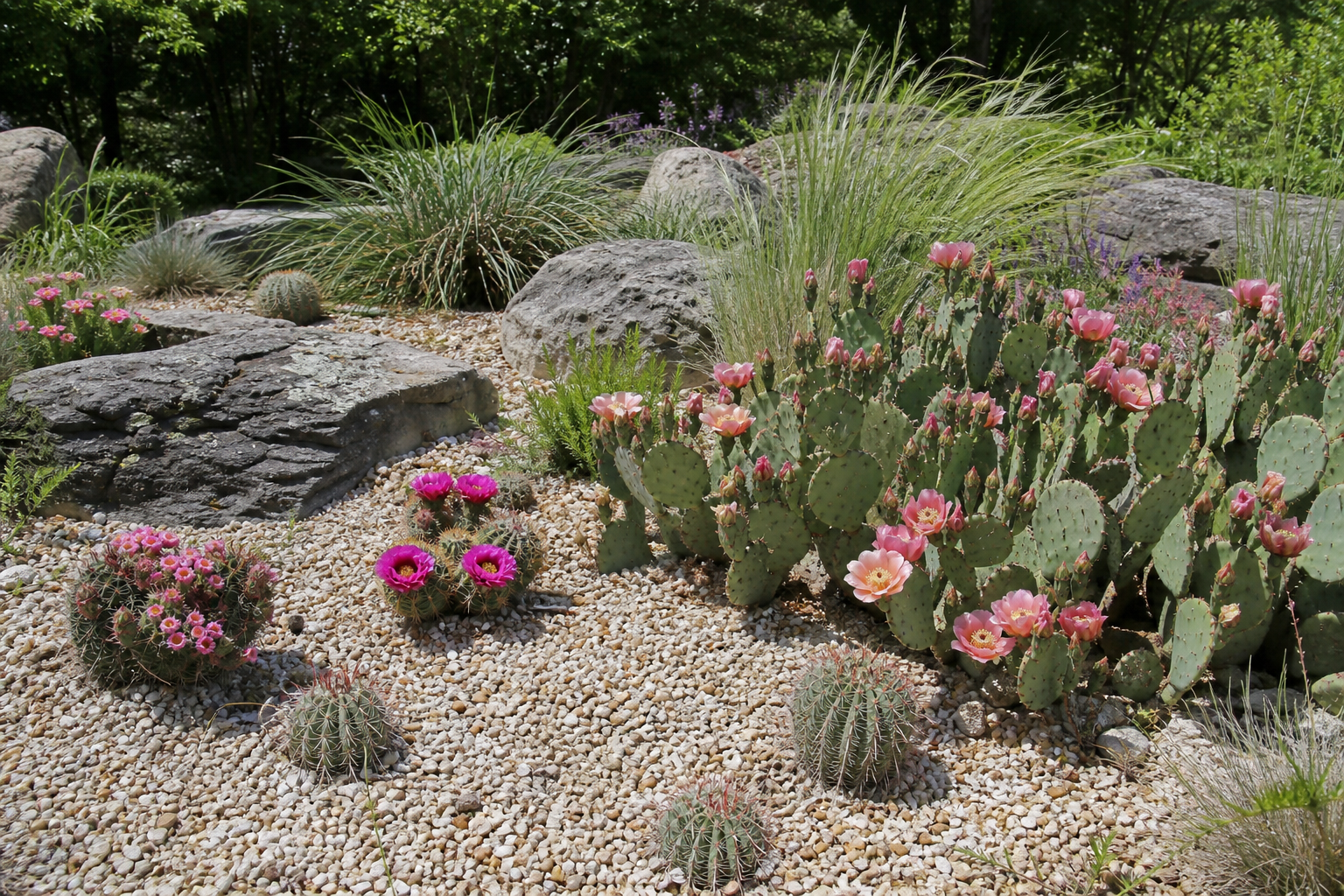
Think cacti belong only in the desert? Think again. Several remarkably tough species can survive freezing winters, snow and sharp temperature swings, provided you give them the conditions they need most: bright sun, fast drainage and a dry winter rest.
Cold-hardy cacti bring sculptural shapes, unusual textures and brilliant flowers to rock gardens, gravel beds, retaining walls and sunny containers. Many are especially useful in low-water landscapes across the United States, from the Great Plains and Rocky Mountain region to parts of the Northeast and Midwest.
Before you buy, check your location on the current USDA Plant Hardiness Zone Map. The map describes average annual extreme minimum temperatures, but it does not account for winter wet, soil type, wind exposure or the differences between a sheltered courtyard and an exposed garden. In practice, a cactus in a dry raised bed may survive conditions that would kill the same plant in heavy, soggy soil.
What Makes a Cactus Cold-Hardy?
Hardy cacti often cope with winter by shrinking, wrinkling or partially collapsing above ground. This is not necessarily a sign of damage. Their tissues lose water and become more resistant to freezing, then plump up again in spring.
The bigger threat is often moisture rather than cold. When wet soil freezes around the roots, or water collects inside a plant during a freeze-thaw cycle, rot can develop quickly. Choose a site where rain and melting snow drain away within minutes rather than pooling around the crown.
- Sun: Aim for at least six hours of direct sun, with more being better in cooler climates.
- Drainage: Use a gritty, rocky bed or a raised mound rather than ordinary garden soil.
- Air movement: Good circulation helps the plant dry after rain and snow.
- Winter dryness: Avoid automatic irrigation once the plant has entered dormancy.
- Placement: Keep spiny plants away from paths, play areas and places where pets or children regularly pass.
10 Cold-Hardy Cacti Worth Growing
1. Eastern Prickly Pear (Opuntia humifusa)
This low, spreading cactus is one of the best choices for gardeners east of the Great Plains. Its flattened green pads form a broad mat, and its large yellow flowers appear from late spring into early summer. Reddish or purplish fruit may follow and can persist into winter.
Eastern prickly pear is a U.S. native that tolerates sandy, rocky and relatively poor soils. It is commonly listed for roughly USDA Zones 4 through 9, although local forms and site conditions vary. The pads usually lack prominent long spines, but their tiny barbed bristles, called glochids, can be difficult to see and easy to brush against.
- Best use: Sunny rock gardens, slopes and dry borders.
- Give it: Full sun and sharply drained soil.
- Watch for: Waterlogged ground and narrow paths.
2. Brittle Prickly Pear (Opuntia fragilis)
As its common name suggests, this small prickly pear has pads that detach readily. That may sound like a problem, but it is a natural way for the plant to spread across gravelly ground. It stays relatively low, making it useful where a large, sprawling prickly pear would be too aggressive.
Its yellow flowers are modest but cheerful, and the compact pads provide excellent year-round structure. Established plants are among the hardiest prickly pears and are often suitable for very cold regions, including parts of Zones 3 and 4 when grown in dry, well-drained locations.
- Best use: Gravel gardens, alpine-style beds and sunny slopes.
- Give it: A mineral soil with little organic matter.
- Watch for: Loose pads rooting where you do not want them.
3. Plains Prickly Pear (Opuntia macrorhiza)
Native to parts of the central United States, plains prickly pear forms low clumps of rounded to oval pads. In early summer, it can produce attractive yellow flowers followed by fleshy fruit. The plant has a relaxed, ground-hugging habit that works especially well among ornamental grasses and native prairie plants.
This species is a strong candidate for dry gardens in the Great Plains and other regions with hot summers and cold winters. Expect best performance in full sun and in soil that drains rapidly after thunderstorms.
- Best use: Native plant gardens and low-water prairie borders.
- Give it: Space to spread and a gravel mulch.
- Watch for: Rich, damp beds that encourage soft growth and rot.
4. Plains or Hairy Prickly Pear (Opuntia polyacantha)
Opuntia polyacantha is a highly variable species with flattened pads, strong spines and showy flowers that may be yellow, pink, red or purple, depending on the form. It is widespread across much of the interior West and Great Plains and is a reliable performer in many cold, dry landscapes.
Some forms stay close to the ground while others create broader colonies. Mature clumps can become impressive features in a gravel bed, especially when paired with blue fescue, penstemon or low-growing native grasses.
- Best use: Large xeriscapes and naturalistic dry borders.
- Give it: Full sun, lean soil and generous spacing.
- Watch for: Spines and glochids when weeding nearby.
5. Tulip Prickly Pear (Opuntia phaeacantha)
Tulip prickly pear earns attention for its large, cup-shaped flowers, which may range from yellow to orange, pink or red. The pads can develop a blue-green cast, adding contrast to silver foliage and dark gravel.
It is particularly useful in Southwestern, Rocky Mountain and high-plains gardens. In colder or wetter areas, select a locally proven form and place it on a south-facing slope, near a masonry wall or in a raised bed where winter moisture cannot linger.
- Best use: Specimen planting in a dry, sunny bed.
- Give it: Strong light and excellent air circulation.
- Watch for: Winter rain followed by freezing temperatures.
6. Yellow Pincushion Cactus (Escobaria missouriensis)
This small, rounded cactus is easy to overlook until it flowers. In late spring or early summer, delicate yellow-green to yellow blooms appear near the top of the plant. Over time, it may form a compact cluster rather than a large colony.
Yellow pincushion cactus is native to portions of the Great Plains and central United States and is valued for its impressive cold tolerance. It suits gardeners who want a true miniature for a trough, pocket garden or carefully constructed rockery.
- Best use: Alpine beds, crevice gardens and containers.
- Give it: A raised position with plenty of grit around the crown.
- Watch for: Being crowded by vigorous neighboring plants.
7. Ball or Pincushion Cactus (Escobaria vivipara)
Escobaria vivipara is a variable species found across a broad area of the western and central United States. Depending on the form, plants may be solitary or clustered, with dense spines and pink, lavender or pale flowers.
It is a good choice for a dry rock garden where you can appreciate its small scale up close. Although tough once established, it still needs a planting site that dries quickly. In regions with wet winters, position it beneath a rain shadow, such as the edge of a roof overhang or a south-facing wall, while still providing plenty of sun.
8. Mountain Ball Cactus (Pediocactus simpsonii)
Mountain ball cactus has a rounded, hedgehog-like form and can produce bright flowers in spring. It comes from high-elevation and cold regions of the western United States, where plants experience intense sun, lean soils and substantial temperature changes.
This is a rewarding choice for a small rock garden, but it is less forgiving of poor drainage than many prickly pears. Use a mineral-heavy mix and avoid placing it in a low spot where snowmelt collects.
- Best use: Small-scale alpine or high-desert gardens.
- Give it: A raised mound and very restrained irrigation.
- Watch for: Overwatering during cool weather.
9. Claret Cup Cactus (Echinocereus triglochidiatus)
Claret cup cactus is one of the showiest cold-hardy cacti. It forms clusters of ribbed cylinders and produces brilliant red to orange, cup-shaped flowers in late spring or early summer. In a mature clump, dozens of blossoms can create a spectacular display.
It is native to dry parts of the Southwest and southern Rocky Mountain region. Some forms are hardy well below freezing, but performance depends strongly on winter dryness and local provenance. Buy from a reputable nursery and ask whether the plant has been grown outdoors in a climate similar to yours.
- Best use: Sunny focal points and low-water demonstration beds.
- Give it: Full sun and a warm, gravelly planting pocket.
- Watch for: Heavy clay and prolonged winter rainfall.
10. Green-Flower Hedgehog Cactus (Echinocereus viridiflorus)
This compact hedgehog cactus is prized for unusual greenish-yellow flowers, sometimes with a subtle lemon-like fragrance. The cylindrical stems form low clusters, and the dense spines create attractive texture even when the plant is not blooming.
It is a strong candidate for cold, dry gardens in the Great Plains and Rocky Mountain region. Give it a bright, open position and avoid surrounding it with plants that require frequent summer irrigation.
How to Plant Cold-Hardy Cacti Successfully
Start with the site rather than the plant. If your soil is heavy clay, build a raised mound 8 to 12 inches high and fill it with a gritty mix containing coarse mineral material such as gravel, pumice or expanded shale. Avoid adding large amounts of compost, which can hold moisture around the roots.
- Choose a sunny location with quick drainage.
- Set the cactus at the same depth it occupied in its nursery container.
- Keep the crown—the point where the stems meet the roots—slightly above the surrounding soil.
- Backfill with gritty soil and add a thin layer of gravel mulch.
- Wait several days before watering if the roots were disturbed during planting.
Wear thick gloves and use folded newspaper, tongs or a piece of cardboard to handle spiny plants. Even species described as spineless may have glochids, so avoid touching pads with bare hands.
A Simple Watering Method That Uses Real Measurements
Cold-hardy cacti need more water during active growth than many beginners expect, but they dislike frequent sips. After planting, water thoroughly enough to moisten the root zone, then allow the soil to dry completely before watering again.
For a small raised bed, try measuring your irrigation rather than guessing. Apply about 1 gallon of water per square foot of planting area, then check the soil 4 inches below the surface the next day. If it remains wet, improve drainage before adding more water. During a hot, dry summer, an established cactus may need a deep watering every 2 to 4 weeks, while a rainy period may require no supplemental water at all.
Stop routine watering in fall once nights become consistently cool and the plant begins to wrinkle or enter dormancy. Resume gradually in spring when temperatures rise, new growth appears and the soil has dried after winter.
Comparing the Best Choices
- Best for beginners: Eastern prickly pear and plains prickly pear.
- Best for very cold, dry climates: Brittle prickly pear, yellow pincushion and mountain ball cactus.
- Best flowers: Claret cup cactus and tulip prickly pear.
- Best for small gardens: Escobaria species and mountain ball cactus.
- Best for a broad native-style planting: Plains prickly pear, Opuntia polyacantha and claret cup cactus.
Winter Care: Keep Them Cold, but Dry
Do not automatically cover hardy cacti with blankets or move them indoors. Many need a cold, dry dormant period to remain healthy. Instead, protect them from excess moisture by improving drainage and, where practical, placing a temporary rain shield above the planting area. Keep the cover open at the sides so air can circulate.
Container-grown cacti face greater risk because their roots freeze faster than roots in the ground. Move pots beneath a covered porch, against a sunny wall or into an unheated garage before prolonged wet weather arrives. The space should remain cool, but the soil should stay dry.
Make Room for a Little Desert Drama
Cold-hardy cacti reward patience. They may grow slowly, look wrinkled in winter and take several seasons to form a substantial clump, but their flowers and structure can transform a difficult, sunny corner of the garden.
Begin with one or two locally proven plants, create the driest bed you can and observe how moisture behaves through the seasons. With the right site, even gardeners far from the desert can grow cacti that return year after year—and look more impressive with every summer.