Palms may suggest beaches and tropical vacations, but several tough species can handle genuine winter cold across much of the United States. The trick is choosing a palm that matches your USDA Hardiness Zone, then giving it a warm, well-drained planting spot and sensible winter care.
Before you buy, remember that a hardiness-zone rating is a useful guide—not a guarantee. Wind, wet soil, sudden temperature drops, the age of the palm, and how well it has established can all affect survival. A healthy palm in a sheltered courtyard may outperform a stressed palm planted in an exposed, freezing wind.
Here are 10 of the best candidates for gardeners who want a tropical-looking landscape without automatically committing to a greenhouse.
How to Choose a Winter-Tough Palm
Start by checking your local USDA Hardiness Zone and the typical winter low temperature for your property. If a palm is listed as hardy to Zone 8, it may survive in Zone 8, but it is not necessarily a dependable choice for every exposed garden in that zone.
- Choose a warm microclimate: South-facing walls, courtyards, slopes, and areas protected from north and west winds can make a major difference.
- Prioritize drainage: Cold, waterlogged soil can damage roots even when the air temperature is only moderately cold.
- Buy established plants when possible: Larger, well-rooted palms generally cope better than tiny seedlings, although transplant shock can still be a concern.
- Plan for mature size: Some palms remain shrubby, while others eventually need overhead clearance and room for a broad crown.
10 Cold-Hardy Palm Trees for U.S. Gardens
1. Needle Palm Rhapidophyllum hystrix
If maximum cold tolerance is your priority, needle palm deserves a place at the top of your list. This southeastern native forms a dense, nearly trunkless clump and is often considered one of the hardiest palms available to home gardeners. In a protected site, established plants can survive brief temperatures below 0°F, with some references placing it around USDA Zone 6b.
Needle palm prefers rich, evenly moist but well-drained soil and performs especially well in partial shade. Its dark green, fan-shaped leaves create a lush, shrub-like effect rather than the look of a tall tropical tree.
- Best for: Sheltered woodland edges, courtyards, and shaded foundation plantings.
- Typical size: About 3 to 6 feet tall and 4 to 8 feet wide.
- Watch out for: Long, sharp spines around the leaf bases. Plant it away from paths, play areas, and pet traffic.
2. Dwarf Palmetto Sabal minor
Dwarf palmetto brings a true palm appearance to gardens where a large trunked tree would be impractical. Its trunk usually remains underground, so the plant looks like a broad, sturdy clump of fan-shaped foliage. It is native to the southeastern United States and is commonly rated for USDA Zone 7 in a protected location.
This is an excellent choice for a moist, sunny-to-partly shaded site. Established plants may survive temperatures around 0°F, but leaf damage or slow recovery can occur after severe freezes.
- Best for: Rain gardens with good drainage, moist borders, and naturalistic plantings.
- Typical size: Roughly 4 to 6 feet tall and wide, though mature spread varies.
- Growing tip: Apply a 3- to 4-inch layer of mulch over the root zone before winter, keeping mulch away from the crown.
3. Windmill Palm Trachycarpus fortunei
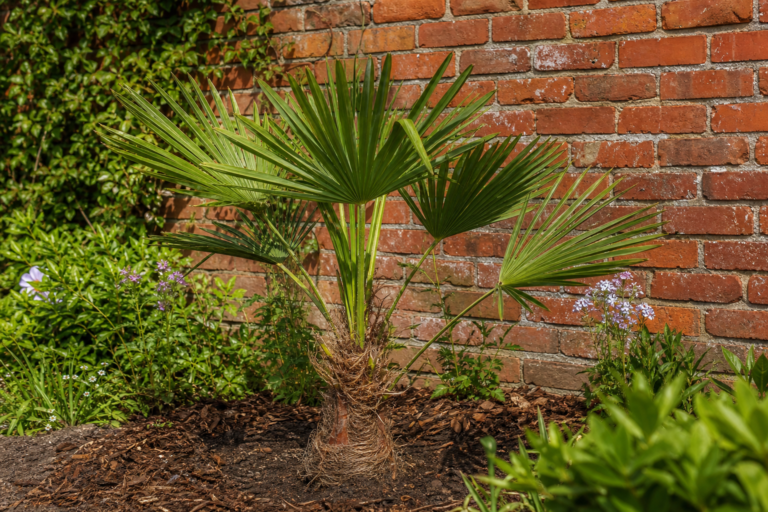
For a palm that develops a recognizable trunk, windmill palm is one of the most dependable choices for cooler parts of the Southeast and other mild-winter regions. Its slender trunk is covered with a fibrous, burlap-like layer, and its stiff, rounded fronds form an elegant crown.
Windmill palm is often grown in USDA Zones 8a through 10, with well-established specimens sometimes succeeding in warmer pockets of Zone 7. It tolerates sun or light shade and adapts to many soils, but it dislikes permanently wet ground.
- Best for: Entryways, courtyards, patios, and small urban gardens.
- Typical size: Commonly 10 to 25 feet tall in landscapes.
- Growing tip: Choose a site protected from strong winter wind; wind can worsen frond burn and dry the crown.
4. Waggie Palm Trachycarpus wagnerianus
Waggie palm is a compact, sturdy relative of windmill palm. Its smaller, thicker leaflets hold up well in wind, making it useful where a standard windmill palm would look ragged or become too broad. It is generally treated as a Zone 7b or 8 palm, depending on exposure and local conditions.
The leaves are fan-shaped but more rigid and compact than those of Trachycarpus fortunei. Growth is relatively slow, which makes this palm a good long-term choice for smaller properties.
- Best for: Windy gardens, containers in mild climates, and formal entry plantings.
- Typical size: About 8 to 15 feet tall over time.
- Growing tip: Give it excellent drainage and avoid planting where roof runoff keeps the soil saturated.
5. Pindo Palm or Jelly Palm Butia odorata
Pindo palm offers a different silhouette, with arching, blue-gray, feather-like fronds. It is a slow-growing palm that can reach approximately 15 to 25 feet in a suitable climate and is commonly rated around USDA Zone 8a. Mature plants can tolerate temperatures near 10°F, although foliage damage may occur before the plant reaches its absolute survival limit.
Full sun produces the best crown, and a warm, relatively dry planting site helps this South American palm perform well. In humid areas, avoid heavy, poorly drained soil.
- Best for: Sunny lawns, coastal-inland landscapes, and xeric-style gardens.
- Typical size: Approximately 15 to 25 feet tall.
- Growing tip: Do not rely on it in a salt-spray location; pindo palm is less tolerant of salt than several native palmettos.
6. European Fan Palm Chamaerops humilis
European fan palm forms a handsome, clumping plant with several short trunks and fan-shaped leaves. Green forms are widely grown, while silver-leaved forms add especially strong contrast to gravel gardens and sunny borders. It is generally suitable for USDA Zones 8 through 11 and may tolerate temperatures around 10°F in a favorable site.
This palm appreciates sun, heat, and fast-draining soil. It is slower and more compact than many people expect, which makes it useful near patios or in large containers.
- Best for: Mediterranean-style landscapes, rock gardens, and sunny courtyards.
- Typical size: Around 8 to 15 feet tall and 6 to 10 feet wide.
- Watch out for: The leaf stalks have sharp teeth. Keep the plant away from narrow walkways.
7. Saw Palmetto Serenoa repens
Saw palmetto is a rugged southeastern native that usually grows as a low, spreading shrub rather than a tall tree. Green and silvery forms are available, and the plant works well as a drought-tolerant accent or broad groundcover in warm climates.
It is usually considered a USDA Zone 8b plant. Saw palmetto handles heat, sandy soil, and drought after establishment, but it can be difficult to move once mature because its stems may creep along or below the ground.
- Best for: Low-maintenance landscapes, sandy sites, and wildlife-friendly native plantings.
- Typical size: About 3 to 6 feet tall, with a wider spread.
- Growing tip: Allow plenty of horizontal room and avoid placing it close to combustible structures where dry old material can accumulate.
8. Cabbage Palm Sabal palmetto
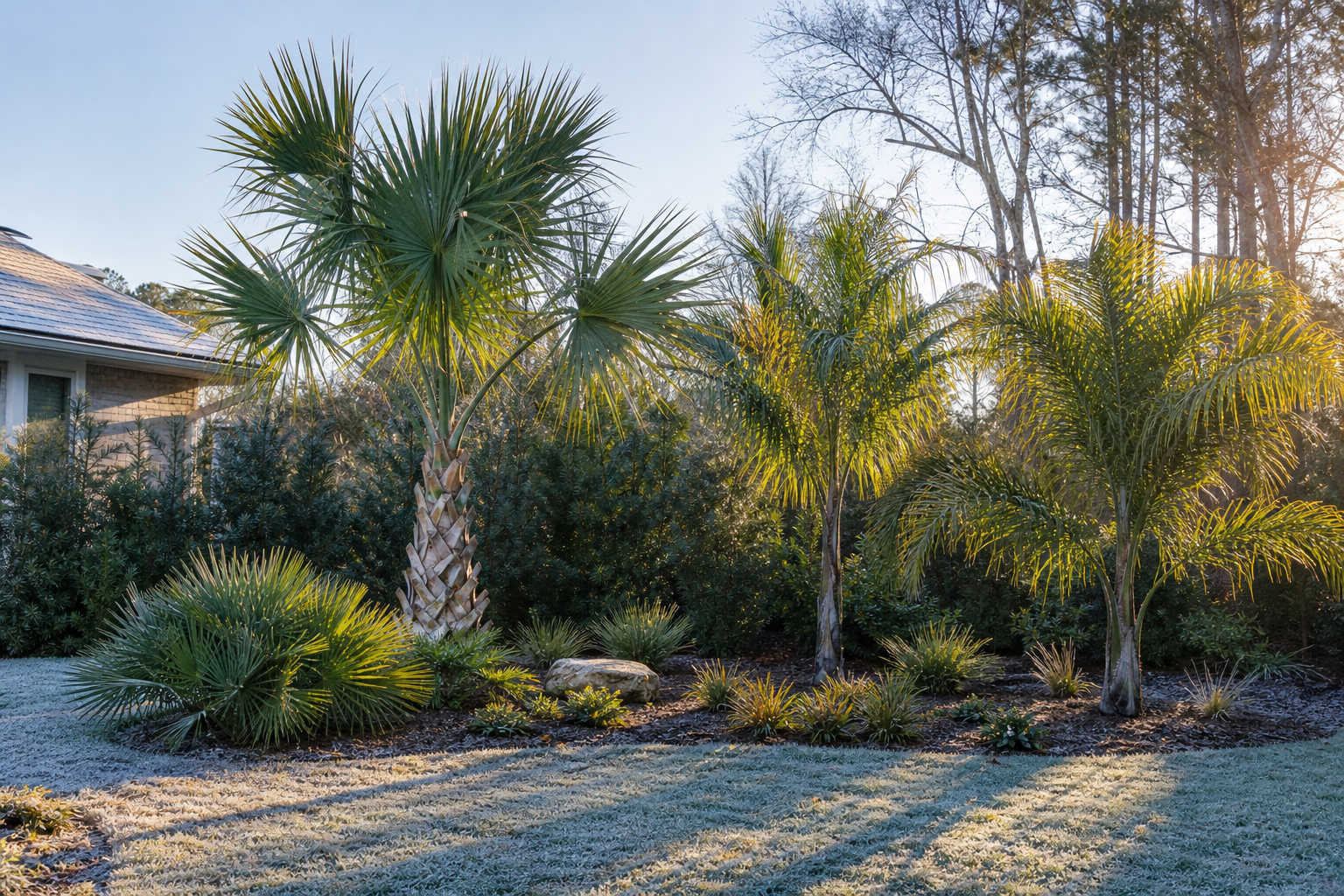
Cabbage palm is one of the signature palms of the southeastern United States. It develops a tall, substantial trunk and a rounded crown of fan-shaped leaves. Mature trees are commonly associated with USDA Zone 8b, and established specimens can tolerate brief cold near 15°F, though severe freezes may still damage the crown.
Give cabbage palm full sun and enough room to develop. It is especially effective in broad lawns, coastal-inland gardens, and warm Southern landscapes where a strong vertical accent is needed.
- Best for: Large properties and warm coastal or southeastern gardens.
- Typical size: Up to roughly 50 feet in favorable conditions.
- Growing tip: Avoid excessive pruning. Removing too many green fronds can weaken a palm before winter arrives.
9. Texas Palmetto Sabal mexicana
Texas palmetto is a bold, trunk-forming palm for warm regions of Texas and the southern Gulf Coast. It has large fan leaves and a tropical presence, but it is more tolerant of heat, low humidity, and occasional cold than many commonly sold palms.
Its reliable range is best considered USDA Zone 9 and warmer, with some protected Zone 8b gardens able to grow it successfully. Because local strains and microclimates vary, buy from a regional nursery when possible and protect young plants during hard freezes.
- Best for: Hot, sunny yards with space for a large specimen.
- Typical size: Often 20 to 40 feet tall, potentially larger with age.
- Growing tip: Plant it in spring so the root system has a full growing season to establish before winter.
10. Mazari Palm Nannorrhops ritchiana
Mazari palm is a less common but intriguing option for gardeners in dry, warm-winter regions. Its blue-green, fan-shaped foliage creates a striking contrast with grasses, yuccas, stones, and other drought-tolerant plants. It is commonly listed around USDA Zone 8a, but winter success depends heavily on dry soil and summer heat.
This is not the palm to choose for a damp clay garden. It comes from arid regions and is particularly vulnerable to cold when its roots remain wet.
- Best for: Desert-style landscapes, raised beds, and sharply drained slopes.
- Typical size: Roughly 6 to 15 feet, with clumping growth possible.
- Growing tip: Improve drainage before planting rather than trying to correct a soggy site later.
Winter Care That Improves Your Odds
Even a cold-hardy palm may show brown or torn fronds after a freeze. That does not automatically mean the plant has died. The growing point, or crown, is the critical area; if it remains healthy, new growth may emerge when warm weather returns.
Water Carefully, Not Automatically
Newly planted palms need consistent moisture while roots grow outward. As a practical starting point, measure about 1 inch of water per week during the first growing season, including rainfall, then adjust for soil type, heat, and plant response. Rather than watering by the calendar, place a small rain gauge nearby or use a straight-sided container to check how much irrigation reaches the root zone.
In a small test bed, you could compare two palms by recording rainfall and irrigation once a week for eight weeks. If the soil remains damp 4 to 6 inches below the surface several days after watering, reduce the frequency; if it is dry at that depth and the palm is still establishing, water slowly and deeply.
Protect the Roots and Crown
- Spread 3 to 4 inches of organic mulch over the root zone before severe cold, leaving a few inches around the trunk or crown clear.
- Use frost cloth rather than plastic directly against foliage. Remove coverings when temperatures rise to prevent overheating and trapped moisture.
- Do not prune off every damaged frond immediately. Brown leaves still offer some protection, and it is easier to judge recovery in spring.
- After a freeze, wait for clear evidence of new growth before cutting into the crown or applying fertilizer.
- Avoid late-season high-nitrogen feeding, which can encourage tender growth before winter.
Which Palm Should You Try First?
For the coldest climates on this list, start with needle palm or dwarf palmetto. If you want a clearly tree-like form, windmill palm and waggie palm are the strongest choices. In USDA Zone 8 and warmer, pindo palm, European fan palm, saw palmetto, and selected Sabal species offer more options.
Choose your site as carefully as your species, measure irrigation instead of guessing, and give young plants time to establish. With a realistic zone match and a little winter planning, you can enjoy palm foliage far beyond the traditional frost-free belt.