
 Source:
Bottle Palm (Hyophorbe lagenicaulis) short overview
Bottle Palm, Hyophorbe lagenicaulis, is a distinctive tropical palm from Mauritius recognized by its swollen, bottle-shaped trunk, smooth green crownshaft and arching feather-like fronds. It grows slowly and is prized as a specimen for warm landscapes, patios and bright indoor spaces. Provide strong light, sharply drained soil, regular moisture during active growth and complete protection from freezing temperatures.
Taxonomic classification
Bottle Palm (Hyophorbe lagenicaulis) care guide
Light and placement
Give full sun to bright partial shade. Outdoors, a site with morning or all-day sun and protection from severe reflected heat is suitable; indoors, place it directly beside a bright south- or west-facing window with filtered midday light if needed. Weak light causes stretched growth and dull foliage, while abrupt intense sun can scorch leaves, especially after indoor cultivation.
Watering and humidity
Water thoroughly when the upper few inches of mix begin to dry, then let excess drain completely. Increase frequency during hot active growth and reduce it in cool, dim weather without allowing the root ball to remain bone dry for long periods. High humidity helps indoor appearance, but stagnant air and constantly wet soil are more harmful than moderately dry air.
Soil and growing medium
Use a loose, sharply drained palm mix or sandy loam. The species tolerates a broad soil range, but persistent saturation can damage roots. Slightly acidic to neutral soil is a practical target; mildly alkaline conditions are also tolerated when drainage and micronutrient availability remain good.
Feeding
Feed during warm active growth with a controlled-release palm fertilizer containing potassium and appropriate micronutrients. Follow the product label rather than applying heavily; container palms may need lighter, more frequent feeding. Do not fertilize during cold, dark winter conditions or immediately after severe root stress.
Growth and habit
This is a slow-growing, solitary palm with a strong architectural silhouette. Young plants show the characteristic swollen base most clearly; older trunks may become taller and less bottle-like. Because the palm has a single growing point, avoid trunk wounds, severe crown damage and indiscriminate cutting.
Planting and repotting
Plant after danger of cold has passed, in a warm site with excellent drainage. Set the palm at the same depth as its nursery container; do not bury the trunk. Water deeply during establishment and mulch lightly while keeping mulch away from the trunk.
Repot container plants only when roots fill the pot or drainage declines, preferably in spring or early summer. Move up one pot size rather than making a large jump. Handle the root ball gently and keep the swollen stem at its original depth.
Propagation and pruning
Propagation
Propagate from fresh seed. Clean ripe seed, sow it in a warm, moist, well-drained medium and maintain steady heat. Germination may take weeks to months, and seed viability declines with storage. Seed-grown plants require patience before reaching flowering maturity.
Pruning
Remove only dead, broken or completely yellow fronds, cutting cleanly without injuring the crownshaft or trunk. Do not cut green fronds for cosmetic shaping. Remove spent inflorescences or fruit stalks only when accessible and necessary.
Overwintering
Move container plants indoors before nights approach the low 40s°F. Keep them in the brightest available position, water less often in winter and keep them away from heating vents. Outdoor plants in marginal climates need substantial cold protection, but freezing temperatures can kill this tropical palm.
Uses
A specimen palm for tropical and subtropical landscapes, courtyards, patios and conservatories. It also works as a container-grown architectural plant where winters are cold. Use it for form and foliage rather than edible production; no supported culinary or medicinal use is established here.
Appearance
The defining feature is a smooth gray to nearly white trunk with a conspicuously swollen base, especially on younger plants. A waxy bright-green crownshaft supports a crown of long pinnate fronds with narrow leaflets arranged along the rachis. Branched inflorescences emerge around the trunk beneath the crownshaft.
Flowering
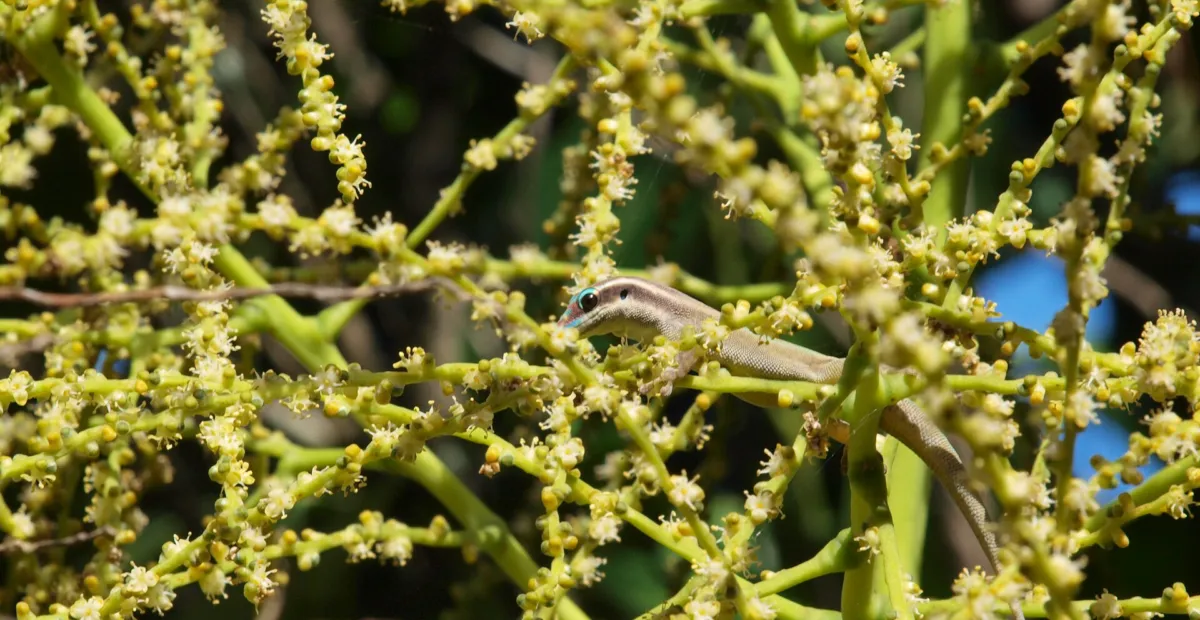
Mature palms produce branched inflorescences around the trunk just below the crownshaft. Male and female flowers occur on the same inflorescence, with small white to cream flowers followed by darkening fruits. Flowering is irregular in cultivation and depends strongly on warmth and maturity.
Pollination and visitors
The flowers require insect visitation for pollination, but reliable species-level visitor records are limited. Small insects, including bee-like visitors and other insects, are the most defensible broad visitor categories; attraction should be considered low rather than assumed high.
Hyophorbe lagenicaulis photos
Click any photo for a larger view. Source, author and license are shown separately.
Diseases and pests
Diseases
Prevent disease by avoiding waterlogged soil, keeping the crown dry when possible and sterilizing tools. Watch for trunk or root problems after cold injury or chronic overwatering. Remove severely damaged tissue only when necessary and improve drainage before treating symptoms.
Pests
Inspect for scale insects, mealybugs, spider mites and palm-feeding caterpillars, especially on stressed indoor plants. Isolate infested containers, wash foliage, improve airflow and use a labeled horticultural treatment only when monitoring confirms a problem.
Toxicity and pollen
Available horticultural and animal-safety references do not identify Hyophorbe lagenicaulis as toxic to humans or common household pets. That is not proof that large ingestions are harmless; prevent chewing, and seek veterinary or medical advice if symptoms occur after ingestion.
- Pollination / pollen
- Insect-associated floral pollen; airborne relevance uncertain
This is a flowering palm that produces pollen, but reliable species-specific evidence for airborne allergy importance is scarce. Its insect-associated flowers are not evidence of zero allergy risk. People with pollen sensitivity should monitor symptoms during flowering and keep indoor plants well ventilated.
Native habitat
The species is native to Mauritius and is associated with warm, wet tropical conditions. It performs best in heat, bright light and soils that drain freely after rain. Its restricted native distribution and severe conservation concern make cultivated specimens valuable for ex situ horticulture.
Interesting fact
The species name refers to its flask- or bottle-shaped trunk. Its natural range is restricted to Mauritius, where habitat loss has made it highly threatened. The trunk is usually most swollen when young and becomes more elongated with age. It is a solitary palm with one growing point, so severe crown damage can be fatal.
Frequently asked questions (FAQ)
The most relevant questions about this plant, with short and direct answers.
🌱Quick care
What is a Bottle Palm?⌄
The Bottle Palm is Hyophorbe lagenicaulis, a slow-growing tropical palm recognized by its swollen, bottle-shaped trunk and featherlike fronds. It is best suited to warm climates or containers that can be protected from freezing weather.
How fast does a Bottle Palm grow?⌄
Bottle Palm grows slowly, often adding only limited height each year under normal conditions. Warm temperatures, strong light, adequate water, and balanced palm fertilizer support its best growth.
How big does Hyophorbe lagenicaulis get?⌄
Bottle Palm can eventually reach about 12 to 20 feet outdoors, although it usually stays smaller for many years and remains more compact in a container. Its mature spread is typically narrower than its height.
🌤️Environment and placement
How much light does a Bottle Palm need?⌄
Bottle Palm grows best in full sun to partial shade, with several hours of direct or very bright light daily. Indoor plants need the brightest available window or supplemental grow lighting.
Can a Bottle Palm grow indoors?⌄
Yes, Bottle Palm can grow indoors when it receives ample bright light and has enough room for its crown and root system. Keep it away from cold drafts and avoid placing it in a dim corner.
What USDA zones can grow Bottle Palm outdoors?⌄
Bottle Palm is best suited to frost-free parts of USDA Zones 10 and 11, including suitable areas of southern Florida, southern California, and Hawaii. In colder zones, grow it in a container and move it under protection before freezing weather.
Can Bottle Palm tolerate full sun?⌄
Yes, established Bottle Palm tolerates full sun and generally grows best there when the soil drains well. Acclimate a plant moved from indoor or shaded conditions gradually to prevent leaf scorch.
Is Bottle Palm tolerant of salt spray?⌄
Bottle Palm has useful tolerance of coastal conditions and moderate to high salt exposure compared with many ornamental palms. Even so, protect it from constant severe salt buildup and rinse foliage when practical.
💧Care and problems
How often should you water a Bottle Palm?⌄
Water Bottle Palm thoroughly when the surface of the soil begins to dry, then allow excess water to drain completely. Water more often during hot, dry weather and reduce frequency during cool or low-light periods.
Can you overwater a Bottle Palm?⌄
Yes, overwatering or poor drainage can cause root problems and deterioration at the trunk base. Use a well-drained sandy loam or palm mix, and do not leave the container sitting in water.
What soil is best for Hyophorbe lagenicaulis?⌄
Bottle Palm prefers well-drained sandy loam or a fast-draining palm mix. The soil may be mildly acidic to alkaline, but drainage is more important than a narrow pH target.
What fertilizer does a Bottle Palm need?⌄
Feed Bottle Palm with a slow-release fertilizer formulated for palms during active growth, following the product label. Potassium is particularly important because deficiency can cause spotting, browning, and retention of old fronds.
Why are my Bottle Palm leaves turning brown?⌄
Brown Bottle Palm leaves can result from cold exposure, drought, excessive salts, nutrient imbalance, or root stress from poor drainage. Check watering, drainage, recent temperature changes, and fertilizer use before treating the symptom.
Why is my Bottle Palm turning yellow?⌄
Yellowing may indicate overwatering, low light, cold wet soil, drought stress, or a nutrient problem. Inspect the roots and soil moisture first, then correct the growing conditions rather than repeatedly adding fertilizer.
What pests affect Bottle Palm?⌄
Spider mites and other occasional palm pests can affect Bottle Palm, especially indoors or in hot, dry conditions. Inspect the undersides of fronds regularly and treat infestations promptly with a product labeled for palms.
How do you protect a Bottle Palm from frost?⌄
Move container-grown Bottle Palm indoors or into a heated, protected space before a freeze. Outdoor specimens in marginal climates should be covered with breathable frost cloth during cold snaps, but freezing temperatures can still cause severe or fatal damage.
🪴Planting and repotting
When should you plant a Bottle Palm outdoors?⌄
Plant Bottle Palm outdoors in late spring or early summer after freezing weather has passed and the soil is warm. Choose a sunny or lightly shaded location with excellent drainage and enough room for the mature crown.
Can Bottle Palm grow in a container?⌄
Yes, Bottle Palm is well suited to container growing because it grows slowly and can be moved away from freezing weather. Use a heavy container with drainage holes to reduce tipping and prevent waterlogged roots.
How do you repot a Bottle Palm?⌄
Repot Bottle Palm only when roots fill the container or growth has clearly slowed from crowding, usually by moving it into a pot just one or two inches wider. Preserve the root ball, use fresh fast-draining mix, and avoid burying the swollen trunk deeper than before.
How far apart should Bottle Palms be planted?⌄
Space Bottle Palms according to their mature crown width and the intended visual effect, leaving several feet between trunks for individual specimens. Keep them well away from buildings, paving, and utilities so the crown and trunk have room to develop.
✂️Propagation and pruning
How do you propagate Hyophorbe lagenicaulis?⌄
Bottle Palm is propagated primarily from fresh seed. Sow cleaned seeds in a warm, well-drained medium and keep them lightly moist, because germination can be slow and irregular.
Can you grow a Bottle Palm from a cutting?⌄
No, Bottle Palm is not normally propagated from stem or leaf cuttings. Seed propagation is the practical method because this species does not readily produce vegetative offsets.
Should you prune a Bottle Palm?⌄
Bottle Palm needs little pruning because it naturally forms a clean single trunk and crown. Remove only completely dead or damaged fronds with clean tools, and never cut the central spear or green healthy leaves.
⚠️Toxicity and safety
Is Bottle Palm toxic to dogs or cats?⌄
The toxicity of Hyophorbe lagenicaulis is not well documented, so it is safest to prevent pets from chewing the leaves, fruit, or other plant parts. Seek veterinary advice if an animal ingests a significant amount or develops symptoms.
Is Bottle Palm fruit edible?⌄
Bottle Palm fruit should be treated as inedible for people and pets because reliable food-safety information is limited. Remove fallen fruit if children or animals may be tempted to eat it.
🌸Flowering and special interest
Does Bottle Palm produce flowers?⌄
Yes, mature Bottle Palm produces branched flower clusters below the crownshaft. The small male and female flowers occur on the same palm and are generally white to cream colored.
When does a Bottle Palm bloom?⌄
Bottle Palm often flowers during warm growing conditions, commonly in spring in suitable outdoor climates. Indoor or stressed plants may flower irregularly or require many years to reach flowering size.
Does Bottle Palm produce fruit?⌄
Yes, pollinated flowers can develop into small fruits that change from green to dark or black as they ripen. Fruit production is more likely on mature outdoor palms exposed to suitable warmth and pollination conditions.
Similar plants
 Palm (Oenocarpus bataua) care guideOenocarpus bataua
 Date Palm (Phoenix dactylifera) care guidePhoenix dactylifera
 Oenocarpus bacaba care guideOenocarpus bacaba
 White Elephant Palm (Kerriodoxa elegans) care guideKerriodoxa elegans
 Coco-de-mer (Lodoicea maldivica) care guideLodoicea maldivica
 Mkambati Palm (Jubaeopsis caffra) care guideJubaeopsis caffra