
 Source:
 Druce’s Crane’s-bill (Geranium oxonianum) short overview
Druce's Crane's-bill is a vigorous hardy geranium valued for its long season of pink, five-petaled flowers marked with darker veins. This clump-forming perennial grows well in full sun or partial shade, especially in humus-rich, well-drained soil with steady moisture. It is useful for borders, cottage gardens, edging, rock gardens and pollinator plantings, and can often be refreshed by cutting back after flowering.
Taxonomic classification
Druce’s Crane’s-bill (Geranium oxonianum) care guide
Light and placement
Grow in full sun to partial shade. In cool climates, a south- or west-facing border can support the strongest flowering; in hot-summer areas, morning sun or bright afternoon shade helps prevent foliage collapse. Too little light produces fewer flowers and looser stems, while intense heat combined with reflected sun can scorch or prematurely yellow the leaves.
Watering and humidity
Water deeply when the upper inch of soil begins to dry, then allow excess water to drain. Maintain more consistent moisture during establishment, flowering and hot weather; reduce watering in cool fall conditions without allowing container plants to remain saturated. Average outdoor humidity is adequate, and misting is unnecessary.
Soil and growing medium
Use fertile, humus-rich soil that drains freely but does not dry rapidly. Loam or improved clay is suitable when drainage is adequate. A slightly acidic to slightly alkaline reaction is generally tolerated; avoid persistently waterlogged ground, especially in winter.
Feeding
Apply a thin layer of compost or a balanced, slow-release perennial fertilizer in spring as growth resumes. Avoid heavy nitrogen feeding, which can produce floppy foliage and fewer flowers. Additional feeding is usually unnecessary in fertile soil; do not fertilize drought-stressed or newly divided plants until they recover.
Growth and habit
This vigorous perennial forms a broadening clump of branching stems and may fill open ground without becoming a woody shrub. In hot weather the foliage can decline after flowering; cutting the plant back encourages cleaner regrowth and may support later flowering.
Planting and repotting
Plant in spring or early fall when temperatures are moderate. Set the crown at the same level as in the nursery pot, firm the soil gently and water deeply. Space plants about 18–30 inches apart, allowing room for the clump to broaden without crowding neighboring perennials.
Container-grown plants can be divided and repotted in spring or early fall. Use a standard quality potting mix amended for drainage, and choose a container only slightly larger than the root mass. Water thoroughly after repotting and keep evenly moist while roots re-establish.
Propagation and pruning
Propagation
Division is the most practical method and is best done in spring or early fall as new growth begins or after flowering. Seed may be produced because the hybrid is fertile, but seedlings may not come true to a selected cultivar. Pot divisions promptly and keep them evenly moist.
Pruning
Cut back spent flowering stems and tired foliage after the main bloom flush, especially if summer heat causes the foliage to yellow or collapse. Shearing the plant near the base can produce fresh leaves and occasional later flowers. Remove damaged material before winter if it harbors disease.
Overwintering
Plants established in the ground generally need little winter protection in suitable USDA zones. Mulch lightly after the soil cools, keeping mulch away from the crown. In colder or exposed sites, avoid excessive winter wet and consider a loose organic mulch; container roots need extra insulation or sheltered placement.
Uses
Use it in perennial borders, cottage gardens, informal edging, rock gardens, containers and broad planting groups where its spreading clumps can soften hard lines. It is also suitable for pollinator-oriented gardens. It has no established culinary or medicinal use recommended here.
Appearance
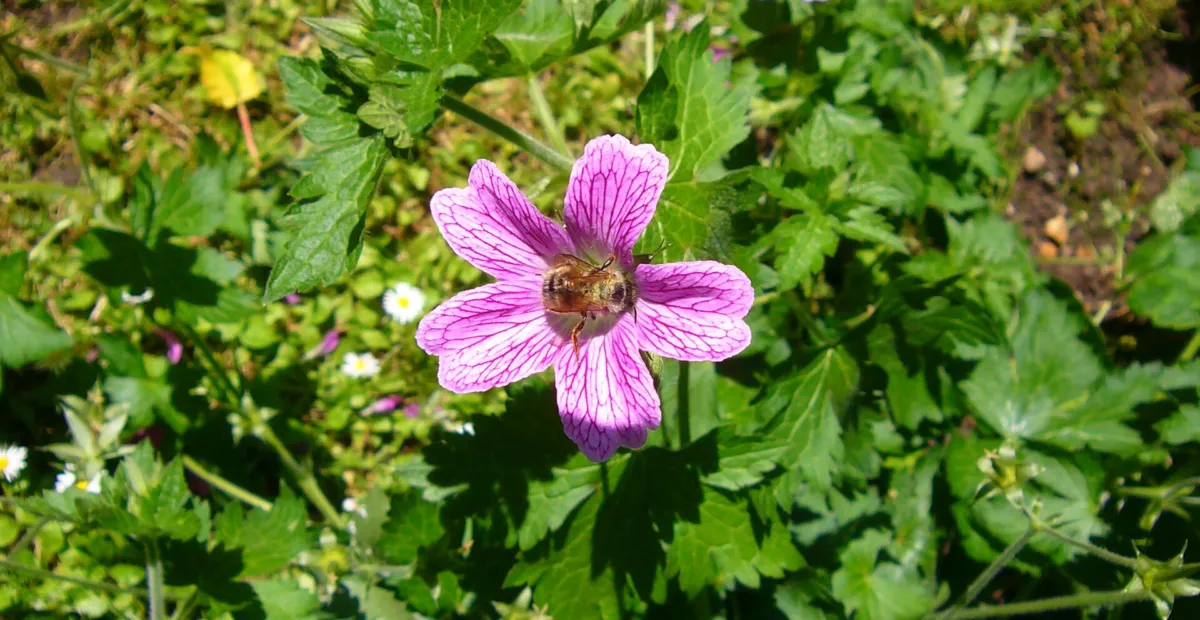
The plant has rounded basal leaves divided into five broad lobes, usually gray-green to medium green, with slender branching flowering stems. The open pink flowers commonly show darker veins. The developing fruit has the elongated crane-bill form characteristic of Geranium.
Flowering
The flowers are borne in loose clusters on branching stems and usually appear from late spring into summer, with possible later rebloom after cutting back. Flowering can be reduced by intense heat, drought or dense shade. Remove tired foliage and stems after the main flush if the plant becomes untidy.
Pollination and visitors
The open, nectar- and pollen-bearing flowers are reported to attract bees, bumblebees, butterflies and other beneficial flower visitors, including hoverflies. Visits are most likely during the daylight flowering period from late spring through summer.
Geranium oxonianum photos
Click any photo for a larger view. Source, author and license are shown separately.
Diseases and pests
Diseases
Leaf spot and rust may occur, particularly in crowded or persistently damp conditions. Improve air circulation, water at the soil surface and remove affected foliage. Cut back heavily infected growth and dispose of it rather than composting diseased leaves.
Pests
Slugs and snails may damage young foliage, while aphids can gather on tender shoots. Encourage natural predators, reduce hiding places around dense growth and use physical controls first. Avoid routinely spraying flowers visited by pollinators.
Toxicity and pollen
No well-established serious toxicity is documented for Geranium oxonianum in the horticultural sources reviewed, but evidence specific to this hybrid is limited. Avoid ingestion, and use ordinary precautions when handling unfamiliar plant material because individual sensitivity and misidentification remain possible.
- Typical season
- May through September in much of the United States
- Pollination / pollen
- Insect-borne, not strongly wind-dispersed
As an insect-pollinated geranium hybrid, its pollen is generally deposited by visiting insects rather than released in large airborne clouds. That suggests a low airborne allergy concern, but it does not establish zero risk for people with individual pollen or plant sensitivities.
Native habitat
Its parentage links it to temperate European cranesbills associated with open, grassy or lightly disturbed habitats. In cultivation it performs best in ordinary fertile garden soil with reliable drainage, moderate moisture and protection from extreme afternoon heat in hot-summer regions.
Interesting fact
Geranium oxonianum is widely understood horticulturally as a fertile hybrid between G. endressii and G. versicolor. The name oxonianum refers to Oxford. Its crane-like fruit structure gives the genus Geranium its common botanical association with cranesbills.
Frequently asked questions (FAQ)
The most relevant questions about this plant, with short and direct answers.
🌱Quick care
What is Geranium oxonianum commonly called in the United States?⌄
Geranium oxonianum is documented as Druce's Crane's-bill, a hardy perennial cranesbill in the geranium family, Geraniaceae. It is a garden-origin hybrid often grown for its pink flowers and spreading habit.
Is Geranium oxonianum a perennial?⌄
Yes, Geranium oxonianum is a frost-hardy herbaceous perennial. Its foliage may decline after flowering in hot weather, but the plant can regrow from its crown.
How much sun does Druce's Crane's-bill need?⌄
Druce's Crane's-bill grows best in full sun to partial shade. Full sun generally produces the strongest flowering, while some afternoon shade can help in hot-summer regions.
How often should I water Geranium oxonianum?⌄
Water Geranium oxonianum when the soil begins to dry, maintaining moderate and consistent moisture without leaving the roots waterlogged. Established plants tolerate short dry periods but flower better with regular moisture.
What type of soil is best for Geranium oxonianum?⌄
Use fertile, humus-rich, well-drained loam for Geranium oxonianum. Improve heavy or sandy soil with compost while preserving good drainage.
Is Geranium oxonianum easy to grow?⌄
Yes, Geranium oxonianum is generally easy to grow once established. It needs suitable light, moderate moisture, fertile soil, and occasional cutting back rather than intensive maintenance.
🌤️Environment and placement
Can Geranium oxonianum grow in partial shade?⌄
Yes, Geranium oxonianum can grow in partial shade, especially where summers are hot. Flowering may be reduced if the plant receives too little direct light.
Where should I plant Druce's Crane's-bill in the garden?⌄
Plant Druce's Crane's-bill in a sunny or lightly shaded border, cottage garden, edging, rock garden, or informal ground-cover planting. Give it enough room to spread without crowding smaller plants.
Is Geranium oxonianum suitable for hot climates?⌄
Geranium oxonianum can grow in hot climates if it receives reliable moisture and some protection from intense afternoon sun. In very hot conditions, the foliage may look tired after flowering and benefit from pruning.
What USDA hardiness zones suit Geranium oxonianum?⌄
Cultivar information for Geranium × oxonianum commonly places this group in USDA Zones 5 through 8. Hardiness can vary among selections and local winter conditions, so protect new plantings from severe exposure.
Can Geranium oxonianum grow in clay soil?⌄
Geranium oxonianum can grow in clay soil if drainage is improved first. Incorporate organic matter and avoid planting where water remains around the crown after rain.
Does Geranium oxonianum tolerate drought?⌄
Geranium oxonianum tolerates some drought once established, but it performs more reliably with moderate moisture. Water during prolonged hot or dry weather, particularly for newly planted divisions.
💧Care and problems
How do I fertilize Geranium oxonianum?⌄
Apply compost or a balanced, slow-release fertilizer in spring if the soil is poor. Avoid excessive nitrogen, which can encourage leafy growth at the expense of flowers.
Why is my Geranium oxonianum not flowering well?⌄
Poor flowering is commonly associated with insufficient light, excessive shade, drought, or overly rich nitrogen-based feeding. Move or thin surrounding plants if necessary and keep the soil moderately moist.
Should I deadhead Geranium oxonianum?⌄
Deadheading Geranium oxonianum is optional rather than essential. Remove spent flower stems to improve appearance and sometimes encourage additional blooms, but larger plantings can usually be left alone.
When should I cut back Geranium oxonianum?⌄
Cut back Geranium oxonianum after its main flowering period or at the end of the growing season. If the foliage declines in hot weather, trimming the plant can encourage fresh, tidier growth.
What problems affect Geranium oxonianum?⌄
Geranium oxonianum has few serious pest or disease problems, but leaf spots and rust can occur. Improve air circulation, avoid wetting the foliage, and remove badly affected leaves.
Why is my Geranium oxonianum becoming floppy?⌄
Floppiness can result from excessive shade, rich soil, or a crowded planting. Cut the plant back after flowering and grow it in brighter light with moderate, not excessive, fertility.
🪴Planting and repotting
When is the best time to plant Geranium oxonianum?⌄
Plant Geranium oxonianum in spring after the soil is workable or in early fall while roots still have time to establish. Water new plants regularly until they are established.
How far apart should I plant Geranium oxonianum?⌄
Space Geranium oxonianum according to the mature spread of the cultivar, commonly about 12 to 18 inches apart for a connected border planting. Allow more room if you want individual plants to remain distinct.
Can Geranium oxonianum be grown in containers?⌄
Yes, Geranium oxonianum can be grown in a container with drainage holes and fertile, well-drained potting mix. Container plants dry out faster than those in the ground and need more frequent watering.
Does Geranium oxonianum need winter protection?⌄
Established Geranium oxonianum usually needs little winter protection within its suitable hardiness range. A light mulch can protect young crowns, but keep mulch from touching the plant's base.
✂️Propagation and pruning
How do I propagate Geranium oxonianum?⌄
Propagate Geranium oxonianum primarily by division. Lift a mature clump in spring or early fall, separate rooted sections, and replant them promptly at the original depth.
Can Geranium oxonianum be grown from seed?⌄
Geranium oxonianum may produce seed, but seedlings may not closely match the parent plant, particularly when the plant is a named hybrid. Division is the more dependable method for preserving its characteristics.
When should I divide Geranium oxonianum?⌄
Divide Geranium oxonianum in spring or early fall when temperatures are moderate and soil moisture is dependable. Avoid dividing during hot, dry weather or while the plant is under significant stress.
Can I propagate Geranium oxonianum from cuttings?⌄
Some Geranium oxonianum selections can be propagated from herbaceous cuttings, but success varies by cultivar. Division is generally simpler and more reliable for home gardeners.
⚠️Toxicity and safety
Is Geranium oxonianum toxic to people?⌄
No serious toxicity is reported for Geranium oxonianum, but specific evidence for this exact plant is limited. Do not consume it, and seek medical advice if a child or adult develops symptoms after ingestion.
Is Druce's Crane's-bill safe for pets?⌄
Pet-specific safety evidence for Druce's Crane's-bill is limited, so it should not be treated as edible for dogs, cats, or other animals. Prevent chewing and contact a veterinarian if a pet eats a substantial amount or shows symptoms.
🌸Flowering and special interest
When does Geranium oxonianum bloom?⌄
Geranium oxonianum generally blooms from late spring into summer, with timing varying by cultivar and climate. Some plants may produce scattered rebloom after being cut back.
What color flowers does Druce's Crane's-bill have?⌄
Druce's Crane's-bill typically produces pink flowers, often with darker veins. Exact color, petal form, and bloom duration vary among cultivars sold under the Geranium oxonianum group.
Does Geranium oxonianum attract pollinators?⌄
Yes, the open flowers of Geranium oxonianum can attract butterflies and other flower-visiting insects. Flowering is usually strongest when the plant receives adequate light and consistent moisture.
How long does Geranium oxonianum flower?⌄
Geranium oxonianum commonly flowers from late spring into early or midsummer. Deadheading and post-bloom pruning may improve appearance and can sometimes support later sporadic flowers.
Similar plants
 Knotted Crane’s-bill (Geranium nodosum) care guideGeranium nodosum
 Geranium ‘Cinereum’Geranium 'Cinereum'
 Geranium ‘Rozanne’Geranium 'Rozanne'
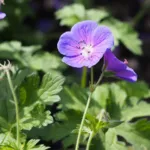 Cranesbill (Geranium ‘Johnson’s Blue’)Geranium 'Johnson's Blue'
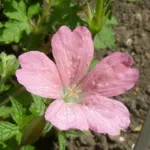 French Crane’s-bill (Geranium endressii) care guideGeranium endressii
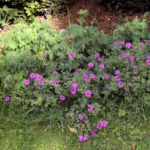 Armenian Crane’s-bill (Geranium psilostemon) care guideGeranium psilostemon