Source:
 Aster ‘Novi Belgii’ short overview
Aster 'Novi Belgii' is a cultivated form identified with Symphyotrichum novi-belgii, a North American perennial traditionally treated under the name Aster novi-belgii. Its narrow, clasping leaves and branched stems carry daisy-like flower heads in the late-summer and fall garden. The exact cultivar or group description is not well documented in authoritative US sources, so flower color, mature size, and habit should be treated as variable rather than fixed. It suits sunny borders, containers, cutting gardens, and pollinator plantings.
Taxonomic classification
Aster ‘Novi Belgii’ care guide
Light and placement
Provide full sun, ideally six or more hours of direct light, with morning-to-afternoon exposure and good air circulation. In hot inland climates, some late-day protection can reduce stress, but insufficient light produces weak, floppy stems and fewer flowers. Excessive shade commonly causes stretching and sparse flowering.
Watering and humidity
Water deeply when the upper inch of soil begins to dry, keeping the root zone consistently moist during active growth and flowering. Increase frequency during hot, windy weather and reduce it after dormancy, while preventing prolonged winter saturation. Water at the base to keep foliage dry and reduce foliar disease.
Soil and growing medium
Use fertile, humus-rich soil that drains freely but does not dry rapidly. Loam is ideal; the species also tolerates clay and wetter sites if drainage remains adequate. A slightly acidic to neutral soil is a practical target, with some tolerance of mildly alkaline conditions. Avoid stagnant winter water and heavily compacted ground.
Feeding
Top-dress with compost in spring or apply a balanced, slow-release perennial fertilizer at label rates as growth begins. Avoid heavy nitrogen feeding, which can produce weak, leafy growth and increase disease pressure. Do not fertilize drought-stressed, waterlogged, or newly divided plants until they resume active growth.
Growth and habit
Forms a leafy, branched perennial clump and may spread gradually through crown growth. Taller forms can flop in rich soil or exposed sites; pinching or cutting stems back in late spring or early summer encourages branching and shorter, sturdier growth. Divide aging clumps when the center becomes sparse.
Planting and repotting
Plant in spring or early fall, setting the crown at soil level. Space plants according to the unknown cultivar size; about 18–30 inches apart is a reasonable starting range for typical S. novi-belgii forms. Water deeply after planting and keep the root zone evenly moist during establishment.
Container-grown plants can be shifted in early spring when roots fill the pot. Use a container with drainage holes and a moisture-retentive but open potting mix. Refresh the upper layer of mix annually and avoid moving the plant into an excessively large pot, which can remain wet for too long.
Propagation and pruning
Propagation
Divide established clumps in early spring or after flowering, replanting vigorous sections promptly. Seed propagation is possible, but seedlings may not reproduce a named selection faithfully. Softwood cuttings are also reported for the species and cultivars; take them during active growth and root in a sterile, free-draining medium.
Pruning
Pinch or cut stems back by roughly one-third in late spring or early summer to encourage branching and reduce flopping. After flowering, remove spent stems if self-seeding or winter debris is undesirable. Leave some seed heads through winter for structure and wildlife, then cut back before spring growth resumes.
Overwintering
Leave healthy stems standing for winter interest and wildlife, or cut them back after dormancy. Apply a light mulch after the ground begins to freeze in colder areas, keeping mulch away from the crown. Container plants are more exposed to root freezing and should be sheltered in an unheated protected location where possible.
Uses
Useful in sunny perennial borders, cottage gardens, cutting gardens, containers, rock gardens, rain gardens, seaside plantings, and pollinator gardens. Its late-season display complements ornamental grasses and goldenrods. It is not documented here as a culinary or medicinal plant, so do not promote ingestion or medicinal use.
Appearance
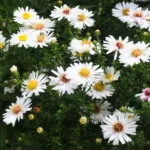
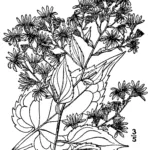
Leaves are simple, alternate, narrow lanceolate to oblanceolate, and often clasp the stem at the base. Stems may be green to reddish and can bear fine hairs. The plant is recognized by branched flowering stems and numerous radial heads with yellow disk florets. Cultivar forms can be substantially shorter, denser, or more double-flowered than wild-type plants.
Flowering
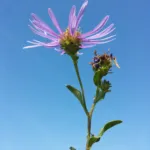
This is a true flowering plant with terminal heads composed of conspicuous ray florets surrounding yellow-orange disk florets. Species-level references place normal flowering from late summer into fall, commonly August through October in much of the United States. Cultivars may differ in timing, flower fullness, and color.
Pollination and visitors
Flower heads are documented as attractive to bees, butterflies, and other insect pollinators. The broader Symphyotrichum group supports specialized native bees, and the species is reported as a host plant for the pearl crescent butterfly. Double-flowered cultivars may provide less accessible nectar and pollen than open-centered forms.
Aster 'Novi Belgii' photos
Click any photo for a larger view. Source, author and license are shown separately.
Diseases and pests
Diseases
Powdery mildew is the principal reported disease concern. Improve air circulation, avoid crowding, water at the soil surface, and remove badly affected foliage. Cut back and dispose of diseased stems after the season rather than composting heavily infected material.
Pests
Aphids, leafhoppers, thrips, and aster-feeding insects may occur, but serious pest problems are not consistently reported. Inspect new growth and flower buds, encourage beneficial insects, and use a strong water spray for light infestations. Remove badly damaged material and avoid broad-spectrum insecticides during bloom.
Related diseases and pests
Only Plant Doctor profiles whose host data indicate this plant may be affected are shown here.

Toxicity and pollen
No authoritative evidence located indicating significant toxicity for this exact identity. Symphyotrichum asters are generally treated as non-toxic to pets in US poison-control listings, but any plant material may cause mild gastrointestinal upset if eaten in quantity. Handle sap and plant debris normally and seek professional advice after concerning exposure.
- Typical season
- Late summer through fall
- Pollination / pollen
- Insect-dispersed composite pollen
As an insect-pollinated composite, its pollen is mainly presented within flower heads rather than released in large windborne clouds. Airborne exposure is therefore expected to be lower than for strongly wind-pollinated plants, but sensitive people can still react to contact with flowers or plant dust during handling and cutting.
Native habitat
The species is native to eastern North America, especially coastal and lowland habitats extending from Atlantic Canada southward into the southeastern United States. It occurs in moist meadows, marsh margins, forest edges, riverbanks, lake shores, fens, and bog edges, often in fertile soils with reliable moisture.
Interesting fact
The name Aster novi-belgii is an older classification now generally placed in Symphyotrichum. The epithet novi-belgii refers historically to New Netherland, not modern Belgium. Species plants occur in coastal wetlands, meadows, forest edges, shores, and other moist habitats. Its late-season flowers provide nectar when many summer perennials are fading.
Frequently asked questions (FAQ)
The most relevant questions about this plant, with short and direct answers.
🌱Quick care
What is Aster 'Novi Belgii'?⌄
Aster 'Novi Belgii' is a fall-flowering perennial in the Asteraceae family, treated botanically as Symphyotrichum novi-belgii. It is commonly associated with the New York aster or Michaelmas daisy group, although the supplied horticultural identity does not specify a cultivar.
How much sun does Aster 'Novi Belgii' need?⌄
Aster 'Novi Belgii' grows best in full sun, with at least 6 hours of direct light daily. Some light afternoon shade may be tolerated, especially in hot climates, but too much shade can reduce flowering and encourage weak stems.
How often should I water Aster 'Novi Belgii'?⌄
Water Aster 'Novi Belgii' regularly enough to keep the soil evenly moist, especially during establishment and summer drought. Avoid letting the soil remain waterlogged because poor winter drainage can damage the roots.
Is Aster 'Novi Belgii' perennial?⌄
Yes, Aster 'Novi Belgii' is a herbaceous perennial that dies back in winter and regrows from the crown in spring. It is generally hardy outdoors in suitable climates.
🌤️Environment and placement
What USDA hardiness zones suit Aster 'Novi Belgii'?⌄
Aster 'Novi Belgii' is generally suitable for USDA Zones 4 through 8. Exact performance can vary with the specific clone, local winter temperatures, summer heat, and drainage.
What soil is best for Aster 'Novi Belgii'?⌄
Use humus-rich, well-drained soil that holds consistent moisture without becoming saturated. It can tolerate sandy, loamy, or clay soil if drainage and moisture are managed well.
Can Aster 'Novi Belgii' grow in clay soil?⌄
Yes, Aster 'Novi Belgii' can grow in clay soil if it is amended with organic matter and does not stay waterlogged. Improving drainage and maintaining steady moisture are more important than achieving a particular soil texture.
Can Aster 'Novi Belgii' grow in wet areas?⌄
Aster 'Novi Belgii' tolerates consistently moist soil and can suit rain gardens or moist borders, provided excess water drains away. Do not plant it where winter water remains standing around the crown.
Is Aster 'Novi Belgii' suitable for a rain garden?⌄
It can be suitable for a rain garden’s better-drained margins rather than its permanently saturated center. Choose a location that stays moist during the growing season but drains reasonably well in winter.
How large does Aster 'Novi Belgii' get?⌄
The species commonly reaches about 3 to 4 feet tall and 2 to 3 feet wide, but plants sold under this name may differ substantially in height. Check the nursery label if the plant is a named compact cultivar.
💧Care and problems
How do I keep Aster 'Novi Belgii' from flopping?⌄
Pinch or cut the stems back by about 6 inches in late spring or early summer to encourage branching and shorter, sturdier growth. Full sun, adequate spacing, and avoiding excessive nitrogen also help reduce flopping.
When should I cut back Aster 'Novi Belgii'?⌄
Cut Aster 'Novi Belgii' stems close to the ground in late fall or leave them standing through winter for habitat and then remove them in early spring. Cutting after flowering can also reduce unwanted self-seeding.
Does Aster 'Novi Belgii' need fertilizer?⌄
Aster 'Novi Belgii' usually needs little fertilizer when grown in reasonably fertile soil. If growth is poor, use a modest balanced fertilizer or compost, because excessive nitrogen can produce lush, weak stems with fewer flowers.
Why are the leaves of my Aster 'Novi Belgii' turning white?⌄
White patches on Aster 'Novi Belgii' leaves are commonly caused by powdery mildew. Improve air circulation, avoid wetting the foliage, maintain even soil moisture, and remove heavily infected leaves.
What diseases affect Aster 'Novi Belgii'?⌄
Aster 'Novi Belgii' may be affected by powdery mildew, leaf spot, gray mold, or wilt diseases. Good spacing, full sun, consistent moisture, and well-drained soil help lower disease pressure.
What pests attack Aster 'Novi Belgii'?⌄
Potential pests include aphids, slugs, snails, mites, and certain leaf or bud eelworms. Inspect new growth regularly and address problems early with the least disruptive control appropriate for the infestation.
Does Aster 'Novi Belgii' need staking?⌄
Tall forms of Aster 'Novi Belgii' may need staking, particularly in rich soil, partial shade, or exposed windy sites. Pinching the stems earlier in the season can reduce the need for support.
🪴Planting and repotting
When is the best time to plant Aster 'Novi Belgii'?⌄
Plant Aster 'Novi Belgii' in spring or early fall, allowing enough time for roots to establish before severe heat or freezing weather. Spring planting is usually safest in colder USDA Zones.
How far apart should I plant Aster 'Novi Belgii'?⌄
Space Aster 'Novi Belgii' according to its expected mature width, commonly about 2 to 3 feet apart for species-sized plants. Compact cultivars may need much less space, so follow the plant label when available.
Can Aster 'Novi Belgii' grow in a container?⌄
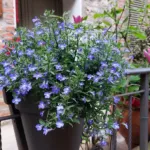
Yes, compact forms of Aster 'Novi Belgii' can grow in containers with drainage holes and evenly moist potting mix. Use a container large enough for the root system and provide winter protection where container roots may freeze severely.
Should I mulch Aster 'Novi Belgii' in winter?⌄
Apply a light mulch layer around Aster 'Novi Belgii' in fall to moderate soil temperature and conserve moisture. Keep mulch away from the crown and avoid heavy, wet coverings that could promote rot.
✂️Propagation and pruning
How do I propagate Aster 'Novi Belgii' by division?⌄
Divide Aster 'Novi Belgii' in spring by lifting the clump and separating vigorous young shoots with healthy roots. Replant the divisions promptly at the original depth and keep them evenly moist while they establish.
Can Aster 'Novi Belgii' be grown from seed?⌄
Yes, the species can be propagated from seed, although seedlings may vary in flower color, height, and habit. Named cultivars are usually propagated vegetatively when their characteristics need to be preserved.
Can I propagate Aster 'Novi Belgii' from cuttings?⌄
Yes, Aster 'Novi Belgii' can be propagated from softwood or basal cuttings taken during active growth. Keep the cuttings in a clean, evenly moist rooting medium with bright, indirect light until roots form.
⚠️Toxicity and safety
Is Aster 'Novi Belgii' toxic to dogs or cats?⌄
No significant toxicity is documented for Aster 'Novi Belgii'. Nevertheless, pets and children should not be encouraged to eat ornamental plants, and any concerning symptoms after ingestion warrant veterinary or medical advice.
Is Aster 'Novi Belgii' deer resistant?⌄
Aster 'Novi Belgii' is often considered relatively deer resistant, but deer may browse it when preferred food is scarce. Protection may still be needed in areas with heavy deer pressure.
🌸Flowering and special interest
When does Aster 'Novi Belgii' bloom?⌄
Aster 'Novi Belgii' typically blooms from late summer into fall, often from August through October in temperate parts of the United States. Bloom timing varies with climate, cultivar, and growing conditions.
What color flowers does Aster 'Novi Belgii' have?⌄
Flowers of Aster 'Novi Belgii' may be violet-blue, purple, pink, or white with a yellow central disk. The exact color depends on the plant’s cultivar or seed source.
Why is my Aster 'Novi Belgii' not flowering?⌄
The most common causes are insufficient sun, excessive nitrogen, drought stress, or a plant that is still establishing. Move or thin surrounding plants if necessary, keep the soil evenly moist, and avoid heavy nitrogen feeding.
Does Aster 'Novi Belgii' attract pollinators?⌄
Yes, the flowers of Aster 'Novi Belgii' attract bees, butterflies, and other insect pollinators during the late-season flowering period. It is especially useful when fewer garden plants are still blooming.
Is Aster 'Novi Belgii' good as a cut flower?⌄
Yes, Aster 'Novi Belgii' is useful as a cut flower because its daisy-like blooms provide late-season color in arrangements. Cut stems when flowers are beginning to open and place them in clean water promptly.