
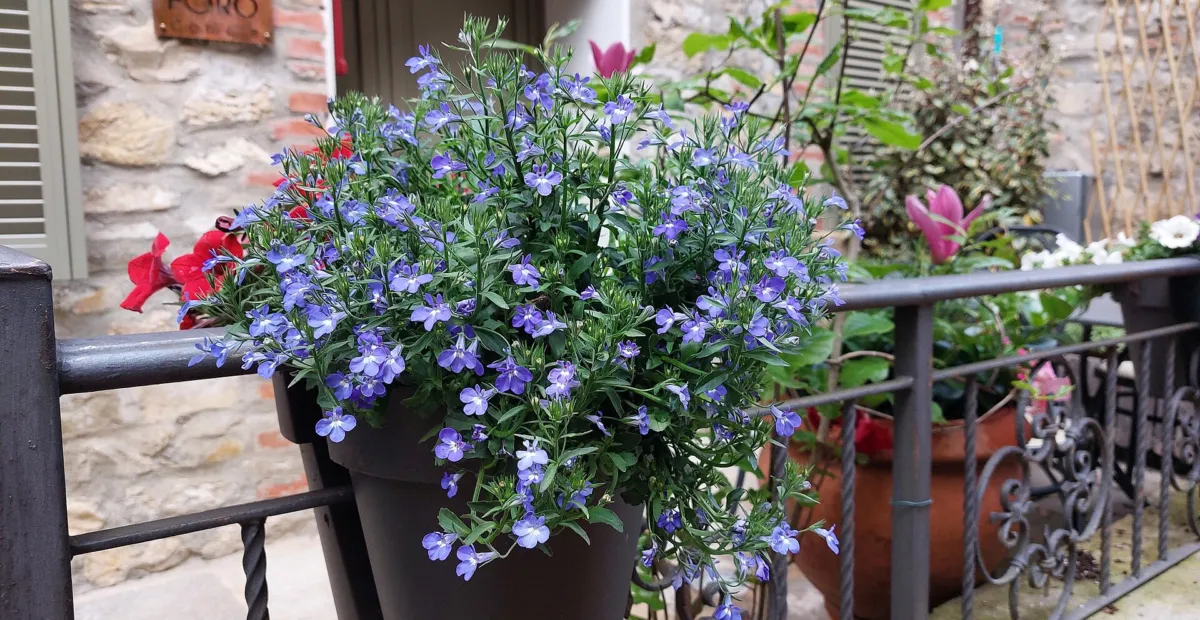
 Source:
 Aster ageratoides short overview
Aster ageratoides is a late-blooming, East Asian perennial valued for its branched habit, dark green toothed leaves, and clusters of violet-blue flower heads with yellow centers. It forms a durable clump in a sunny or lightly shaded border and performs best in moderately fertile, well-drained soil that does not remain waterlogged. In U.S. gardens, it can extend seasonal color into autumn and works well in informal plantings or containers.
Taxonomic classification
Aster ageratoides care guide
Light and placement
Grow in full sun for the strongest flowering, or in partial shade where summers are hot. An east- or south-facing border with morning or filtered afternoon light is suitable. Too little light can produce stretched stems and fewer flower heads; intense reflected heat combined with drought may scorch foliage and shorten bloom quality.
Watering and humidity
Water deeply when the upper inch of soil begins to dry during the growing season, rather than applying frequent shallow sprinkles. Keep new plantings evenly moist through establishment, then adjust to rainfall and soil type. Reduce watering after dormancy, but do not allow container plants to become completely dry for long periods.
Soil and growing medium
Use moderately fertile soil with reliable drainage. Loam, sandy loam, or improved clay is suitable if excess water can escape. The species is reported across acid, neutral, and alkaline conditions, so extreme pH correction is usually unnecessary; prioritize structure, drainage, and organic matter rather than a narrowly targeted pH.
Feeding
In spring, incorporate a modest amount of finished compost or apply a balanced slow-release perennial fertilizer according to the product label. Avoid heavy nitrogen feeding, which can produce soft, leafy growth and weaker stems. Do not fertilize drought-stressed, newly divided, or dormant plants until active growth resumes.
Growth and habit
This perennial develops a durable crown and an upright, branched flowering framework. It can become visually dense when established, so thinning crowded clumps and dividing them periodically improves airflow and keeps neighboring plants from being overwhelmed. Staking is usually unnecessary in a well-lit, moderately fertile site.
Planting and repotting
Plant in spring or early fall, setting the crown at soil level. Space plants about 18–24 inches apart to allow the clump and flowering stems to develop without excessive crowding. Water deeply after planting and maintain consistent moisture during the first growing season; mulch lightly, keeping it away from the crown.
Repot container-grown plants in spring when roots fill the pot or the crown becomes crowded. Use a loam-based, well-drained potting mix and a container with drainage holes. Replant at the same depth, water thoroughly, and keep evenly moist while the divisions or transplant re-establish.
Propagation and pruning
Propagation
Divide established clumps in spring, or root softwood basal cuttings in spring. Seed propagation is possible, but offspring may vary because the species is polymorphic and cultivated material may represent selected forms. Keep new divisions and cuttings evenly moist until rooted.
Pruning
Deadhead spent flower heads if self-seeding or a tidier appearance is desired. After flowering, cut the stems close to ground level in late fall or leave them standing through winter for structure and insect cover, then remove old growth before spring emergence.
Overwintering
Plants in suitable climates can remain outdoors in the ground. After frost, cut back dead stems or leave some standing until late winter for habitat value. In colder regions or exposed containers, protect the crown with a light mulch and move pots to a sheltered location so roots are not repeatedly frozen and thawed.
Uses
Use Aster ageratoides in mixed perennial borders, informal gardens, late-season displays, containers, and as a cut flower. Its autumn flower heads can contribute nectar and pollen resources for visiting insects. It has no established culinary use in this profile, and unsupported medicinal claims should be avoided.
Appearance
The plant has a herbaceous, clump-forming structure with upright, finely grooved and often rough stems. Middle stem leaves are dark green, lance-shaped, toothed, and commonly marked by three prominent veins; upper leaves become progressively smaller. Branched clusters of daisy-like heads are the principal identification feature.
Flowering
Flower heads are composed of violet-blue ray florets surrounding yellow disk florets and are carried in branched clusters on upright stems. Blooming is concentrated in late summer and autumn, with the display sometimes continuing into early winter in mild climates. Individual plants and forms can vary in flower color and flowering duration.
Pollination and visitors
The open flower heads provide accessible central disk florets and are visited by a range of insects, including bees, bumblebees, hoverflies, and butterflies. The strongest garden value is as a late-season floral resource; the exact visitor community depends on local insect abundance and competing blooms.
Aster ageratoides photos
Click any photo for a larger view. Source, author and license are shown separately.
Diseases and pests
Diseases
Provide good air circulation and avoid prolonged wetness on foliage to reduce powdery mildew and gray mold risk. Verticillium wilt may occur in susceptible aster plantings. Remove badly affected tissue, discard diseased debris, and avoid repeatedly planting asters in contaminated soil; fungicides are generally secondary to sanitation and site management.
Pests
Slugs and snails may damage young foliage. Aster-associated leaf and bud eelworms are also reported. Inspect plants regularly, remove heavily damaged tissue, improve sanitation, and reduce hiding places for slugs; use locally approved controls only when necessary.
Related diseases and pests
Only Plant Doctor profiles whose host data indicate this plant may be affected are shown here.


Toxicity and pollen
No reliable species-specific evidence establishing human or pet toxicity was located in the reviewed authoritative horticultural sources. Avoid treating this absence as proof of complete safety: do not ingest unidentified plant material, and monitor for skin or digestive reactions after handling or accidental consumption.
- Typical season
- Late summer through fall in the United States
- Pollination / pollen
- Insect-associated floral pollen
Asters release pollen from the disk florets, but species-specific airborne-allergy data for Aster ageratoides are limited. Because the flowers are primarily insect-visited, exposure may be lower than for strongly wind-pollinated plants, but sensitive people should still avoid handling flowering stems when symptomatic and reduce direct contact with flowers.
Native habitat
The species is native across temperate and montane parts of East Asia, including China, Korea, Japan, Taiwan, the Russian Far East, the Himalaya, and parts of Indochina. It occurs in temperate habitats and is associated with open, semi-shaded, roadside, forest-margin, and mountainous settings depending on the variety.
Interesting fact
The species has a broad East Asian distribution extending from the Himalaya and China through Japan, Korea, Taiwan, and parts of Southeast Asia. It is notably polymorphic, which has led to many named varieties and forms. Its late flowering helps extend color after many summer perennials have finished.
Frequently asked questions (FAQ)
The most relevant questions about this plant, with short and direct answers.
🌱Quick care
What is Aster ageratoides?⌄
Aster ageratoides is a clump-forming herbaceous perennial in the Asteraceae family. It produces toothed, lance-shaped foliage and clusters of violet to purple, yellow-centered flowers in late summer and fall.
How big does Aster ageratoides get?⌄
Aster ageratoides commonly reaches about 2.5 to 3 feet tall and wide, although size varies among forms and cultivars. Give it enough room to develop a rounded clump without crowding neighboring plants.
Is Aster ageratoides the same as an annual China aster?⌄
No, Aster ageratoides is a perennial species, whereas China aster is an annual commonly classified as Callistephus chinensis. They are related members of the daisy family but have different life cycles and cultivation uses.
🌤️Environment and placement
How much sun does Aster ageratoides need?⌄
Aster ageratoides grows best in full sun but also tolerates partial shade. Plants usually flower most heavily when they receive several hours of direct sunlight each day.
What type of soil is best for Aster ageratoides?⌄
Use moderately fertile, well-drained soil for Aster ageratoides, including loam, sandy soil, or improved clay. It can tolerate acidic, neutral, or alkaline conditions, but prolonged winter wetness can damage the roots.
Can Aster ageratoides grow in partial shade?⌄
Yes, Aster ageratoides can grow in partial shade. Expect fewer flowers and potentially weaker stems than plants grown in full sun, especially where afternoon light is limited.
Is Aster ageratoides hardy in the United States?⌄
Aster ageratoides is a hardy perennial, but winter survival depends on the local climate, drainage, and the plant’s particular form or cultivar. In colder regions, excellent drainage and a protective mulch layer can improve overwintering.
💧Care and problems
How often should I water Aster ageratoides?⌄
Water Aster ageratoides moderately, keeping the soil evenly moist while the plant establishes. After establishment, water when the surface begins to dry, with extra attention during hot or prolonged dry weather.
Should I fertilize Aster ageratoides?⌄
Aster ageratoides usually needs only modest fertilization in moderately fertile soil. If growth is weak, apply a balanced, slow-release fertilizer in spring according to the product label, avoiding excessive nitrogen that can produce leafy growth and fewer flowers.
Should I deadhead Aster ageratoides?⌄
Deadheading Aster ageratoides is optional rather than essential. Remove spent flower heads to improve appearance and possibly extend flowering, or leave them in place for late-season structure and wildlife value.
Does Aster ageratoides need staking?⌄
Aster ageratoides may need support if it is grown in rich soil, receives insufficient light, or becomes tall and crowded. Planting it in full sun and avoiding excess fertilizer generally helps produce sturdier stems.
What pests affect Aster ageratoides?⌄
Aster ageratoides may be affected by slugs, snails, and leaf or bud eelworms. Inspect new growth regularly, improve air circulation, and remove badly damaged or distorted plant parts when practical.
What diseases affect Aster ageratoides?⌄
Aster ageratoides may experience powdery mildew, gray mold, or wilt diseases. Good spacing, adequate sunlight, well-drained soil, and watering at the soil line can reduce disease-favorable conditions.
🪴Planting and repotting
Where should I plant Aster ageratoides?⌄
Plant Aster ageratoides in a sunny or lightly shaded border, cottage garden, meadow-style planting, or pollinator garden with well-drained soil. It can also be grown in a sufficiently large container with drainage holes.
When is the best time to plant Aster ageratoides?⌄
Plant Aster ageratoides in spring or early fall, avoiding periods when the ground is frozen or waterlogged. Spring planting gives the roots a full growing season to establish before winter.
How do I plant Aster ageratoides?⌄
Plant Aster ageratoides at the same depth as it was growing in its nursery container, then water thoroughly. Space plants according to their mature spread and add a light mulch layer without covering the crown.
Can Aster ageratoides be grown in a container?⌄
Yes, Aster ageratoides can grow in a container if the pot has drainage holes and is large enough for its mature clump. Use a well-drained potting mix and monitor moisture more closely than in garden soil.
✂️Propagation and pruning
When should I cut back Aster ageratoides?⌄
Cut Aster ageratoides back close to the ground in late fall after the foliage has declined. In areas where winter stems provide habitat or visual interest, you can wait until late winter or early spring.
How do I propagate Aster ageratoides?⌄
Propagate Aster ageratoides primarily by division in spring or by softwood basal cuttings taken in spring. Division is especially useful for maintaining the characteristics of a named cultivar.
How often should I divide Aster ageratoides?⌄
Divide established Aster ageratoides clumps about every three to five years, or sooner if the center becomes weak or flowering declines. Replant the vigorous outer sections at the original depth and water them well.
Can Aster ageratoides be grown from seed?⌄
Aster ageratoides can be propagated from seed, but seedlings may not reproduce a named cultivar exactly. Division or cuttings are more reliable when you want plants that match the parent.
⚠️Toxicity and safety
Is Aster ageratoides toxic to dogs or cats?⌄
Species-specific toxicity information for Aster ageratoides was not established in the reviewed sources. Prevent pets from eating unfamiliar plants, and contact a veterinarian or animal poison-control service if ingestion causes symptoms or the plant identity is uncertain.
Is Aster ageratoides safe for people to touch?⌄
No specific contact hazard for Aster ageratoides was established in the reviewed sources. As with many garden plants, wash hands after handling it and avoid consuming any part unless a qualified source has confirmed its edibility.
🌸Flowering and special interest
When does Aster ageratoides bloom?⌄
Aster ageratoides generally blooms from late summer into fall, with flowering sometimes extending toward early winter in mild climates. Exact timing varies with latitude, weather, and the selected cultivar.
What color are Aster ageratoides flowers?⌄
The typical flowers of Aster ageratoides are dark violet to purple with yellow centers. Cultivars may differ in flower color, size, and plant height, so check the named variety when purchasing.
Does Aster ageratoides attract pollinators?⌄
Yes, the daisy-like flowers of Aster ageratoides can provide late-season forage for bees and other flower-visiting insects. Its fall bloom makes it useful in a pollinator border when other plants are finishing.
Why is my Aster ageratoides not flowering?⌄
Insufficient sunlight, excess nitrogen, drought stress, or excessive crowding can reduce flowering in Aster ageratoides. Move or divide the plant only during a suitable planting season, and avoid heavily shaded or waterlogged locations.
Similar plants
 Yellow lantern chili (Capsicum chinense) care guideCapsicum chinense
 Capsicum baccatum care guideCapsicum baccatum
 Serrano (Capsicum annuum ‘Serrano’)Capsicum annuum 'Serrano'
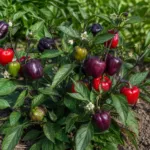 Purple Beauty (Capsicum annuum ‘Purple Beauty’)Capsicum annuum 'Purple Beauty'
 Numex Twilight (Capsicum annuum ‘Numex Twilight’)Capsicum annuum 'Numex Twilight'
 Explosive Ember Chili Pepper (Capsicum annuum ‘Explosive Ember’)Capsicum annuum 'Explosive Ember'