
 Source:
Aster cordifolius short overview
Aster cordifolius is a North American woodland-edge perennial with distinctive heart-shaped leaves and airy clusters of small blue-lavender flower heads. It performs well in bright shade or morning sun, especially in humus-rich, well-drained soil that does not dry sharply. The late-summer to fall display provides useful nectar and pollen for native insects, while the plant’s loose habit suits naturalistic borders, woodland margins and pollinator gardens.
Taxonomic classification
Aster cordifolius care guide
Light and placement
Grow in bright filtered light, partial shade or gentle morning sun; an east-facing border or open woodland edge is ideal. In hot climates, shelter from intense afternoon sun. Too little light may produce sparse stems and reduced flowering, while excessive sun combined with dry soil can cause wilting, leaf scorch and premature decline.
Watering and humidity
Water deeply when the upper inch of soil begins to dry during the first season, aiming for steady moisture rather than frequent shallow watering. Established plants need less irrigation in shaded, organic soil but should not be allowed to remain drought-stressed for long periods. Water at the soil line and improve drainage if roots stay saturated.
Soil and growing medium
Use a humus-rich, loamy soil with reliable drainage. The plant tolerates a range of garden soils but generally performs best where organic matter improves moisture retention without creating saturation. A slightly acidic to neutral reaction is suitable; avoid persistently waterlogged ground.
Feeding
Top-dress with compost in spring. If growth is weak in poor soil, apply a balanced slow-release perennial fertilizer at the label rate as growth begins. Avoid heavy nitrogen feeding, which can produce soft, floppy stems and excess foliage at the expense of a sturdy flowering habit.
Growth and habit
This clump-forming perennial develops upright to arching, branching stems and a relatively open, naturalistic shape. It can look loose after flowering, so selective staking or a light early-season cutback may help in formal borders. Dividing crowded clumps maintains vigor and prevents congested growth.
Planting and repotting
Plant in spring or early fall when soil can be worked. Set the crown at the same depth as in its nursery pot. Space plants about 18–24 inches apart to allow the branching habit to develop while still creating a natural mass. Water consistently during the first growing season.
Container-grown plants can be moved in spring or early fall. Repot only when roots fill the container, shifting to a pot just one size larger with a moisture-retentive but well-drained perennial mix. Water thoroughly after transplanting and protect the root ball from drying during establishment.
Propagation and pruning
Propagation
Propagate from seed or by division. Sow fresh seed outdoors in fall or provide cold, moist stratification before spring sowing; germination can be uneven. Divide established clumps in spring or early fall, retaining healthy roots and several shoots per section. Water divisions until actively growing.
Pruning
Cut stems back after flowering or in late winter before new growth begins. A light early-summer trim can encourage shorter, more branched plants, but excessive late-season pruning may reduce the flower display. Remove diseased foliage promptly and clear dead stems if a tidier appearance is desired.
Overwintering
Plants in Zones 4–8 generally overwinter outdoors without special protection. Leave a small amount of standing top growth over winter for structure and habitat, then cut it back before spring growth resumes. In exposed containers, insulate the pot or move it to a sheltered location because roots are less protected above ground.
Uses
Useful in woodland borders, native plantings, naturalistic beds and pollinator gardens. Its airy flower clusters combine well with ferns, goldenrods and other late-season perennials. It is primarily ornamental and ecological; no culinary or medicinal use is recommended without separate authoritative evidence.
Appearance
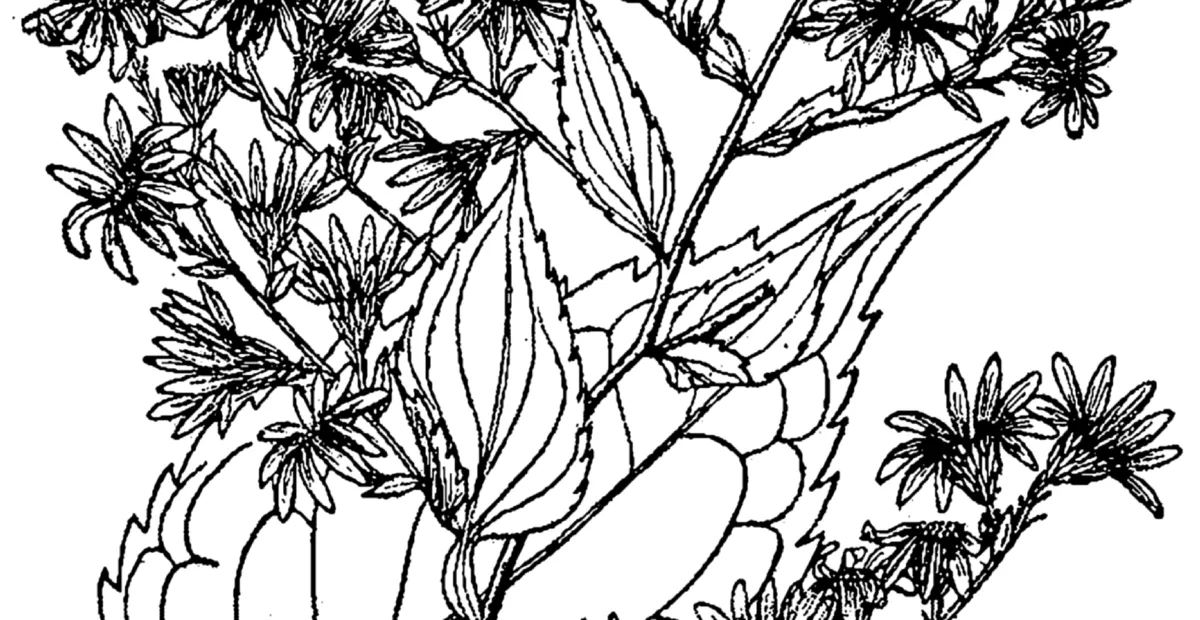
Leaves are broadly heart-shaped to ovate, with pointed tips and toothed margins. Stems branch toward the top and carry open sprays of small composite flower heads. The combination of cordate foliage, airy branching and blue-lavender rays is useful for distinguishing this plant from more narrow-leaved asters.
Flowering
Small daisy-like flower heads are carried in loose, branching clusters from late summer into fall. The rays are typically blue to lavender around yellow disk florets, and flowering stems become airy as the season progresses. Removing spent stems after bloom can improve appearance and limit unwanted self-sowing.
Pollination and visitors
The flower heads are documented as resources for bees and other insect visitors, and the plant is associated with specialist Andrena and Colletes bees through its genus-level ecological relationships. It also serves as a host plant for the pearl crescent butterfly.
Diseases and pests
Diseases
Usually trouble-free when grown with good air circulation. Watch for powdery mildew or leaf-spot symptoms during humid weather. Improve spacing, avoid wetting foliage late in the day, remove badly affected leaves and clear plant debris in fall. Persistent problems may indicate excessive shade, crowding or poor airflow.
Pests
Monitor for aphids, leafhoppers and occasional chewing damage from caterpillars. Encourage beneficial insects, use a strong water spray for light aphid infestations and avoid broad-spectrum insecticides during bloom. Remove heavily damaged foliage only when necessary.
Related diseases and pests
Only Plant Doctor profiles whose host data indicate this plant may be affected are shown here.


Toxicity and pollen
No reliable authoritative evidence was located establishing significant human or companion-animal toxicity for this species. Normal plant-handling precautions are appropriate: do not consume unidentified plant material, and monitor for individual skin or digestive sensitivity. The absence of documented toxicity should not be treated as proof of edibility.
- Typical season
- Late summer through fall
- Pollination / pollen
- Insect-presented pollen
As an insect-pollinated aster, its pollen is mainly presented within flower heads rather than released in large windborne clouds. Airborne exposure is therefore generally lower than for wind-pollinated plants, but the species should not be described as allergy-free; sensitive people may still react to contact or nearby flowering plants.
Native habitat
Native to eastern and central North America, where it occurs in open woods, woodland margins, thickets and other partly shaded habitats. It favors soils with organic matter and regular but not stagnant moisture, although established plants can tolerate moderately drier conditions in shade.
Interesting fact
The species has historically been treated in the broad genus Aster but is commonly separated into Symphyotrichum in modern North American taxonomy. Its heart-shaped leaves help distinguish it from several narrow-leaved asters. Late-season blooms extend floral resources when many summer perennials are fading.
Frequently asked questions (FAQ)
The most relevant questions about this plant, with short and direct answers.
🌱Quick care
Is Aster cordifolius a perennial?⌄
Yes, Aster cordifolius is a cold-hardy herbaceous perennial that dies back in winter and regrows from its crown in spring.
How large does Aster cordifolius get?⌄
Aster cordifolius typically grows about 1 to 4 feet tall and 1.5 to 2 feet wide, depending on light, moisture, and soil conditions.
What is the best light for Aster cordifolius?⌄
Bright shade, dappled light, or partial sun is best for Aster cordifolius. It can tolerate deeper shade, but flowering is usually better with some morning or filtered sun.
🌤️Environment and placement
Where should I plant Aster cordifolius?⌄
Plant Aster cordifolius in a woodland garden, shaded border, woodland edge, or other site with filtered light and well-drained soil. Protect it from intense direct afternoon sun, especially in hot climates.
What type of soil does Aster cordifolius need?⌄
Aster cordifolius grows best in humus-rich, well-drained loam that stays moderately moist during establishment. It can tolerate average or somewhat dry soil once established, but poor drainage should be avoided.
Can Aster cordifolius grow in full shade?⌄
Aster cordifolius can survive in full shade, but it may become more open and produce fewer flowers. Filtered light or a few hours of gentle morning sun generally gives a better display.
Is Aster cordifolius native to the United States?⌄
Yes, Aster cordifolius is native to central and eastern parts of North America, where it commonly occurs in rich woods, woodland margins, and shaded roadsides.
💧Care and problems
How often should I water Aster cordifolius?⌄
Water Aster cordifolius when the soil begins to dry, keeping it evenly and moderately moist while it establishes. Mature plants tolerate some dry periods, but prolonged drought can reduce vigor and flowering.
Does Aster cordifolius need fertilizer?⌄
Aster cordifolius usually does not need regular fertilizer when grown in reasonably fertile, organic-rich soil. A thin layer of compost in spring is generally preferable to heavy feeding.
Why is my Aster cordifolius wilting?⌄
Wilting is most often caused by drought, root stress from poorly drained soil, transplant shock, or disease. Check soil moisture and drainage first, and avoid keeping the roots constantly saturated.
Is Aster cordifolius susceptible to powdery mildew?⌄
Yes, Aster cordifolius can develop powdery mildew, leaf spot, or rust, particularly in crowded or poorly ventilated plantings. Improve air circulation, water at the soil level, and remove badly affected foliage.
Why is Aster cordifolius falling over?⌄
Aster cordifolius may flop when grown in excessive shade, overly rich soil, or crowded conditions. Cutting the stems back by about one-half in early summer can encourage a shorter, more branching plant.
Should I deadhead Aster cordifolius?⌄
Deadheading is optional for Aster cordifolius. Remove spent flower clusters to reduce self-seeding, or leave them in place if you want naturalization and late-season seed for wildlife.
Should I cut back Aster cordifolius in fall?⌄
You can cut Aster cordifolius back after it becomes dormant in late fall or leave the stems through winter. Delaying cleanup provides structure and may leave seeds available for wildlife.
🪴Planting and repotting
When is the best time to plant Aster cordifolius?⌄
Spring or fall is the best time to plant Aster cordifolius in the United States. Planting during cool weather gives the roots time to establish before summer heat or winter dormancy.
How far apart should I plant Aster cordifolius?⌄
Space Aster cordifolius about 18 to 24 inches apart, allowing room for its branching habit and natural spread. Use closer spacing only when a quicker massed appearance is desired.
Can Aster cordifolius be grown in a container?⌄
Aster cordifolius can be grown in a large container with drainage holes and a moisture-retentive but well-drained potting mix. Container plants require more frequent watering and are more exposed to winter temperature swings.
✂️Propagation and pruning
How do you propagate Aster cordifolius from seed?⌄
Collect mature seeds in fall and sow them on or just barely cover them with a well-drained seed-starting mix. Germination guidance varies by source, so a period of cold, moist stratification may improve results even though some seed may germinate without treatment.
Can Aster cordifolius be propagated by division?⌄
Yes, established clumps of Aster cordifolius can be divided in spring as new growth begins. Replant divisions promptly and keep them evenly moist until they recover.
Does Aster cordifolius spread by self-seeding?⌄
Yes, Aster cordifolius can self-seed and may gradually naturalize in suitable conditions. Remove spent flower heads before seed dispersal if you want to keep it contained.
⚠️Toxicity and safety
Is Aster cordifolius toxic to people or pets?⌄
No significant toxicity is documented for Aster cordifolius, and one native-plant source reports no known toxicity. Evidence is incomplete, so prevent children and pets from eating large amounts of any ornamental plant.
Is Aster cordifolius deer resistant?⌄
Aster cordifolius is not reliably deer-proof, although deer may browse it less heavily than highly preferred plants. Protection may be needed in areas with frequent deer pressure.
Does Aster cordifolius attract butterflies and bees?⌄
Yes, Aster cordifolius attracts bees, butterflies, and other pollinating insects when it flowers. It is especially useful in native and woodland-edge gardens that need late-season blooms.
🌸Flowering and special interest
When does Aster cordifolius bloom?⌄
Aster cordifolius generally blooms from late summer into fall, often from August through October depending on the local climate. Its small blue, lavender, or occasionally white flower heads have yellow centers.
Why is my Aster cordifolius not flowering?⌄
Insufficient light, drought, excessive nitrogen, transplant stress, or immature growth can reduce flowering. Move plants toward brighter filtered light and maintain moderate moisture without waterlogging the soil.
Is Aster cordifolius good for pollinators?⌄
Yes, Aster cordifolius provides late-season nectar and pollen for bees, butterflies, and other beneficial insects. Its fall bloom period can help extend food availability after many summer perennials finish.
Can Aster cordifolius be used as a cut flower?⌄
Yes, the branching flower stems of Aster cordifolius can be used in informal cut-flower arrangements. Cut stems when flowers are beginning to open and place them in water immediately.
Similar plants
 Yellow lantern chili (Capsicum chinense) care guideCapsicum chinense
 Capsicum baccatum care guideCapsicum baccatum
 Serrano (Capsicum annuum ‘Serrano’)Capsicum annuum 'Serrano'
 Purple Beauty (Capsicum annuum ‘Purple Beauty’)Capsicum annuum 'Purple Beauty'
 Numex Twilight (Capsicum annuum ‘Numex Twilight’)Capsicum annuum 'Numex Twilight'
 Explosive Ember Chili Pepper (Capsicum annuum ‘Explosive Ember’)Capsicum annuum 'Explosive Ember'