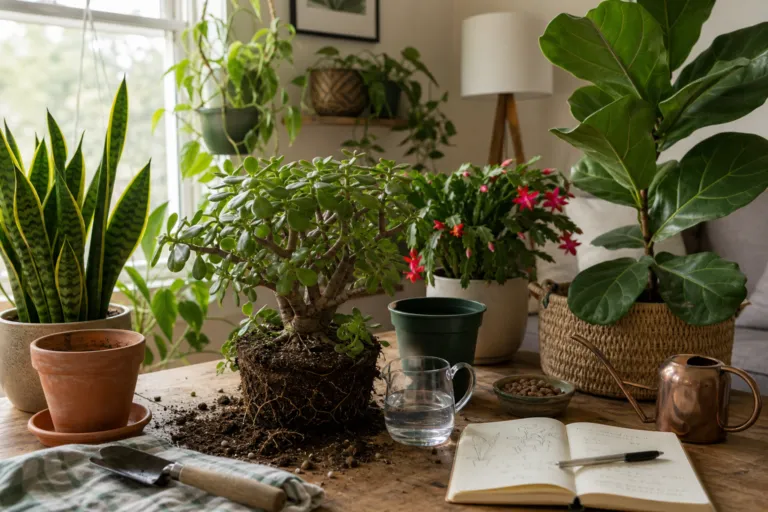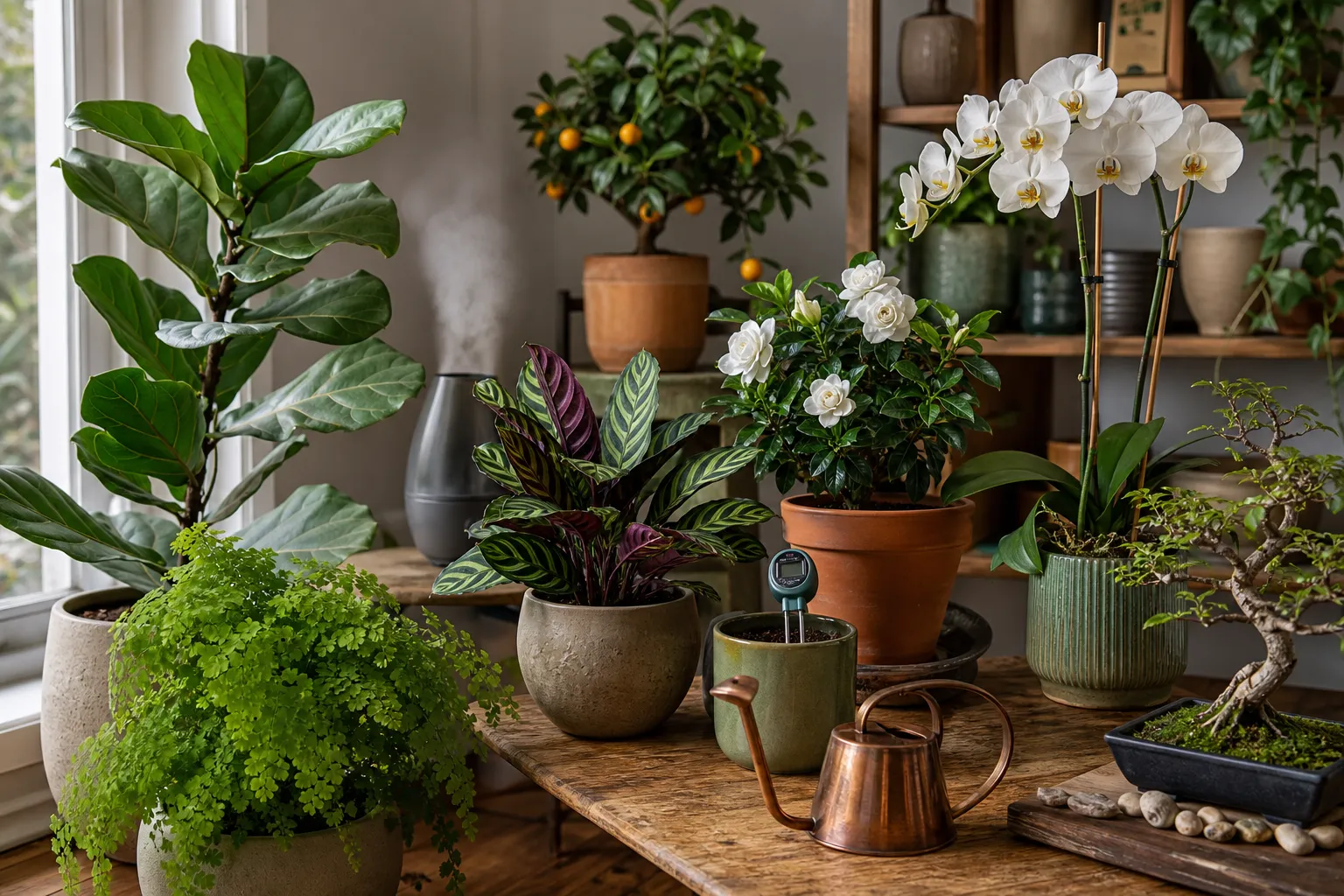
Some houseplants seem determined to test your patience. They arrive from the garden center looking lush and perfect, then respond to an ordinary living room with brown leaf tips, dropped buds, curled leaves, or a sudden shower of fallen foliage.
That does not necessarily mean you have a black thumb. Many “difficult” houseplants are simply specialists. They evolved in humid forests, bright tropical understories, cool mountain habitats, or carefully managed greenhouses. A typical American home—with dry winter air, inconsistent light, heating and air-conditioning vents, and vacation-related watering gaps—can be a challenging substitute.
The good news is that difficulty usually has a reason. Once you understand the plant’s particular demands, you can decide whether to adjust your home, choose a more forgiving variety, or enjoy the plant as a short-term seasonal project rather than a permanent fixture.
What makes a houseplant difficult?
The hardest indoor plants usually have a narrow comfort zone. They may need several conditions to line up at once: bright but filtered light, steady moisture, high humidity, excellent drainage, stable temperatures, and the right potting mix.
Watering is especially deceptive. Two plants in the same room can need completely different treatment. A plant in a small terracotta pot may dry out in a few days, while one in a large plastic container can remain wet for weeks. Light, pot size, room temperature, humidity, root health, and soil texture all affect how quickly water disappears.
Instead of following a calendar, check the soil. Push your finger about 2 inches into the mix, or use a moisture meter as a secondary guide. When you water, soak the mix thoroughly until excess water drains from the bottom, then empty the saucer.
1. Maidenhair fern: delicate leaves, demanding roots
Maidenhair fern is one of the most beautiful indoor ferns—and one of the least forgiving. Its small, fan-shaped leaflets create a soft, airy effect, but the plant can collapse quickly when its roots dry out or the air becomes too dry.
Why it struggles indoors
- It prefers evenly moist soil and reacts badly to repeated drying.
- Winter heating can push household humidity far below what tropical ferns prefer.
- Direct sun can scorch the delicate foliage, while dim light produces weak growth.
- Waterlogged soil can suffocate roots, so “keep it moist” does not mean “keep it soggy.”
Place it near an east- or north-facing window with bright, indirect light. A bathroom with a window may work well, provided the room does not become cold. A small humidifier is generally more dependable than occasional misting, which raises humidity only briefly.
During a trial at home, measure rather than guess: check the top 2 inches of soil every morning for a week and record how quickly it dries. In a heated room, you may find that a small pot needs attention every 2 to 4 days, while a larger container stays moist for a week or more. Treat that as information about your room—not a universal schedule.
2. Calatheas and prayer plants: the “Goldilocks” group
Calatheas, including plants sold as rattlesnake plant, peacock plant, and network plant, are prized for patterned leaves and evening leaf movement. They can thrive indoors, but only when several details are “just right.”
What makes them fussy?
Calatheas dislike both extremes. Their soil should stay evenly moist, but the roots need air. The light should be bright enough for growth, but direct afternoon sun can bleach or scorch the leaves. Dry air often causes brown edges, while cold drafts may damage foliage quickly.
Keep the plant away from radiators, forced-air vents, exterior doors, and cold window glass. Aim for a warm, stable spot with bright filtered light. Kitchens and bathrooms can be useful locations when they also provide enough light.
Different varieties are not equally demanding. A richly patterned variety with thin leaves may show stress sooner than a tougher, thicker-leaved cultivar. If you are comparing several types, begin with one plant rather than filling a room with the same challenge.
- Water when the upper layer begins to dry, but do not let the root ball become bone-dry.
- Use a loose, well-drained potting mix.
- Increase humidity with a humidifier or plant grouping rather than relying on constant misting.
- Reduce watering during short, dim winter days, when the soil dries more slowly.
3. Gardenia: a flowering plant with greenhouse expectations
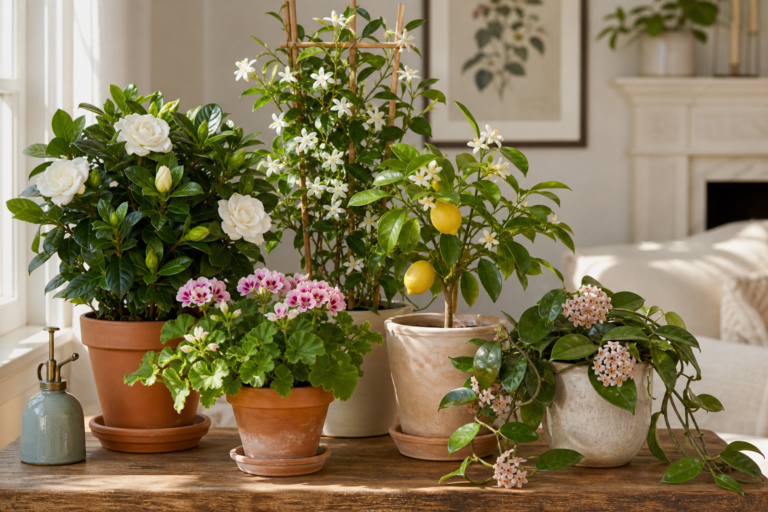
Gardenia offers glossy foliage and intensely fragrant white flowers, but it often performs better as a carefully managed project than as a casual windowsill plant.
It wants bright light without harsh, hot sun; steady moisture without standing water; high humidity; acidic potting mix; and stable temperatures. Sudden changes can cause flower buds to drop before they open. Dry air and hot rooms are particularly troublesome during winter.
How to give gardenia a fair chance
- Place it in the brightest practical window, filtered from strong afternoon sun.
- Keep the potting mix consistently moist, but never leave the container sitting in water.
- Use a potting mix formulated for acid-loving plants.
- Protect it from furnace vents and temperature swings.
- Use a humidifier if winter air is very dry.
Water quality can also matter. In areas with hard water, mineral buildup may gradually affect the root environment. If your gardenia repeatedly develops yellow leaves despite good light and correct watering, consider testing your water or using rainwater where practical and safe.
Gardenia varieties can differ in size and flowering habit. Compact cultivars may fit a bright apartment window more naturally than vigorous plants that quickly outgrow the space. Buy the healthiest plant you can find, not simply the one with the most open flowers.
4. Orchids: easy species exist, but not every orchid is easy
“Orchid” is not a single care category. A common moth orchid can adapt to many homes, while orchids that demand very high light, cool nights, constant humidity, or precise seasonal changes can be genuinely difficult.
For beginners, moth orchids are usually a sensible starting point. Give them bright, indirect light, a well-aerated bark-based mix, and a chance to dry slightly between waterings. Their roots need oxygen as much as they need moisture.
Common orchid mistakes
- Leaving the plant in a decorative pot filled with stagnant water.
- Using dense, ordinary potting soil that excludes air from the roots.
- Keeping the plant in a dark room and expecting it to rebloom.
- Watering by adding a small splash every day instead of soaking and draining properly.
Try a measured watering experiment with one orchid. Weigh the pot after watering, then weigh it again every day until it feels substantially lighter. You will see how much longer moisture remains in the mix during winter compared with the brighter, warmer growing season. This is more useful than copying a rigid “ice cube” or weekly watering routine.
Compare a moth orchid with a slipper orchid if you enjoy experimentation. Both can succeed indoors, but they differ in light and moisture preferences. Choosing the orchid for your available window is more reliable than choosing only by flower color.
5. Fiddle-leaf fig: dramatic, large, and sensitive to change
Fiddle-leaf figs are often described as difficult because they can drop leaves after a move, a light change, or an abrupt shift in watering. Their reputation is partly deserved—but consistency solves many problems.
These plants need strong indoor light, preferably close to a bright window. A dim corner may keep a small plant alive for a while, but it rarely supports dense, attractive growth. Rotate the container occasionally so the plant develops evenly, but avoid moving it repeatedly from room to room.
The real challenge is consistency
- Do not let the root ball become extremely dry and pull away from the pot.
- Do not keep the soil constantly wet.
- Use a container with drainage holes.
- Keep the plant away from cold drafts and heating or cooling vents.
- Introduce it gradually to outdoor light if you move it outside for summer.
Brown spots can have several causes, including watering problems, root stress, or leaf damage. Do not diagnose a single cause from one symptom. Check the soil, roots, drainage, light, and recent changes together.
6. Indoor citrus: a tree that wants more sun than most rooms provide
Lemon, lime, calamondin, and other citrus plants can be grown in containers, but fruiting indoors is a different challenge from simply keeping the foliage alive.
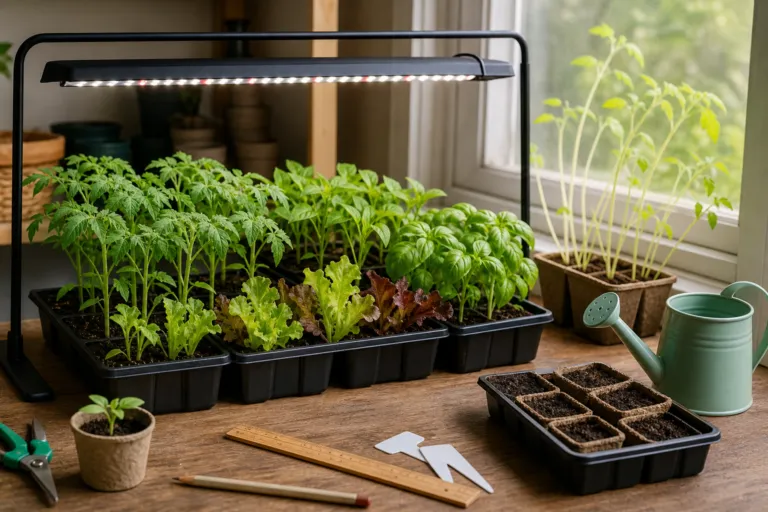
Citrus generally needs very bright light, steady watering, good drainage, and enough space for a woody plant. A sunny south-facing window may help, but many homes still require supplemental grow-light support during short winter days.
Indoor citrus also faces a seasonal mismatch. Winter rooms are warm enough for growth but often too dim, while outdoor summer conditions provide abundant light but can expose the plant to sudden sun, wind, and pests. If you move citrus outdoors, acclimate it gradually over one to two weeks.
Choose a compact, grafted cultivar rather than starting with a large, vigorous tree. Calamondin is often grown as a container plant, while lemons and limes can become demanding because of their size, light needs, and sensitivity to cold. Fruit may be slow to develop, and flowering can be inconsistent indoors.
7. Bonsai: difficult because the container leaves little room for error
Bonsai is not one species but a growing style. Many bonsai fail indoors because they are treated like ordinary houseplants even though their shallow pots contain limited soil, water, and nutrients.
The first question is whether the tree is tropical or temperate. Tropical bonsai may live indoors year-round with strong light and warm temperatures. Temperate trees, such as many junipers and maples, need seasonal outdoor conditions and usually cannot thrive permanently in a heated room.
Small bonsai pots dry rapidly, yet frequent watering does not compensate for poor drainage or low light. Check the soil daily during warm, bright periods and more cautiously in winter. Water thoroughly when needed, allowing the excess to drain freely.
Before buying a bonsai, check three things
- Can you provide the required light without placing it against hot glass?
- Is the species suited to indoor life in your climate?
- Can you monitor moisture more often than once a week?
A practical difficulty test for any houseplant
Before declaring a plant impossible, run a simple two-week observation test. Record the room temperature, approximate humidity, window direction, watering date, and soil condition. Note whether new leaves emerge, old leaves yellow, or the plant changes after watering.
Use these checkpoints:
- Light: Is the plant stretching, leaning, or producing smaller new leaves?
- Water: Is the mix staying wet for many days, or drying almost immediately?
- Humidity: Are leaf edges browning while the soil moisture seems reasonable?
- Temperature: Is the plant near a vent, draft, cold pane, or frequently opened door?
- Roots: Does the pot drain freely, and does the plant smell sour or remain waterlogged?
This approach helps you fix the real problem instead of adding random fertilizer, misting more often, or repotting unnecessarily.
Should you give up on difficult houseplants?
Not at all. Difficult plants can teach you more than forgiving ones because they make the relationship between light, water, air, and temperature visible. The key is to match the plant to your home rather than forcing every plant into the same routine.
If your house is dry in winter, start with a humidity-loving plant only if you can provide a humidifier or a naturally moist room. If your windows are shaded, choose a lower-light species instead of trying to rescue a sun-loving citrus tree. And if you travel often, avoid plants that need constantly even moisture.
The best success story may not be keeping every demanding plant forever. It may be learning which varieties suit your rooms, measuring instead of guessing, and choosing plants that make everyday care feel rewarding rather than stressful.