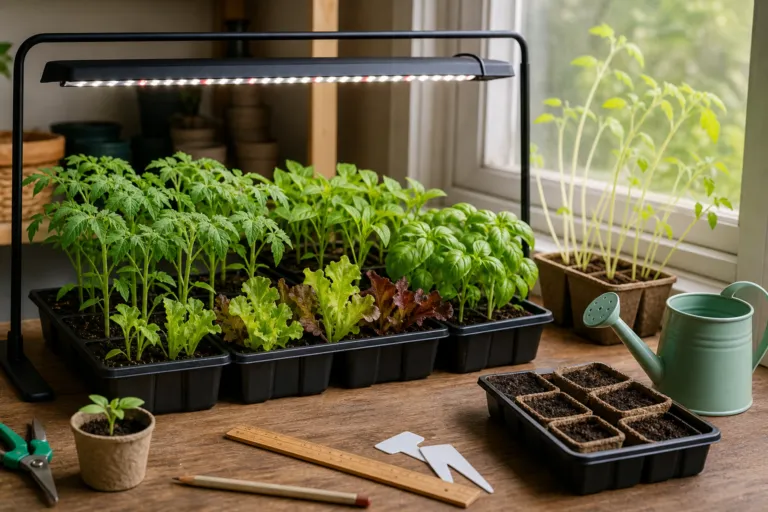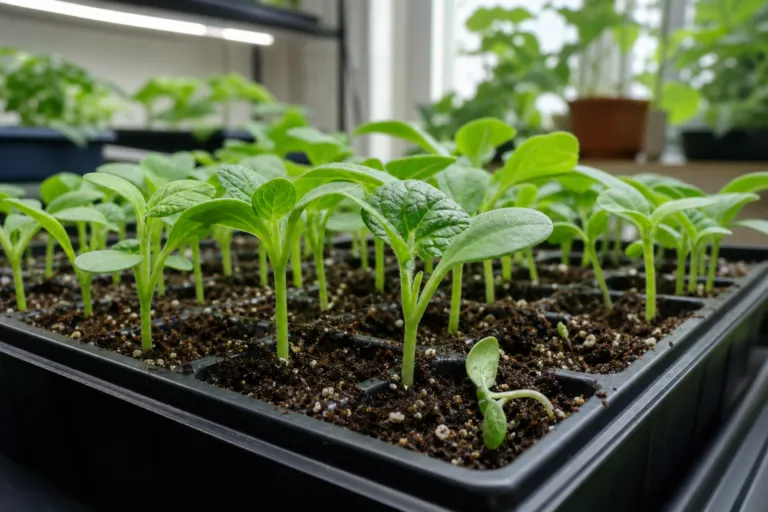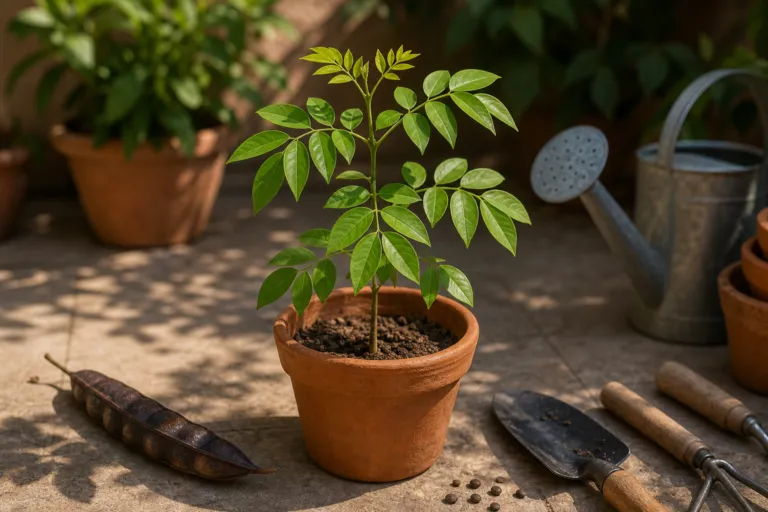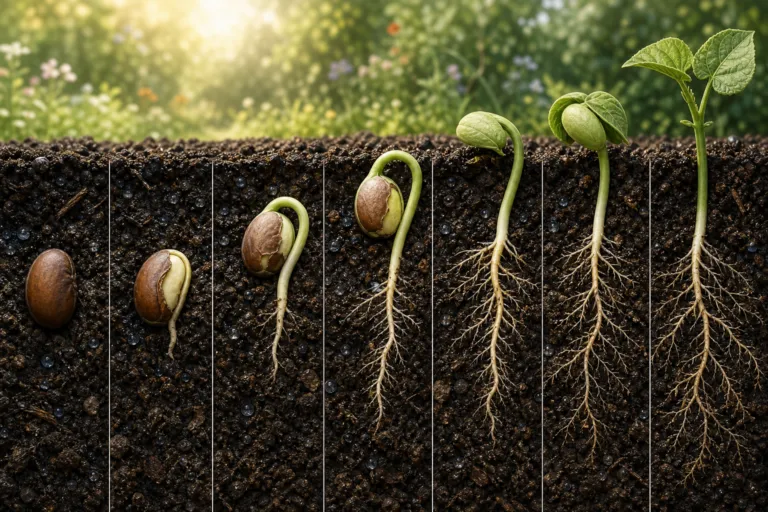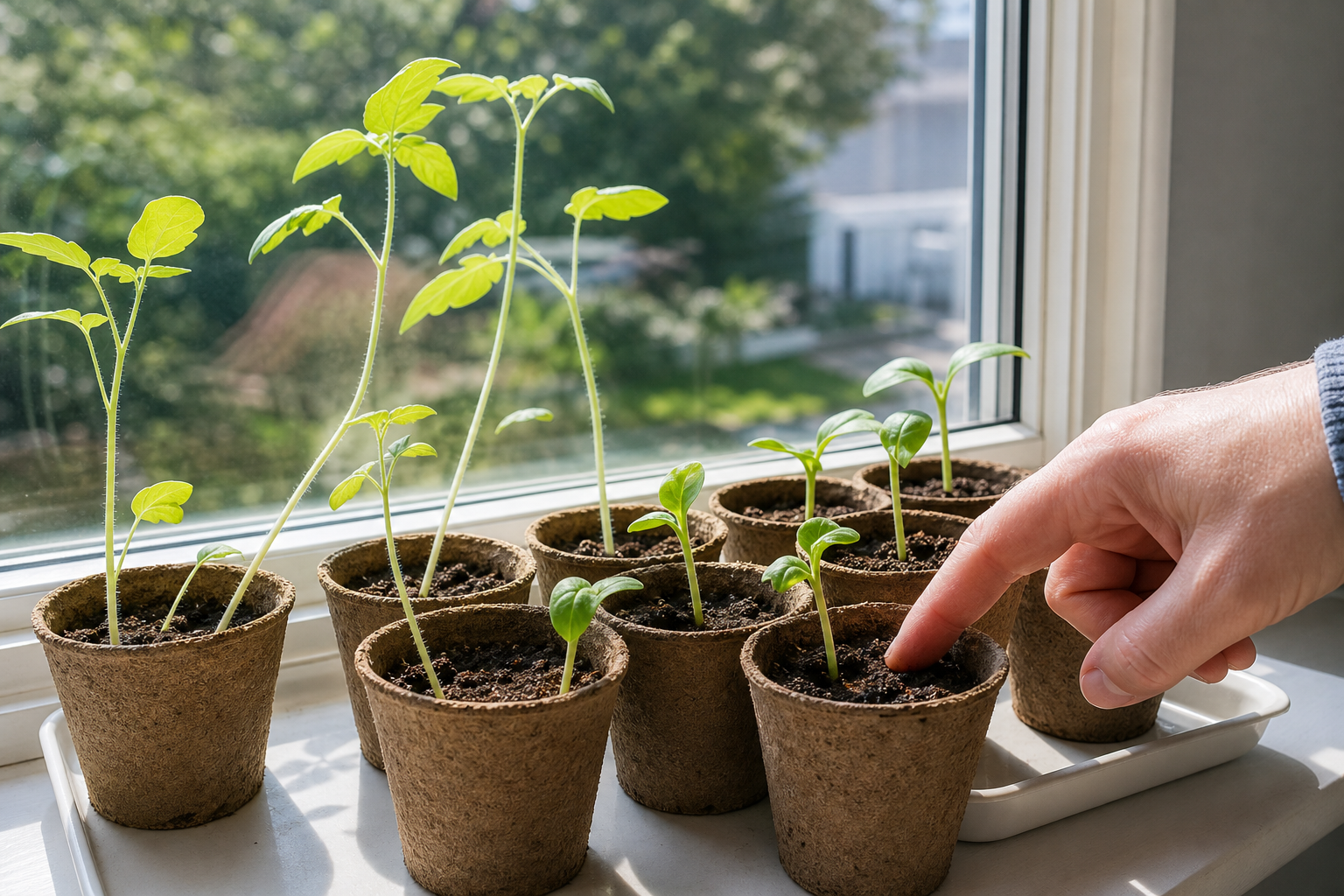
Few gardening moments are more discouraging than checking your seed tray and finding seedlings that look like tiny green fishing poles: long stems, small leaves, and a tendency to lean or flop. The good news is that leggy seedlings are usually giving you a clear message rather than a final verdict. In most cases, they have stretched toward better light, and you can often improve their shape with a few simple changes.
You do not necessarily need an expensive grow-light setup. A brighter window, better timing, gentler watering, improved spacing, and a modest temperature adjustment can make a meaningful difference. Some stretched seedlings can even be planted more deeply when you transplant them, depending on the crop.
What “leggy” really means
A leggy seedling has an unusually long, thin stem compared with the size of its leaves. It may lean toward a window, develop unevenly across the tray, or fall over when the growing medium becomes dry. The botanical term is etiolation, which simply describes growth that becomes elongated when a plant does not receive enough usable light.
Legginess is most common with seedlings started indoors during late winter or early spring, when daylight is short and windows filter or limit the intensity of sunlight. A windowsill may look bright to your eyes but still provide less light than a young plant needs for compact growth.
Before trying to fix the problem, look closely at the seedlings:
- Long, pale stems leaning toward one direction: insufficient or one-sided light is the most likely cause.
- Green but stretched plants with very large gaps between leaves: light is probably weak, and warmth or crowding may be adding to the problem.
- Thin stems with a pinched, discolored base and seedlings falling over: this may be damping-off rather than ordinary legginess. Remove affected plants and improve airflow, drainage, and cleanliness.
- Slow-growing, yellowing seedlings: check light, root-zone moisture, temperature, and whether the seed-starting mix contains any nutrients.
Cause 1: The window is bright, but not bright enough
Low light is the number-one cause of leggy seedlings. Plants naturally stretch toward a light source, putting more energy into stem length than sturdy leaf and root development. This often happens on a north-facing windowsill or several feet back from a south- or west-facing window.
Quick fix: move the tray and use the best part of the day
Place seedlings in the brightest unobstructed window available. In much of the United States, a south-facing window usually offers the strongest indoor daylight, while a west-facing window can also work well. Keep the tray close to the glass, but protect it from cold drafts and avoid letting foliage touch a cold pane.
- Remove sheer curtains, blinds, or nearby objects that block daylight during the brightest hours.
- Turn the tray 180 degrees every day or two so stems do not permanently bend in one direction.
- Keep seedlings where they receive several hours of direct sun, not merely general room brightness.
- Use a white wall, light-colored surface, or simple reflective board behind the tray to redirect some light. Leave space for airflow and avoid trapping heat.
A window may be enough for quick crops such as lettuce, onions, or some herbs, especially when you start them close to their outdoor planting date. Tomatoes, peppers, eggplants, and other warm-season crops usually spend more time indoors and are more likely to stretch if daylight is weak.
Cause 2: You started warm-season crops too early
Even a good window can struggle to support a tomato or pepper seedling that remains indoors for many weeks. Starting seeds too far ahead of your local outdoor planting window gives plants time to outgrow the available light, container space, and natural growth rhythm.
Your seed packet typically gives a recommended number of weeks before transplanting outdoors. Use that guidance together with your local average last spring frost date, remembering that the date is an estimate rather than a guarantee. Cold-sensitive crops should not move outside until weather and soil conditions are suitable.
Quick fix: shorten the indoor waiting period
- Sow tomatoes, peppers, and eggplants closer to the recommended indoor-starting date rather than automatically starting everything in February.
- Start cool-season crops, such as kale, broccoli, lettuce, and cabbage, earlier if your local climate allows, because they can usually tolerate cooler conditions.
- If a tray is already badly stretched, start a second batch at the correct time instead of trying to nurse weak plants for another month.
- Compare the growth of a fast tomato variety with a compact or determinate type. Some varieties naturally produce shorter, sturdier plants at the same age.
As a simple home comparison, sow three tomato varieties on the same day and place them in identical containers on the same windowsill. Record stem height and the number of true leaves after two weeks. You may find that one variety remains compact while another stretches quickly. That difference reflects genetics as well as growing conditions.

Cause 3: Seedlings are too warm for the available light
Warmth speeds plant growth, but it does not create more light. When seedlings sit in a warm room or directly above a radiator, they may grow rapidly while the window supplies too little energy to keep the stems short and strong. This is especially noticeable with warm-season crops in a dim winter room.
Quick fix: match temperature to the crop
Move seedlings away from radiators, heating vents, and hot appliances. Aim for a stable environment rather than dramatic temperature swings. Cool-season seedlings generally prefer cooler conditions than tomatoes, peppers, and basil, while warm-season seedlings need warmth for healthy growth but can still become stretched when light is inadequate.
- Use a basic indoor thermometer near the tray rather than relying on the room thermostat.
- Keep cool-season seedlings in a bright, moderately cool area.
- After germination, avoid placing warm-season seedlings in an excessively hot, dark corner.
- Do not put seedlings outdoors suddenly. Gradually acclimate them to wind, direct sun, and changing temperatures.
Lowering the temperature slightly can slow the pace of growth, but it will not repair a severely elongated stem by itself. Pair the adjustment with the brightest window and careful watering.
Cause 4: Crowding creates a race for light
Seedlings sown too thickly compete for the same narrow band of sunlight. Taller plants shade shorter neighbors, and the shaded seedlings stretch to reach the top of the canopy. Crowding also reduces airflow, which keeps foliage wet longer and can increase the risk of seedling diseases.
Quick fix: thin early and give each plant breathing room
Thin seedlings when they develop their first set of true leaves, or follow the timing recommended for the crop. Keep the strongest, most compact seedlings and snip unwanted plants at the soil surface rather than pulling them and disturbing nearby roots.
- Give each seedling enough space that leaves are not overlapping continuously.
- Separate crowded cells into individual containers when the plants are large enough to handle.
- Rotate the tray so the same plants are not always closest to the window.
- Label varieties before thinning so you can compare growth instead of accidentally mixing them.
In a small trial, sow one cell of lettuce densely and another at the recommended spacing. Keep both cells in the same window and measure the tallest seedling every three days. The crowded cell will often show taller, thinner growth even though both groups receive the same general daylight.
Cause 5: Watering is inconsistent or excessive
Watering does not usually cause legginess on its own, but it can magnify the problem. A stretched stem has less structural strength, so it may collapse after the growing medium becomes extremely dry. Constantly wet soil can also weaken roots, slow growth, and create conditions favorable to damping-off.
Quick fix: water the root zone, not the calendar
Check moisture with your finger rather than watering automatically every morning. For a small cell tray, press a clean finger about 1/2 inch into the surface. If the mix feels moist at that depth, wait and check again later. If it feels dry, water slowly until the mix is evenly moist and a small amount drains from the bottom.
For a practical measurement, weigh one dry, filled container before sowing and write down the number. Water it thoroughly, allow excess water to drain for 10 minutes, and weigh it again. For example, a container might weigh 8 ounces dry and 12 ounces after watering. When it falls near 9 1/2 to 10 ounces and the surface feels dry, it may be ready for another watering. This is an observation tool, not a universal formula; different mixes, crops, and containers dry at different rates.
- Use containers with drainage holes.
- Choose a fine-textured seed-starting mix that holds moisture without staying soggy.
- Water gently with a narrow-spout can, squeeze bottle, or bottom-watering method.
- Empty standing water from trays after the mix has absorbed what it needs.
- Check more often in a sunny, warm window and less often in a cool, dim location.
Can you rescue leggy seedlings?
Often, yes – but the best method depends on the crop. First, correct the growing conditions so new growth develops more compactly. Moving a weak seedling to a brighter window will not shorten the existing stem, but it can prevent continued stretching.
Transplant deeper when the crop allows it
Tomatoes are unusually forgiving. When you transplant them, you can bury part of the stem, leaving the top leaves above the soil. Tomatoes can form additional roots along the buried stem, helping stabilize a tall plant. Remove leaves that would otherwise sit under the soil.
Many other seedlings are less tolerant of deep planting. Peppers, eggplants, cucumbers, squash, lettuce, and most herbs should generally be planted at the same depth they were growing, unless reliable crop-specific guidance says otherwise. Burying a tender stem too deeply can encourage rotting.
Support gently, but do not hide the problem
A small bamboo skewer or plant label can keep a tall seedling upright temporarily. Tie it loosely with soft thread or a strip of paper. Support is only a bridge; the long-term fix is stronger light, appropriate temperature, proper spacing, and consistent moisture.
When it is better to start over
Discard seedlings that have collapsed at the soil line, developed a soft brown stem, or show spreading rot. These symptoms suggest more than simple legginess, and affected plants rarely recover well.
For seedlings that are merely tall and green, give them several days of improved care before deciding. If the stems continue to lengthen, leaves remain pale, or the plants cannot support themselves, reseeding may produce better transplants. Starting over is not a gardening failure; it is often the quickest route to a healthy crop.
A simple no-grow-light recovery plan
- Move the tray to the brightest draft-free window you have.
- Rotate it daily so growth stays balanced.
- Thin crowded seedlings and separate plants whose leaves overlap.
- Move the tray away from radiators and hot vents.
- Check moisture with your finger or a scale instead of watering on a fixed schedule.
- Improve drainage and empty standing water.
- Transplant tomatoes deeper if needed; keep most other seedlings at their original depth.
- Begin hardening off only when plants are healthy and outdoor conditions are appropriate.
Give your seedlings a fair second chance
Leggy seedlings are frustrating, but they are also useful teachers. They show you that light, timing, temperature, spacing, and moisture all work together. You do not have to solve every problem with specialized equipment: a better window, a little observation, and a more carefully timed sowing can dramatically improve the next tray.
Watch for compact new growth, sturdy stems, and leaves that stay a healthy green. With those signs in place, your seedlings are back on the right track – and your garden season can continue with confidence.