
 Source:
 Geranium x magnificum (Geranium magnificum) short overview
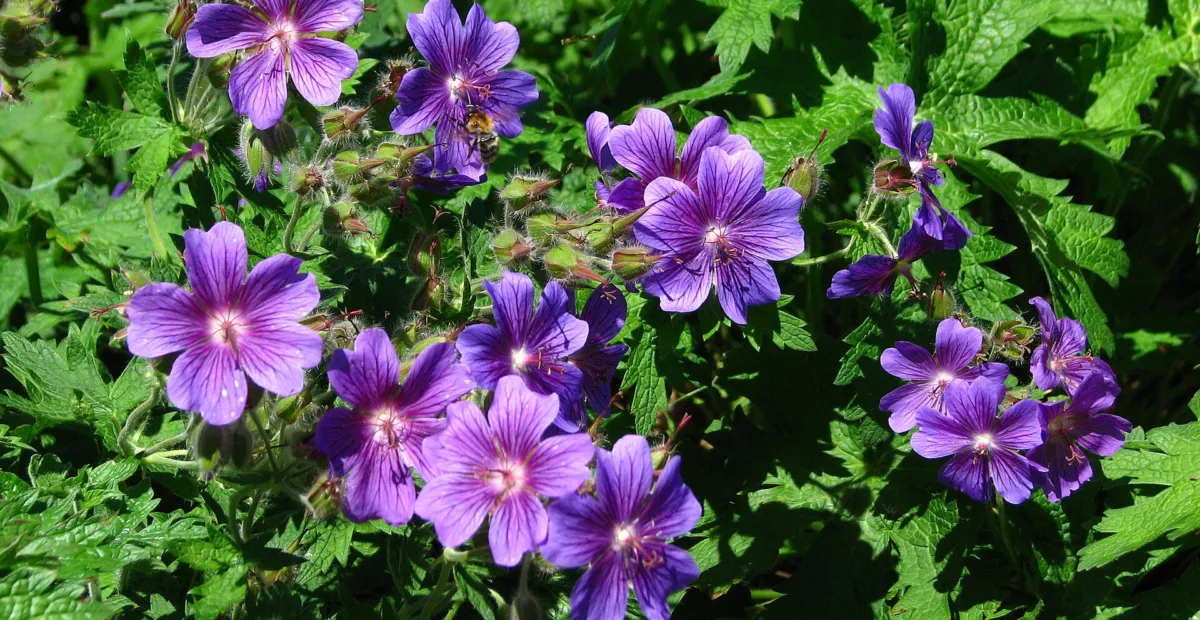
Geranium x magnificum is a hardy, mounding cranesbill hybrid prized for its deeply divided foliage and abundant violet-blue flowers marked with darker veins. The flowers open in late spring to early summer, while the foliage can develop red tones in fall. Give it full sun or partial shade, average moisture, and well-drained soil. This sterile hybrid will not come true from seed, so established clumps are increased by division.
Taxonomic classification
Geranium x magnificum (Geranium magnificum) care guide
Light and placement
Grow in full sun for the strongest flowering and most compact habit; partial afternoon shade is useful in hot U.S. climates. An east- or south-facing bed with good air movement is suitable. Sparse flowering and lanky stems suggest insufficient light, while rapid wilting or scorched foliage can indicate excessive heat, reflected sun, or drought.
Watering and humidity
Water deeply when the upper inch or two of soil begins to dry during establishment, then adjust to weather and soil. Keep moisture reasonably even through spring bloom and hot summer periods, but let excess water drain away. Reduce watering after dormancy or rainfall; container plants dry faster and need more frequent checks.
Soil and growing medium
Use ordinary garden soil that drains freely yet holds moderate moisture. A loam enriched with compost or other well-rotted organic matter supports steady growth, but the plant tolerates many soils provided they are not persistently waterlogged. A slightly acidic to slightly alkaline reaction is acceptable; avoid placing it in stagnant, compacted soil.
Feeding
Apply a thin layer of compost in spring or use a balanced, slow-release perennial fertilizer according to the product label. Heavy feeding is unnecessary and can produce weak, floppy growth. Do not fertilize drought-stressed, newly divided, or dormant plants; water first and resume feeding only after active growth is established.
Growth and habit
Forms a broad, rounded to mounded clump from a perennial crown. The main flowering stems can become lax under heavy bloom or in insufficient light, so group planting, neighboring support, or light staking may improve presentation. Cutting the plant back after flowering encourages fresh basal foliage and a neater second phase of growth.
Planting and repotting
Plant in spring or early fall, setting the crown at the same depth as it was in its nursery pot or original bed. Space plants about 20–30 inches apart to allow the mound to develop without crowding. Water deeply during the establishment season, then mulch lightly while keeping mulch away from the crown.
Container-grown plants can be shifted in early spring, just as new growth begins, or in early fall. Move them into a pot only modestly larger than the root mass and use a moisture-retentive but well-drained multipurpose potting mix. Water thoroughly after transplanting and protect the container from severe winter exposure.
Propagation and pruning
Propagation
Divide established clumps in early spring or early fall, or cut back after flowering and divide while the plant is actively recovering. Lift the clump, separate vigorous crown sections with roots attached, replant promptly, and water well. Because this is a sterile hybrid, seed propagation is not a dependable method.
Pruning
Remove spent flower stems after the main bloom. If the plant becomes floppy or ragged, cut the mound back near the base after flowering; fresh foliage generally returns quickly. Remove old leaves in late season or early spring as new shoots emerge, taking care not to damage the crown.
Overwintering
Leave the dormant crown in the ground outdoors in suitable zones. After frost, remove collapsed stems if desired and apply a light mulch in exposed or very cold locations, keeping it off the crown. Containers are more vulnerable than in-ground plants; place them in a sheltered spot and prevent repeated freeze-thaw drying.
Uses
A reliable ornamental for perennial borders, cottage gardens, informal massing, underplanting, and large containers. Its dense mound can provide seasonal groundcover, while the violet-blue flowers offer documented wildlife interest. It is not supported here for culinary or medicinal use, and it should not be confused with florist geraniums in Pelargonium.
Appearance
The plant forms a dense, rounded mound with upright to spreading, finely hairy stems. Leaves are dark green, palmately divided, and deeply lobed, giving the foliage a lace-like texture. Flower buds and stems are also hairy. In fall, the leaves may shift toward red or reddish-orange before the top growth dies back.
Flowering
Large, saucer-shaped, five-petaled flowers appear in a concentrated flush in late spring and early summer, usually from May into June in much of the United States. Flowering may continue sporadically after the main display if spent stems are removed, but the plant is not generally a continuous bloomer.
Pollination and visitors
The open, nectar-bearing flowers are documented as attracting butterflies and other flower visitors in garden settings. Specific pollinator species are not sufficiently documented here to name one. Remove spent flowers after the main flush if a tidier display is preferred.
Geranium magnificum photos
Click any photo for a larger view. Source, author and license are shown separately.
Diseases and pests
Diseases
Good air circulation and well-drained soil help prevent problems. Watch for powdery mildew or downy mildew during humid, crowded conditions; remove badly affected foliage, water at the soil line, and avoid overhead irrigation. Cut back and discard diseased top growth after flowering rather than composting heavily infected material.
Pests
Slugs and snails may chew young foliage, especially in damp beds. Geranium sawfly larvae can skeletonize leaves, while vine weevil larvae are a concern mainly in containers or nursery production. Inspect foliage and potting mix regularly, remove pests by hand when practical, improve drainage, and use locally approved controls only when damage is significant.
Toxicity and pollen
Reliable sources specifically addressing Geranium × magnificum toxicity were not located. Do not transfer toxicity information for florist geraniums in Pelargonium to this hybrid. As a precaution, discourage ingestion and wash hands after handling; seek professional advice if a person or pet consumes a substantial amount or develops symptoms.
- Typical season
- No specific U.S. exposure season documented
- Pollination / pollen
- Insect-dispersed floral pollen; airborne relevance undocumented
This is an insect-pollinated flowering perennial, but reliable sources specifically measuring airborne pollen production or allergy risk for Geranium × magnificum were not found. The pollen should not be described as allergen-free; people with known pollen sensitivity should use ordinary gardening precautions during bloom.
Native habitat
This cultivated hybrid combines parents associated with western Asian mountain and meadow flora. In gardens it prefers open, temperate conditions, moderately fertile soil, and consistent but not excessive moisture. It is adaptable across many ordinary soils, but waterlogged ground and dense shade weaken growth.
Interesting fact
It is an artificial hybrid rather than a naturally occurring species.
Its parentage is Geranium ibericum × Geranium platypetalum.
The hybrid is sterile and is normally increased by division.
The entire plant, including flower buds, is notably hairy.
Foliage may develop attractive red tones in fall.
Frequently asked questions (FAQ)
The most relevant questions about this plant, with short and direct answers.
🌱Quick care
What is Geranium x magnificum?⌄
Geranium x magnificum is a clump-forming, cold-hardy perennial cranesbill with deeply lobed foliage and rich violet-blue flowers. It is a hybrid of Geranium ibericum and Geranium platypetalum.
How much sun does Geranium x magnificum need?⌄
Geranium x magnificum grows best in full sun to partial shade. In hot climates, afternoon shade can help reduce stress and keep the foliage attractive.
How often should I water Geranium x magnificum?⌄
Water Geranium x magnificum when the top inch of soil begins to dry, keeping the soil moderately moist but never waterlogged. Established plants tolerate some drought, but flowering is usually better with consistent moisture.
Is Geranium x magnificum perennial?⌄
Yes, Geranium x magnificum is a herbaceous perennial that dies back or becomes dormant in colder weather and regrows from the crown in spring.
🌤️Environment and placement
What USDA hardiness zones are suitable for Geranium x magnificum?⌄
Geranium x magnificum is generally suitable for USDA Zones 5 through 8. Local performance can vary with winter exposure, drainage, and the specific plant sold under this name.
What is the best soil for Geranium x magnificum?⌄
Plant Geranium x magnificum in well-drained loam enriched with moderate organic matter. It tolerates a range of soil types and pH levels as long as the site does not remain soggy.
Can Geranium x magnificum grow in partial shade?⌄
Yes, Geranium x magnificum grows well in partial shade, although it generally flowers most heavily with several hours of direct sunlight. Too much shade may produce weaker, floppier stems.
How large does Geranium x magnificum get?⌄
Geranium x magnificum commonly reaches about 18 to 24 inches tall and wide. Flowering stems may spread or flop farther when exposed to heavy rain, wind, or excess shade.
Where should I plant Geranium x magnificum in the garden?⌄
Use Geranium x magnificum in sunny borders, cottage gardens, informal beds, or as an underplanting for shrubs and roses. Give it enough room to form a broad clump without crowding smaller plants.
💧Care and problems
Does Geranium x magnificum need fertilizer?⌄
Geranium x magnificum usually needs little fertilizer when grown in reasonably fertile soil. A light spring application of a balanced, slow-release fertilizer is sufficient if growth is weak.
Why is my Geranium x magnificum flopping?⌄
Geranium x magnificum may flop because of excessive shade, rich soil, strong wind, heavy rain, or the natural weight of its flowering stems. Move it toward more sun, avoid excessive nitrogen, or support the stems discreetly.
How do I stop Geranium x magnificum from becoming leggy?⌄
Prevent legginess by growing Geranium x magnificum in adequate sunlight and trimming it after flowering if the stems become loose or untidy. Cutting back to the basal foliage can encourage a fresh, compact flush of leaves.
What pests affect Geranium x magnificum?⌄
Geranium x magnificum may be damaged by slugs, snails, vine weevil larvae, geranium sawfly larvae, or capsid bugs. Inspect foliage regularly and address the specific pest rather than treating routinely.
What diseases affect Geranium x magnificum?⌄
Geranium x magnificum can occasionally develop powdery mildew or downy mildew, especially in crowded or poorly ventilated conditions. Improve air circulation, avoid wetting the foliage, and remove badly affected leaves.
Is Geranium x magnificum drought tolerant?⌄
Geranium x magnificum has some drought tolerance once established, but it grows and flowers more reliably with moderate moisture. Water deeply during prolonged heat or dry weather.
🪴Planting and repotting
When is the best time to plant Geranium x magnificum?⌄
Plant Geranium x magnificum in spring or early fall when temperatures are mild and soil moisture is dependable. Fall planting should be done early enough for roots to establish before the ground freezes.
How far apart should I plant Geranium x magnificum?⌄
Space Geranium x magnificum about 18 to 24 inches apart to allow each clump to mature. Use wider spacing where airflow is limited or the soil is especially fertile.
Can Geranium x magnificum grow in a container?⌄
Yes, Geranium x magnificum can grow in a container with drainage holes and a well-drained potting mix. Choose a sturdy container at least about 12 inches wide and keep the plant evenly watered without saturating the soil.
Does Geranium x magnificum need mulch?⌄
A thin layer of organic mulch can help conserve moisture and moderate soil temperature around Geranium x magnificum. Keep mulch away from the crown to reduce the risk of rot.
✂️Propagation and pruning
How do I propagate Geranium x magnificum?⌄
Propagate Geranium x magnificum mainly by division because it is a hybrid and is commonly treated as sterile. Divide established clumps in early spring or early fall, then replant the divisions promptly and water them well.
Can Geranium x magnificum be grown from seed?⌄
Geranium x magnificum is generally considered a sterile hybrid, so seed propagation is unreliable or may not produce true-to-type plants. Division is the dependable method for reproducing the plant.
When should I divide Geranium x magnificum?⌄
Divide Geranium x magnificum in early spring or early fall when temperatures are moderate. Avoid dividing during hot, dry weather because newly separated sections may struggle to reestablish.
How often should Geranium x magnificum be divided?⌄
Divide Geranium x magnificum only when the clump becomes crowded, weak in the center, or too large for its space, usually after several years. Frequent division is unnecessary for a healthy, long-lived plant.
Should I deadhead Geranium x magnificum?⌄
Deadheading is optional for Geranium x magnificum because removing individual flowers does not usually produce a second flush of blooms. Cutting the plant back after flowering is more useful for refreshing the foliage and improving its shape.
When should I cut back Geranium x magnificum?⌄
Cut Geranium x magnificum back to its basal foliage after the main flowering period, often in early or midsummer. It will usually produce fresh leaves, but it should not be expected to rebloom reliably after this pruning.
⚠️Toxicity and safety
Is Geranium x magnificum toxic to dogs or cats?⌄
The toxicity of Geranium x magnificum itself is not well established, and it should not automatically be equated with toxic Pelargonium commonly sold as florist geranium. Because the exact hybrid lacks a clear species-specific safety listing, prevent pets from chewing it and contact a veterinarian if ingestion causes symptoms.
Is Geranium x magnificum safe for children?⌄
Specific child-toxicity data for Geranium x magnificum are limited, so it is best treated as an ornamental plant rather than an edible one. Keep young children from eating the foliage or flowers and wash hands after handling if irritation occurs.
Is Geranium x magnificum invasive in the United States?⌄
Geranium x magnificum is generally grown as a clump-forming ornamental and is not known for the invasive behavior associated with some weedy geranium species. Its hybrid status and commonly reported sterility also limit self-seeding, but local plant behavior can vary.
🌸Flowering and special interest
When does Geranium x magnificum bloom?⌄
Geranium x magnificum usually blooms in late spring to early summer, with flowering often occurring from May through July depending on climate. The display is typically abundant but relatively short-lived.
What color are Geranium x magnificum flowers?⌄
Geranium x magnificum produces rich violet to violet-blue, five-petaled flowers often marked with darker veins. The flowers are typically about 1.5 to 2 inches across.
Does Geranium x magnificum rebloom?⌄
Geranium x magnificum generally does not rebloom reliably after its main flowering period. Cutting it back can produce fresh foliage, but it should not be pruned with the expectation of a second major flower display.
Does Geranium x magnificum attract pollinators?⌄
Yes, the violet-blue flowers of Geranium x magnificum can attract butterflies and other flower-visiting insects. Grow it in sun or light shade for the strongest flowering display.
Similar plants
 Meadow Geranium (Geranium pratense) care guideGeranium pratense
 Geranium ‘Cinereum’Geranium 'Cinereum'
 Knotted Crane’s-bill (Geranium nodosum) care guideGeranium nodosum
 Druce’s Crane’s-bill (Geranium oxonianum) care guideGeranium oxonianum
 Geranium ‘Sanguineum’Geranium 'Sanguineum'
 Geranium ‘Summer Skies’Geranium 'Summer Skies'