 Source:
 Dahlia ‘Karma Choc’ short overview
Dahlia 'Karma Choc' is a distinctive decorative dahlia with velvety, deep burgundy-red blooms, dark foliage, and strongly colored stems. Bred in the Netherlands for the cut-flower trade, it produces long-lasting flowers on an upright, freely branching plant. Give it full sun, fertile but well-drained soil, regular moisture, and support in exposed sites. In most U.S. gardens, lift and store the tubers before hard frost, then replant them after the soil warms in spring.
Taxonomic classification
Dahlia ‘Karma Choc’ care guide
Light and placement
Give this dahlia at least 6–8 hours of direct sun, ideally in an open bed with morning and afternoon exposure. A sheltered southern or western position helps stems mature strongly, while some protection from strong wind reduces breakage. Too little light produces stretched growth and fewer flowers; intense heat reflected from walls may scorch foliage or increase water stress.
Watering and humidity
Water deeply when the upper inch of soil begins to dry, directing water to the root zone rather than over the foliage. Keep moisture reasonably even during active growth and flowering, especially in containers, but never leave tubers in standing water. Reduce watering as the plant dies back in fall, and keep dormant stored tubers dry enough to prevent rot.
Soil and growing medium
Use fertile, humus-enriched soil that drains freely yet holds consistent moisture. Loam is ideal, but improved clay or sandy soil can work when amended with compost. Avoid persistently waterlogged ground, which encourages tuber rot. The cultivar tolerates a broad pH range, from acidic through alkaline, provided drainage and fertility are good.
Feeding
Work compost or a balanced organic amendment into the bed before planting. Once plants are actively growing, feed lightly according to the product label; avoid excessive high-nitrogen fertilizer, which promotes soft foliage at the expense of sturdy flowering. Stop routine feeding late in the season as the plant enters dormancy.
Growth and habit
The plant forms an upright, freely branching clump and benefits from early pinching to encourage branching and from staking where wind or heavy blooms may cause leaning. Regular harvesting and deadheading promote a longer display. Growth is strongest after warm weather begins, while the underground tubers remain dormant through winter.
Planting and repotting
Plant dormant tubers outdoors after the danger of hard frost has passed and the soil has warmed, usually in late spring in much of the United States. Set the tuber about 1–2 inches deep with the crown or viable bud facing upward; avoid burying the crown deeply. Allow about 20 inches between plants, water after planting, and add support early.
Container-grown plants can be moved into a larger pot when roots fill the current container, preferably before vigorous summer growth. Use a rich, well-drained potting mix and a container with drainage holes. When overwintering dormant tubers, storage in a pot is possible, but do not keep the medium wet.
Propagation and pruning
Propagation
Propagate by dividing stored tubers so every division retains a viable bud, or by taking softwood cuttings from actively growing shoots in spring. Division is practical for home gardeners; cuttings produce genetically identical plants but require clean tools, suitable warmth, and careful rooting.
Pruning
Pinch the growing tip when plants are established to encourage a bushier framework. Remove spent blooms promptly to extend flowering, and cut stems for arrangements when flowers are beginning to open. After frost blackens the top growth, cut the plant near ground level before lifting the tubers.
Overwintering
In USDA Zones 8–11, tubers may remain outdoors in well-drained soil with suitable protection, although wet winters can still cause losses. In colder or poorly drained areas, wait until frost blackens the foliage, cut stems down, lift the tubers, let them dry briefly, and store them in a cool, dark, frost-free place in a barely moist packing medium.
Uses
Use 'Karma Choc' in flower borders, patio containers, cutting gardens, and informal or cottage-style plantings. The strong stems and long-lasting blooms make it especially useful for arrangements. It is ornamental rather than a food or medicinal plant, and the tubers and foliage should not be consumed by people or pets.
Appearance
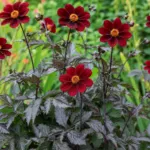
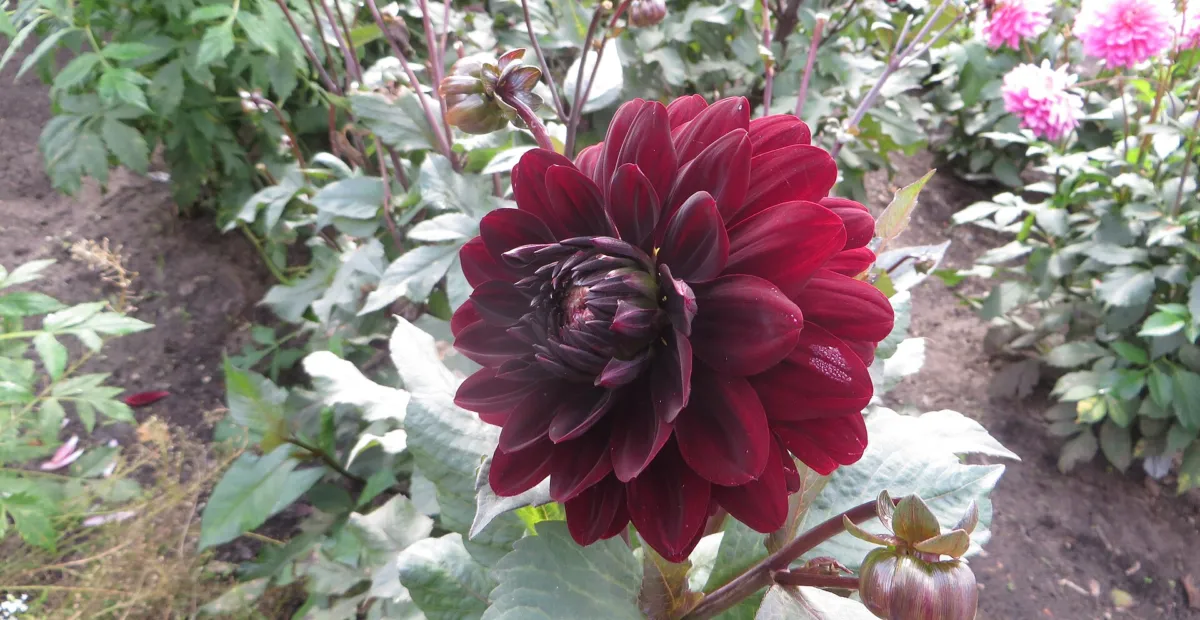
The cultivar is recognized by its deep burgundy, velvety decorative blooms paired with unusually dark foliage and dark stems. The leaves are pinnately divided, and the plant branches freely from an upright framework. The near-black coloring of the vegetative parts provides strong contrast with pale or green companion plants.
Flowering
This decorative dahlia produces fully double flowerheads with many broad, flat to slightly incurved ray florets that largely conceal the central disc. Flowers are produced freely from summer into fall, and regular cutting or deadheading encourages continued production. The blooms are notably durable on the plant and suitable for vase use.
Pollination and visitors
Dahlias can provide nectar and pollen to bees, bumblebees, and other flower-visiting insects, but highly double decorative forms restrict access to the central disc. Because 'Karma Choc' has a fully double decorative flower, its documented pollinator value should be considered limited rather than high.
Dahlia 'Karma Choc' photos
Click any photo for a larger view. Source, author and license are shown separately.
Diseases and pests
Diseases
Watch for powdery mildew in dry conditions, Botrytis or other fungal rots during prolonged wet weather, tuber rot in storage, and virus symptoms such as stunting, mottled leaves, or distortion. Improve air circulation, water at the soil line, remove diseased material promptly, and store only clean, dry, uninjured tubers.
Pests
Common problems include aphids, leaf miners, spider mites under protected conditions, slugs, earwigs, caterpillars, and occasional capsid damage. Inspect new growth and flower buds regularly, encourage beneficial insects, remove slugs by hand or with barrier methods, and use the least-disruptive treatment needed.
Toxicity and pollen
ASPCA lists Dahlia species as toxic to dogs and cats, with the toxic principle unidentified and mild gastrointestinal signs or mild dermatitis reported. Cultivar-specific toxicity data for 'Karma Choc' are not available, so prevent chewing or ingestion and seek veterinary advice if symptoms follow exposure.
- Typical season
- Summer through fall during flowering
- Pollination / pollen
- Insect-carried pollen; limited airborne dispersal expected
As an insect-pollinated Asteraceae cultivar with densely arranged florets, it is not expected to behave like a major windborne pollen source. Direct contact with flowers, foliage, or sap can still bother particularly sensitive people, and individual Asteraceae contact allergies are possible. Avoid rubbing eyes after handling and wear gloves if skin is reactive.
Native habitat
This cultivar is a garden hybrid rather than a wild plant, so it has no native habitat of its own. Its Dahlia background derives from tuberous plants of the Americas, while 'Karma Choc' was bred in the Netherlands. In cultivation it performs best in warm, sunny conditions with fertile, well-drained soil and a distinct dormant season.
Interesting fact
Raised in the Netherlands by Gebr. Verwer, 'Karma Choc' was selected from a cross involving 'Karma Naomi'. The cultivar was introduced to the Karma collection in the mid-2000s and received the RHS Award of Garden Merit. Its dark coloration extends beyond the blooms to the foliage and stems. The U.S. patent describes unusually good postproduction longevity, including long-lasting flowers on the plant and as cut flowers.
Frequently asked questions (FAQ)
The most relevant questions about this plant, with short and direct answers.
🌱Quick care
What is Dahlia 'Karma Choc'?⌄
Dahlia 'Karma Choc' is a decorative, waterlily-form dahlia with deep velvety red to chocolate-burgundy flowers and very dark foliage. It typically grows about 3 to 3½ feet tall and is valued as a cut flower.
How much sun does Dahlia 'Karma Choc' need?⌄
Dahlia 'Karma Choc' needs full sun, ideally at least 6–8 hours of direct light daily. In very hot climates, some afternoon shade can reduce heat stress, although too much shade may reduce flowering.
How often should I water Dahlia 'Karma Choc'?⌄
Water Dahlia 'Karma Choc' to maintain moderate, even moisture without leaving the soil soggy. Water deeply when the surface begins to dry, increasing frequency during hot or dry weather.
How tall does Dahlia 'Karma Choc' grow?⌄
Dahlia 'Karma Choc' usually reaches about 36–40 inches tall and spreads roughly 18–24 inches. Height varies with soil fertility, sunlight, tuber size, and growing season length.
🌤️Environment and placement
What USDA hardiness zones are suitable for Dahlia 'Karma Choc'?⌄
Dahlia 'Karma Choc' is generally treated as a hardy perennial in USDA Zones 8–10, although local winter moisture and soil conditions also matter. In colder zones, lift and store the tubers before hard frost.
Where should I plant Dahlia 'Karma Choc' in the garden?⌄
Plant Dahlia 'Karma Choc' in a sunny bed or border with fertile, humus-rich, well-drained soil. Choose a sheltered location where its stems and flowers are protected from strong wind.
Can Dahlia 'Karma Choc' grow in a container?⌄
Yes, Dahlia 'Karma Choc' can grow in a large container with drainage holes and fertile, well-drained potting mix. Use a container with enough room for the tuber clump and provide early support as the plant grows.
How much space does Dahlia 'Karma Choc' need?⌄
Space Dahlia 'Karma Choc' about 18–24 inches from nearby plants. Good spacing improves airflow and gives the upright stems room to develop without excessive crowding.
💧Care and problems
Does Dahlia 'Karma Choc' need staking?⌄
Dahlia 'Karma Choc' usually benefits from staking because its stems can become tall and top-heavy when flowering. Install a stake or support early, before the plant becomes difficult to secure without damaging roots.
Should I pinch Dahlia 'Karma Choc'?⌄
Pinch the main growing tip when Dahlia 'Karma Choc' is about 12 inches tall to encourage branching and more usable flower stems. Avoid pinching if the plant is weak, recently transplanted, or already forming buds.
How do I get Dahlia 'Karma Choc' to produce more flowers?⌄
Cut flowers regularly, remove faded blooms, and keep the plant evenly watered. Regular harvesting and deadheading redirect energy toward new flower production throughout the growing season.
Why is my Dahlia 'Karma Choc' not blooming?⌄
Common causes include insufficient sunlight, planting too early in cold soil, drought stress, excess nitrogen, or a small or immature tuber. Give the plant warmth, full sun, even moisture, and time, since first flowering can vary by growing conditions.
What pests affect Dahlia 'Karma Choc'?⌄
Aphids, slugs, earwigs, caterpillars, leaf miners, and spider mites may affect Dahlia 'Karma Choc'. Inspect foliage and flower buds regularly and address infestations promptly with methods appropriate for edible-free ornamental gardens.
What diseases can affect Dahlia 'Karma Choc'?⌄
Dahlia 'Karma Choc' can develop powdery mildew, gray mold, fungal rots, or virus symptoms such as stunting and distorted leaves. Improve airflow, avoid persistently wet foliage, and discard severely diseased plants rather than propagating them.
🪴Planting and repotting
When should I plant Dahlia 'Karma Choc' tubers in the United States?⌄
Plant Dahlia 'Karma Choc' tubers after the danger of hard frost has passed and the soil has warmed. In most U.S. gardens, this means spring, with the exact timing determined by the local last-frost date and USDA climate.
How deep should I plant Dahlia 'Karma Choc' tubers?⌄
Plant Dahlia 'Karma Choc' tubers about 4–6 inches deep, with the eyes or sprouting crown facing upward. Cover newly planted tubers lightly at first and avoid keeping the soil wet before shoots emerge.
Can I start Dahlia 'Karma Choc' indoors before planting outside?⌄
Yes, you can start Dahlia 'Karma Choc' tubers indoors in a container several weeks before outdoor planting. Transplant them after frost danger has passed, hardening the plants gradually before placing them permanently outside.
How should I prepare soil for Dahlia 'Karma Choc'?⌄
Improve the planting area with compost or other organic matter while preserving good drainage. The ideal soil is fertile, humus-rich, and consistently moist but not waterlogged.
✂️Propagation and pruning
How do I divide Dahlia 'Karma Choc' tubers?⌄
Divide Dahlia 'Karma Choc' tubers with a clean, sharp knife so every division includes a healthy tuber section and at least one visible eye. Divide during dormancy or before spring planting, and discard soft or diseased pieces.
Can Dahlia 'Karma Choc' be grown from cuttings?⌄
Yes, Dahlia 'Karma Choc' can be propagated from softwood cuttings taken from actively growing shoots produced by stored tubers. Cuttings are useful for multiplying plants while preserving the cultivar’s characteristics.
Can I grow Dahlia 'Karma Choc' from seed?⌄
You can grow dahlias from seed, but seedlings will not reliably reproduce the exact traits of Dahlia 'Karma Choc'. To maintain this named cultivar, propagate it by tuber division or vegetative cuttings.
When should I deadhead Dahlia 'Karma Choc'?⌄
Deadhead Dahlia 'Karma Choc' as soon as flowers fade or begin producing seed. Cut the spent stem back to a strong leaf joint or branching point to encourage continued flowering and keep the plant tidy.
When should I cut back Dahlia 'Karma Choc' for winter?⌄
Cut Dahlia 'Karma Choc' back after frost has blackened the foliage or when the plant has clearly entered dormancy. In areas where tubers must be lifted, allow the stems to die back before digging them.
How do I overwinter Dahlia 'Karma Choc' tubers?⌄
In climates colder than its dependable perennial range, dig the tubers after frost, let them dry briefly, and store them in a cool, dark, frost-free place with moderate humidity. Check them periodically and remove any rotting sections.
⚠️Toxicity and safety
Is Dahlia 'Karma Choc' toxic to dogs and cats?⌄
Dahlia 'Karma Choc' should be treated as moderately toxic to dogs and cats because dahlias are associated with mild gastrointestinal upset and dermatitis. Keep pets from chewing the plant and contact a veterinarian if ingestion causes symptoms.
Is Dahlia 'Karma Choc' poisonous to people?⌄
Human toxicity evidence specific to Dahlia 'Karma Choc' is limited, so do not eat the flowers, foliage, or tubers. Wear gloves if the plant irritates your skin and keep plant parts away from children.
🌸Flowering and special interest
When does Dahlia 'Karma Choc' bloom?⌄
Dahlia 'Karma Choc' generally blooms from midsummer into fall, often continuing until the first hard frost. Flowering may begin later in short-season climates or when tubers are planted in cool soil.
What color are Dahlia 'Karma Choc' flowers?⌄
Dahlia 'Karma Choc' produces deep velvety red flowers that can appear chocolate-burgundy or nearly black in certain light. Color intensity varies with sunlight, temperature, and the stage of flower development.
How large are Dahlia 'Karma Choc' flowers?⌄
The flowers of Dahlia 'Karma Choc' are typically about 4 inches across. Their double, waterlily-style form makes them suitable for borders, display gardens, and cut-flower arrangements.
Does Dahlia 'Karma Choc' really smell like chocolate?⌄
Some growers notice a faint chocolate-like fragrance from Dahlia 'Karma Choc', but the scent is subtle and not consistent for everyone. Its dark red coloring and foliage are more dependable identifying features than fragrance.
Is Dahlia 'Karma Choc' good for cut flowers?⌄
Yes, Dahlia 'Karma Choc' is a strong cut-flower choice because it produces attractive dark blooms on relatively sturdy stems. Harvest flowers when they are fully open and place them immediately in clean water for the best vase life.