
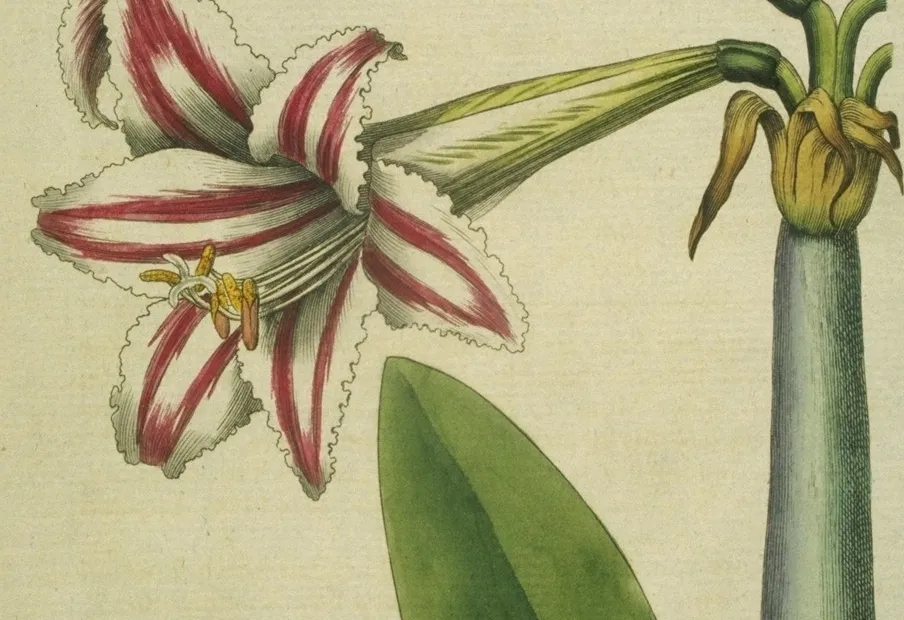
 Source:
 Superb amaryllis (Hippeastrum vittatum) short overview
Superb amaryllis (Hippeastrum vittatum) is a South American bulbous perennial grown for its bold, funnel-shaped flowers marked in red, white, and green. It produces a sturdy, leafless flower stalk followed by glossy strap-like leaves and performs especially well in containers. In the United States it is usually grown indoors or moved outside during warm weather, then kept dry and cool during dormancy because the bulb is not reliably frost hardy.
Taxonomic classification
Superb amaryllis (Hippeastrum vittatum) care guide
Light and placement
Provide bright light with several hours of direct sun, especially in a south- or west-facing window, while protecting the plant from harsh reflected heat. Outdoors, acclimate gradually to full morning sun or bright filtered light. Insufficient light produces weak, leaning scapes and poor bulb recovery; excessive hot afternoon exposure can scorch leaves or overheat the pot.
Watering and humidity
After planting, water once and then wait until the upper mix begins to dry before watering again. During active leaf growth, water thoroughly until excess drains, then empty the saucer. Reduce and stop watering as leaves yellow and dormancy begins. Resume cautiously when new growth appears; constantly wet soil is the main rot risk.
Soil and growing medium
Use a loose, well-drained potting mix with plenty of organic matter. A peat-free houseplant mix amended with perlite or fine bark works well. Keep the bulb neck above the soil line to reduce rot. Slightly acidic to neutral conditions are suitable; avoid dense, waterlogged media and containers without drainage holes.
Feeding
Begin feeding after flowering when leaves are actively expanding. Apply a balanced, complete houseplant fertilizer at half strength about monthly through the growing season, or follow the product label for bulb plants. Stop feeding when leaves yellow and the bulb enters dormancy. Do not fertilize a dry, dormant, recently repotted, or waterlogged bulb.
Growth and habit
This deciduous geophyte alternates between active growth and dormancy. A flower stalk may emerge before the leaves, followed by a rosette of strap-like foliage that rebuilds the bulb. Maintaining healthy leaves after flowering is important because they replenish the bulb for the next cycle. Avoid repeatedly disturbing the brittle roots.
Planting and repotting
Plant dormant bulbs in fall or whenever they are purchased, with the upper half to two-thirds exposed. Set the basal plate firmly on the mix and leave about 1 inch between the bulb and pot edge. After planting, water once, then keep the medium barely moist until active growth begins. Container culture is safer than repeated digging in cold climates.
Repot after dormancy, usually every few years or when the bulb has filled its container. Choose a pot only slightly wider than the bulb because Hippeastrum generally flowers well when somewhat pot-bound. Replace exhausted mix, preserve the roots as much as possible, and leave the upper half to two-thirds of the bulb above the medium.
Propagation and pruning
Propagation
Separate offsets after dormancy, when they have formed roots or are large enough to grow independently. Seed propagation is possible for species plants but seedlings vary and usually take longer to flower. Bulb scaling or basal cutting is more technical and is best reserved for experienced growers or propagation facilities.
Pruning
Remove individual faded flowers and the swollen ovary if seed is not wanted. Once the entire scape turns yellow or brown, cut it several inches above the bulb neck. Do not cut healthy green leaves; allow them to mature and yellow naturally before dormancy.
Overwintering
In cold climates, bring containers indoors before frost. For dormancy, keep the bulb cool and dark, roughly 45–55°F, and withhold water until the resting period ends. When new growth appears, return the plant to bright light and begin watering gradually. Do not expose the bulb to freezing temperatures or cold, saturated soil.
Uses
Primarily used as a flowering houseplant, patio container accent, seasonal display, and cut flower. In USDA Zones 8–10 it may be grown outdoors in a protected, sharply drained site, but containers allow easier frost protection and dormancy control. It is not edible and should not be used medicinally.
Appearance
The plant forms a tunicate underground bulb, a short basal crown, and a rosette of smooth, glossy, strap-like leaves. Flowering stems are stout, straight, hollow, and usually leafless when they emerge. The species is recognized by its funnel-shaped flowers with contrasting red or violet markings, pale tepals, and greenish basal throat.
Flowering
The inflorescence is an umbel carried on a stout, hollow, leafless scape. Flowers are funnel-shaped and have six colored tepals, with a short basal tube and a three-lobed stigma. Individual blooms can remain attractive for several weeks. Dormancy and temperature management can shift flowering, especially in cultivated bulbs.
Pollination and visitors
Reliable, species-specific records identifying the principal animal pollinators of Hippeastrum vittatum were not located. The open, conspicuous flowers are compatible with insect visitation, but a stronger attraction rating would not be evidence-based.
Hippeastrum vittatum photos
Click any photo for a larger view. Source, author and license are shown separately.
Diseases and pests
Diseases
Red blotch, caused by Stagonospora curtisii, produces red lesions on bulbs, leaves, and flower stalks and may weaken or distort new growth. Buy firm, unblemished bulbs, use sterile well-drained media, avoid wet foliage and remove badly affected tissue. Improve air circulation and isolate symptomatic plants; severe cases may require disposal or a labeled systemic fungicide.
Pests
Mealybugs, scale, bulb mites, and fungus gnat larvae may occur, especially in warm indoor conditions or persistently wet mix. Inspect leaf bases and bulbs when watering, isolate infested plants, remove visible insects with a cotton swab or water spray, and correct excess moisture. Use only products labeled for indoor ornamentals and follow the label.
Toxicity and pollen
Hippeastrum contains alkaloids including lycorine. Ingestion can cause gastrointestinal upset, salivation, lethargy, tremors, or more serious signs after larger exposures. The bulb is the main concern, but other plant parts should also be treated as unsafe to eat. Keep bulbs and fallen plant material away from children and pets; contact a medical or veterinary professional after suspected ingestion.
- Typical season
- No reliable United States-specific exposure season documented
- Pollination / pollen
- Flower pollen, mainly retained within insect-accessible anthers
This is an insect-pollinated flowering bulb, but no dependable United States-specific airborne pollen counts or allergy studies for Hippeastrum vittatum were found. Its pollen is generally released within open flowers rather than by wind, so widespread airborne exposure is expected to be limited, though sensitive individuals may still react to close contact.
Native habitat
The species is associated with tropical and subtropical South American environments, including seasonally dry regions. It grows from an underground bulb and experiences a contrast between active moisture availability and a comparatively drier resting period. Cultivation should reproduce that rhythm with drainage, warmth, bright light, and a dry dormancy.
Interesting fact
The species is an accepted Hippeastrum name with the historical synonym Amaryllis vittata. Its flowers have six tepals rather than separate showy petals and sepals. Like other Hippeastrum, it forms a dry, three-valved capsule with flattened, winged seeds. Hippeastrum vittatum is one of the species associated with the breeding history of ornamental amaryllis.
Frequently asked questions (FAQ)
The most relevant questions about this plant, with short and direct answers.
🌱Quick care
What is Hippeastrum vittatum, and is it really an amaryllis?⌄
Hippeastrum vittatum is a bulbous flowering plant in the Amaryllidaceae family commonly called superb amaryllis. It is the South American “amaryllis” genus, distinct from the true Amaryllis genus native to South Africa.
How do you care for superb amaryllis indoors?⌄
Grow superb amaryllis in bright light, a well-drained organic-rich potting mix, and water moderately while it is actively growing. Allow the soil to dry more substantially during dormancy, and never leave the bulb sitting in water.
🌤️Environment and placement
How much light does Hippeastrum vittatum need?⌄
Hippeastrum vittatum grows best in bright sun to bright filtered light. A sunny window is suitable indoors, but protect the foliage from extreme afternoon heat or scorching through glass.
Can superb amaryllis grow outside in the United States?⌄
Superb amaryllis can grow outdoors in warm, frost-free parts of the United States, preferably in a bright, well-drained location. In colder areas, grow it in a container and bring the bulb indoors before freezing temperatures.
What USDA zones are suitable for Hippeastrum vittatum?⌄
Hippeastrum vittatum is frost tender, so outdoor success is generally limited to warm USDA-style climates where the bulb can avoid freezing. Gardeners in colder zones should treat it as a container plant or lift and protect the bulb for winter.
💧Care and problems
How often should I water superb amaryllis?⌄
Water superb amaryllis when the upper portion of the potting mix has begun to dry, then let excess water drain completely. Reduce watering as the leaves yellow and keep the bulb much drier during dormancy.
Why is my Hippeastrum vittatum bulb not growing?⌄
A dormant Hippeastrum vittatum bulb may remain inactive until it receives warmth, light, and renewed watering. If it stays inactive during the growing season, check for a dead or rotting bulb, poor drainage, inadequate light, or cold conditions.
Why are the leaves of my superb amaryllis turning yellow?⌄
Leaves may turn yellow naturally as superb amaryllis enters dormancy after its growing season. Yellowing during active growth can also indicate overwatering, poor drainage, insufficient light, or root and bulb problems.
How do I prevent Hippeastrum vittatum bulb rot?⌄
Prevent bulb rot by using a container with drainage holes, a fast-draining potting mix, and careful watering. Keep the bulb’s neck above the soil and do not allow water to collect in the saucer.
Should I fertilize superb amaryllis?⌄
Fertilize superb amaryllis during active leaf growth with a balanced houseplant fertilizer according to the product label. Stop feeding while the plant is dormant, then resume when new growth restarts.
🪴Planting and repotting
How should I plant a Hippeastrum vittatum bulb in a pot?⌄
Plant the bulb with its pointed end up in a well-drained potting mix, leaving roughly one-third to one-half of the bulb above the soil surface. Choose a stable container only slightly wider than the bulb and make sure it has drainage holes.
What soil is best for superb amaryllis?⌄
Use a loose, well-drained, organic-rich potting mix intended for containers. Avoid dense garden soil or any mix that stays wet around the bulb because poor drainage encourages rot.
When should I repot Hippeastrum vittatum?⌄
Repot Hippeastrum vittatum after dormancy, before or as new growth begins, or when the bulb has outgrown its container. Move it into a pot only modestly larger than the bulb because slightly crowded roots often support better flowering.
Can I plant superb amaryllis directly in the ground?⌄
You can plant superb amaryllis in the ground where winters are frost-free and the soil drains rapidly. In regions with freezing winters, keep the bulb in a pot or dig it before frost and protect it indoors.
✂️Propagation and pruning
How do you propagate Hippeastrum vittatum?⌄
Hippeastrum vittatum can be propagated from offsets or seed, with offsets being the more practical method for preserving the parent plant’s characteristics. Separate well-developed offsets when repotting and pot them individually once they have roots.
Can I grow superb amaryllis from seed?⌄
Yes, superb amaryllis can be grown from seed, but seedlings usually take longer to reach flowering size than offsets. Seed-grown plants may also differ from the parent because they result from sexual reproduction.
Should I cut off the leaves of Hippeastrum vittatum after flowering?⌄
Do not cut off healthy green leaves immediately after flowering because they replenish the bulb for future growth and blooms. Remove leaves only after they naturally yellow and wither, unless diseased tissue must be removed.
⚠️Toxicity and safety
Is Hippeastrum vittatum toxic to cats and dogs?⌄
Hippeastrum vittatum should be treated as toxic if eaten, including the bulb and other plant parts. Keep it away from pets and children, and contact a veterinarian, poison center, or medical professional promptly if ingestion is suspected.
Is superb amaryllis poisonous to people?⌄
Yes, superb amaryllis is toxic if eaten and may cause gastrointestinal or other adverse symptoms. Wear gloves when handling damaged bulbs if you have sensitive skin, and seek professional poison guidance after suspected ingestion.
🌸Flowering and special interest
How can I make superb amaryllis bloom again?⌄
To encourage reblooming, provide bright light and adequate water and fertilizer during active leaf growth, then give the bulb a dry rest for about 8 to 10 weeks. After dormancy, return it to warmth and bright light and resume watering gradually.
How long does it take Hippeastrum vittatum to bloom after planting?⌄
A prepared Hippeastrum vittatum bulb may flower several weeks after planting when kept warm and bright, although timing varies with bulb condition and dormancy history. Bulbs that are not fully prepared may need a longer growing period before flowering.
How do I make superb amaryllis flowers last longer?⌄
Keep the flowering plant in bright indirect or filtered light and a relatively cool indoor location to extend bloom life. Rotate the pot regularly so the flower stalk develops more evenly, and stake tall stalks if needed.
What should I do with Hippeastrum vittatum after the flowers fade?⌄
Remove faded flowers and the developing seed pod while leaving the main flower stalk and green leaves intact. Cut the stalk back near the bulb only after it begins to yellow or brown, then continue growing the foliage until dormancy.