
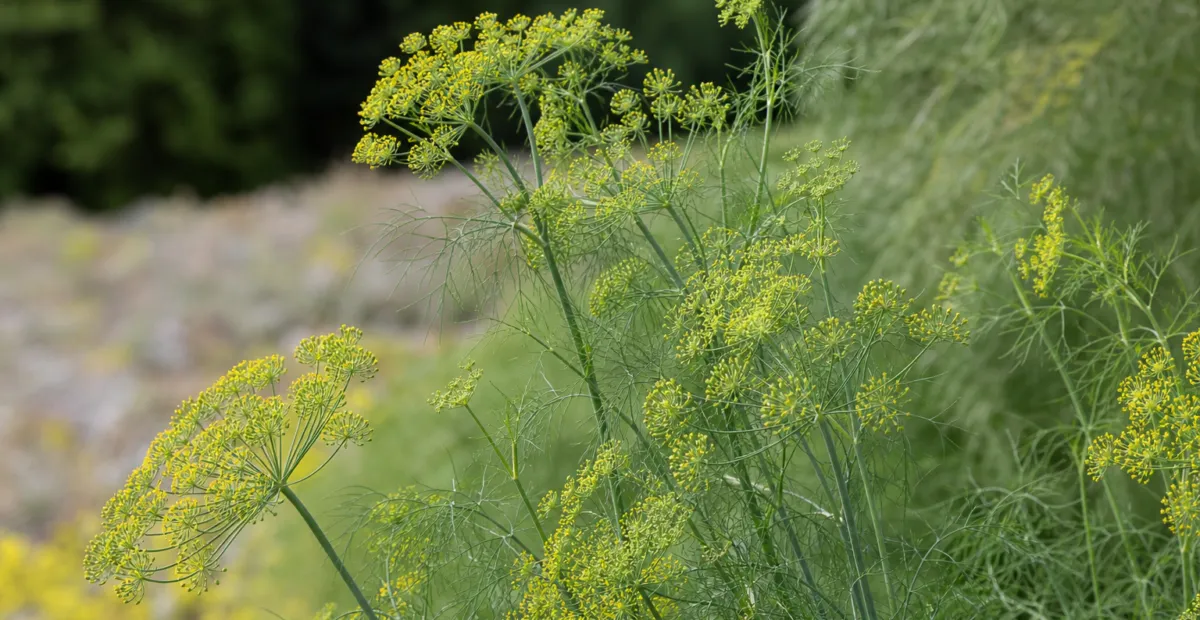
Fennel (Foeniculum vulgare) short overview
Fennel is a tall, aromatic perennial herb with finely divided yellow-green foliage, hollow branching stems, and broad umbels of tiny yellow flowers in summer. Gardeners grow it for its licorice-like leaves and seeds, while butterflies use it as a nectar source and swallowtail caterpillars may feed on the foliage. Give it full sun, moderately fertile well-drained soil, and room to self-seed. Fennel is an aromatic Apiaceae perennial cultivated in the United States as a culinary herb and ornamental pollinator plant. Its feathery foliage, tall branching habit, yellow umbels, and licorice-like flavor are distinctive.
Taxonomic classification
Fennel (Foeniculum vulgare) care guide
Light and placement
Provide at least 6 hours of direct sun, ideally in an open south- or west-facing bed with enough space for the tall flowering stems. Strong light supports sturdy growth and better aroma. Too little light causes lanky, weaker stems and sparse foliage; excessive heat is usually tolerated if roots receive consistent early-season moisture.
Watering and humidity
Water deeply when the top 1–2 inches of soil begins to dry during establishment, then reduce frequency once roots are established. Maintain even moisture during active growth, but let excess water drain completely. Plants in containers dry faster than garden plants. Average humidity is adequate; avoid persistently wet foliage and stagnant air.
Soil and growing medium
Use moderately fertile, well-drained soil with a loamy or sandy structure. Fennel tolerates clay if drainage is improved, but persistently wet ground encourages root and stem rot. A soil reaction near neutral to slightly alkaline is suitable; avoid heavily amended, waterlogged beds.
Feeding
Fennel usually needs only modest fertility. Incorporate finished compost before planting, then apply a balanced fertilizer at label strength in spring if growth is weak or the soil is poor. Avoid heavy nitrogen feeding, which can produce lush, floppy growth and reduce structural stability. Do not fertilize drought-stressed or waterlogged plants.
Growth and habit
This upright, branching herb forms a strong central framework and becomes increasingly airy as flowering stems develop. It can return from the perennial root in mild climates but is often grown as an annual. Mature seed can spread beyond the planting area, so cutting spent umbels is the main maintenance task when naturalization is unwanted.
Planting and repotting
Sow seeds directly outdoors after the danger of hard frost has passed, or start them in biodegradable pots because seedlings resent root disturbance. Cover seeds lightly, keep the seedbed evenly moist until emergence, and thin promptly. Allow generous spacing for branching plants and remove unwanted flower heads before mature seed dispersal.
Container-grown fennel is best moved while young because mature plants develop a substantial root system and dislike unnecessary disturbance. Transplant into a deep container with drainage holes, using a loamy, well-drained potting mix. Repot only when roots have filled the container or the plant is being moved into a larger seasonal display.
Propagation and pruning
Propagation
Propagate from seed, preferably by direct sowing in spring or by sowing young plants in deep biodegradable pots. Seeds germinate best with warmth, light moisture, and only shallow covering. Fennel can self-seed abundantly; remove spent umbels before seed ripens when containment is important.
Pruning
Cut flowering stems to the base after bloom if you want to limit self-seeding. Remove damaged or collapsed stems as needed. If grown for seed, leave selected umbels until fruits mature, then harvest before dispersal. Avoid cutting all foliage while the plant is actively rebuilding its root reserves.
Overwintering
In USDA Zones 4–8, fennel may be treated as an annual or protected with a mulch layer after stems are cut back. In milder Zones 9 and 10 it can overwinter more reliably as a perennial. Container plants are more vulnerable to root freezing; move them to a sheltered location or treat them as seasonal plants.
Uses
Use young leaves, tender stems, and mature fruits as culinary flavorings for salads, fish, vegetables, breads, and sausages. The plant also contributes height and fine texture to ornamental borders and supports butterfly-focused gardens. Culinary use should not be confused with medicinal dosing, and concentrated essential oil requires specialist safety guidance.
Appearance
Fennel has smooth, hollow, finely ridged stems and highly divided, threadlike leaves that give it a soft, feathery texture. The foliage is yellow-green and strongly aromatic when bruised. Broad yellow flower umbels rise above the foliage, followed by narrow ribbed fruits. It is often mistaken for a very large dill.
Flowering
Fennel produces broad, flat compound umbels made of many tiny five-petaled yellow flowers. Bloom generally begins in early or midsummer and continues as stems branch. Flowers are followed by elongated aromatic fruits commonly called fennel seeds. Flowering stems can become top-heavy, especially in rich soil or exposed sites.
Pollination and visitors
The yellow umbels are documented as attractive to butterflies, and the foliage serves as a larval food plant for certain swallowtail butterflies. The flowers provide accessible nectar in a broad, open inflorescence. Specific pollinator species vary by region, so no single primary insect species is assigned here.
Foeniculum vulgare photos
Click any photo for a larger view. Source, author and license are shown separately.
Diseases and pests
Diseases
Prevent stem and root rot by avoiding saturated soil and improving drainage before planting. Remove severely affected plants and do not repeatedly replant fennel in the same wet location. Good spacing improves airflow. There are generally no major disease problems in well-drained garden conditions.
Pests
Aphids and slugs may occur, while swallowtail caterpillars can chew foliage and are valuable wildlife rather than a routine pest to eliminate. Inspect new growth, encourage natural predators, hand-pick slugs, and use gentle water sprays for aphids. Avoid broad-spectrum insecticides during bloom.
Toxicity and pollen
Fennel is listed as non-toxic to dogs and cats by ASPCA when treated as the garden plant. Normal culinary use is different from concentrated fennel oil, which should not be ingested or applied casually. People with known fennel or related Apiaceae food allergies should avoid ingestion and seek medical advice for symptoms.
- Typical season
- June through August in much of the United States
- Pollination / pollen
- Insect-dispersed pollen
Fennel is insect-pollinated, so its pollen is not generally released as a highly wind-borne cloud. However, airborne exposure is not impossible, and people with pollen or food allergies to fennel or related Apiaceae should use personal judgment around flowering plants and avoid ingestion if sensitive.
Native habitat
Fennel is native to Mediterranean and nearby temperate regions, where it grows in sunny, relatively open habitats and tolerates seasonal dryness once established. It favors soils that drain freely rather than stagnant wet ground. In the United States it is widely cultivated and has escaped or naturalized in some regions.
Interesting fact
The species is native from the Mediterranean region eastward to Ethiopia and western Nepal. Its fruits are commonly called fennel seeds and are used as a culinary spice. Fennel resembles an oversized dill but has a distinct licorice-like aroma. It may escape gardens and naturalize in parts of North America.
Frequently asked questions (FAQ)
The most relevant questions about this plant, with short and direct answers.
🌱Quick care
What is Foeniculum vulgare commonly called?⌄
Foeniculum vulgare is commonly called fennel. It is an aromatic perennial herb in the Apiaceae family, grown for its feathery foliage, yellow flowers, and anise-like seeds.
How much sun does fennel need?⌄
Fennel grows best in full sun, ideally with at least six hours of direct sunlight daily. More light generally produces stronger growth and better flowering.
Is fennel perennial or annual?⌄
Common fennel is a perennial in suitable climates, although it may be grown as an annual in colder areas. It can die back in winter and regrow from its crown in spring.
What USDA zones can fennel grow in?⌄
Fennel is generally hardy in USDA Zones 4–9. Winter survival can vary with the cultivar, drainage, exposure, and the severity of local winter conditions.
🌤️Environment and placement
Where should I plant fennel in my garden?⌄
Plant fennel in a sunny, open location with well-drained soil and enough room for its tall growth. A sheltered position is useful because mature flowering stems can become top-heavy or wind-damaged.
What type of soil is best for fennel?⌄
Fennel prefers loamy, fertile, well-drained soil that holds some moisture without becoming waterlogged. It can tolerate a range of soil textures, but poor drainage increases the risk of root and stem problems.
Can fennel grow in clay soil?⌄
Fennel can grow in clay soil if drainage is improved with organic matter and the planting area does not stay saturated. Avoid compacted locations where water collects after rain.
Can fennel grow in a container?⌄
Fennel can grow in a large container at least 12 inches wide and deep, provided it has drainage holes. Use a heavy pot in a sheltered location because the mature plant can become tall and unstable.
How tall does fennel get?⌄
Common fennel commonly reaches about 3 to 8 feet tall, depending on the cultivar and growing conditions. Its height and airy form make it better suited to the back of a border than a narrow bed edge.
💧Care and problems
How often should I water fennel?⌄
Water young and newly planted fennel regularly while it establishes, then allow the soil to dry slightly between waterings. Established plants are moderately drought-tolerant, but container-grown fennel needs more consistent moisture.
Does fennel need fertilizer?⌄
Fennel usually needs little fertilizer when grown in reasonably fertile soil. Excess nitrogen can produce lush, weak growth and may reduce the concentration of the plant’s characteristic aromatic oils.
Why is my fennel wilting?⌄
Fennel may wilt because of drought, heat, root damage, or poorly drained soil. Check soil moisture first, then improve drainage or provide temporary shade if the plant is exposed to extreme heat.
Why is my fennel turning yellow?⌄
Yellowing fennel may indicate overwatering, poor drainage, nutrient stress, or normal seasonal dieback. If the soil remains wet, correct drainage before adding fertilizer.
What pests commonly affect fennel?⌄
Aphids, slugs, snails, and some caterpillars can feed on fennel. Minor damage is often tolerated, but wash foliage, remove pests by hand, and use a labeled treatment only when necessary.
What diseases affect fennel?⌄
Fennel generally has few serious disease problems, but root or stem rot and powdery mildew can occur. Good air circulation, well-drained soil, and watering at the base help reduce disease risk.
Does fennel spread aggressively?⌄
Fennel can spread readily by seed because mature plants self-seed freely. Remove spent flower heads before seeds ripen if you want to keep it contained, especially in regions where fennel is known to naturalize.
🪴Planting and repotting
When should I plant fennel in the United States?⌄
Sow fennel after the danger of hard frost has passed and soil temperatures are roughly 50–75°F. In hot-summer areas, early spring or late summer planting can reduce heat stress and premature flowering.
Can fennel be started indoors from seed?⌄
Fennel can be started indoors about four to six weeks before the local frost-free date, but direct sowing is often preferable. Its taproot dislikes disturbance, so transplant seedlings while they are still young.
How deep should fennel seeds be planted?⌄
Plant fennel seeds about ¼ inch deep in evenly moist soil. Germination commonly takes approximately 7–10 days under suitable conditions.
How far apart should fennel plants be spaced?⌄
Space common fennel plants about 12–18 inches apart to allow for their height and branching habit. If growing Florence fennel for swollen leaf bases, follow the spacing recommended for the specific cultivar.
✂️Propagation and pruning
How do you propagate fennel?⌄
Fennel is most reliably propagated from seed. Collect dry seed heads in late summer or allow some seeds to self-sow, then remove unwanted seedlings before they become firmly established.
Can fennel be grown from cuttings?⌄
Fennel is normally propagated from seed rather than stem cuttings. Stem pieces are unlikely to develop into vigorous new plants, so saving seed is the more dependable method.
Should fennel be pruned?⌄
Fennel does not require routine pruning. Remove dead stems in late winter or early spring, and cut off developing flower heads if you want to limit self-seeding or encourage more foliage.
⚠️Toxicity and safety
Is fennel toxic to dogs and cats?⌄
Fennel is generally considered non-toxic to dogs and cats by the ASPCA. Nevertheless, large amounts of plant material or concentrated fennel oil may cause problems, so prevent pets from consuming excessive quantities.
Is fennel safe for humans to eat?⌄
Fennel leaves, flowers, and seeds are widely used as food and seasoning. Concentrated fennel essential oil is much stronger than culinary fennel and should not be ingested unless directed by a qualified professional.
Is fennel invasive in the United States?⌄
Fennel is not uniformly invasive across the United States, but it can escape cultivation and naturalize in some regions. It is a documented invasive concern in parts of California, so remove seed heads and check local guidance before planting.
🌸Flowering and special interest
When does fennel flower?⌄
Fennel typically flowers in summer, producing flat-topped clusters of small yellow flowers. Flowering time varies with climate, planting date, cultivar, and whether the plant experiences heat or drought stress.
Are fennel flowers good for pollinators?⌄
Yes, fennel flowers attract many beneficial insects, including pollinators and predatory insects. The flowers can also provide habitat and food for swallowtail butterfly caterpillars, which may noticeably consume the foliage.
Why is my fennel flowering too early?⌄
Fennel may flower early when exposed to heat, drought, root disturbance, or other stress. Common fennel naturally flowers as it matures, while Florence fennel is especially prone to bolting under hot or dry conditions.
Can you eat fennel flowers and seeds?⌄
Fennel flowers, leaves, and mature seeds are commonly used as culinary flavorings with an anise-like taste. Harvest only correctly identified plants and use ordinary culinary quantities rather than concentrated essential oil.