
 Source:
 Caribbean Century Plant (Agave angustifolia) short overview
Caribbean Century Plant is a striking evergreen agave with narrow, rigid blue-green leaves arranged in a bold rosette. Its toothed margins and sharp terminal spine make it an architectural choice for dry gardens, gravel beds, and containers. In warm climates it may eventually send up a tall branched flower stalk bearing greenish-yellow flowers, while plants in colder parts of the United States are best grown in containers and protected from freezing temperatures.
Taxonomic classification
Caribbean Century Plant (Agave angustifolia) care guide
Light and placement
Give full sun, ideally with a south- or west-facing exposure and several hours of direct light. Acclimate greenhouse or indoor plants gradually to intense outdoor sun to reduce scorch. Too little light produces looser, weaker rosettes and greener foliage; excessive reflected heat can cause bleaching or brown patches, especially after abrupt relocation.
Watering and humidity
Water deeply only after the mix has dried substantially, then let excess drain completely. During spring and summer growth, check container plants regularly but avoid routine small sips. Reduce watering sharply in cool, cloudy, or dormant periods, and keep the crown nearly dry during prolonged cold or wet weather. Humidity is not a care requirement when air circulation and drainage are good.
Soil and growing medium
Use a gritty, sharply draining mix with substantial mineral content. In the ground, sandy, rocky, or lean loamy soil is preferable to heavy wet clay. A mildly acidic to mildly alkaline reaction is generally tolerated, but persistent winter moisture is more damaging than modest pH variation.
Feeding
Feed sparingly during active spring and summer growth with a balanced, half-strength fertilizer once or twice, or apply a light controlled-release formulation according to its label. Do not fertilize newly repotted, dormant, cold-stressed, or waterlogged plants; excessive nitrogen can encourage softer growth and reduce drought resilience.
Growth and habit
Forms a persistent basal rosette and may produce offsets, gradually creating a clump. Mature plants can remain attractive for years before flowering; after the single flowering event, the original rosette declines, while offsets or bulbils may continue the planting.
Planting and repotting
Plant outdoors after the danger of frost has passed, setting the root crown at the same depth as in its original container. Allow generous clearance from paths because the leaves are rigid and sharply armed. Water once after planting, then let the soil dry well between subsequent irrigations.
Repot container plants only when the root system has filled the pot or drainage has declined. Move up one pot size in spring, use a cactus or succulent mix amended with grit, and handle the rosette with thick gloves and protective sleeves.
Propagation and pruning
Propagation
Separate offsets when they have formed roots or a short basal stem, preferably in spring or early summer. Allow cut surfaces to dry briefly before potting into a gritty, barely moist medium. Seed propagation is possible after flowering but is slower and less uniform than offsets.
Pruning
Remove dead or badly damaged leaves at the base with sterilized loppers, working from the outside inward. Do not cut healthy leaf tips merely for appearance, since wounds can brown and expose the plant to infection. After flowering, remove the spent stalk once it has dried, unless seed or bulbils are wanted.
Overwintering
In regions colder than USDA Zone 9, grow it in a container and move it indoors before frost. Provide the brightest available window or supplemental light, keep temperatures cool to mild, and water only sparingly while growth is slow. Avoid placing the plant against cold glass or in a damp, poorly ventilated room.
Uses
Used as an ornamental architectural succulent in xeric landscapes, rock gardens, and large containers. The species has documented food, material, and cultural uses in parts of its native range, but home gardeners should not prepare or consume plant material without regionally authoritative guidance because sap and sharp tissues can irritate.
Appearance
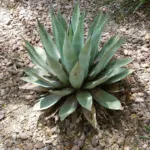
The plant forms a bold, symmetrical rosette of narrow, rigid, fleshy leaves that are green to glaucous gray-green. Leaves are usually lance-shaped, edged with small closely spaced teeth, and tipped by a conspicuous dark spine. Mature plants may produce basal offsets, creating a spreading clump over time.
Flowering
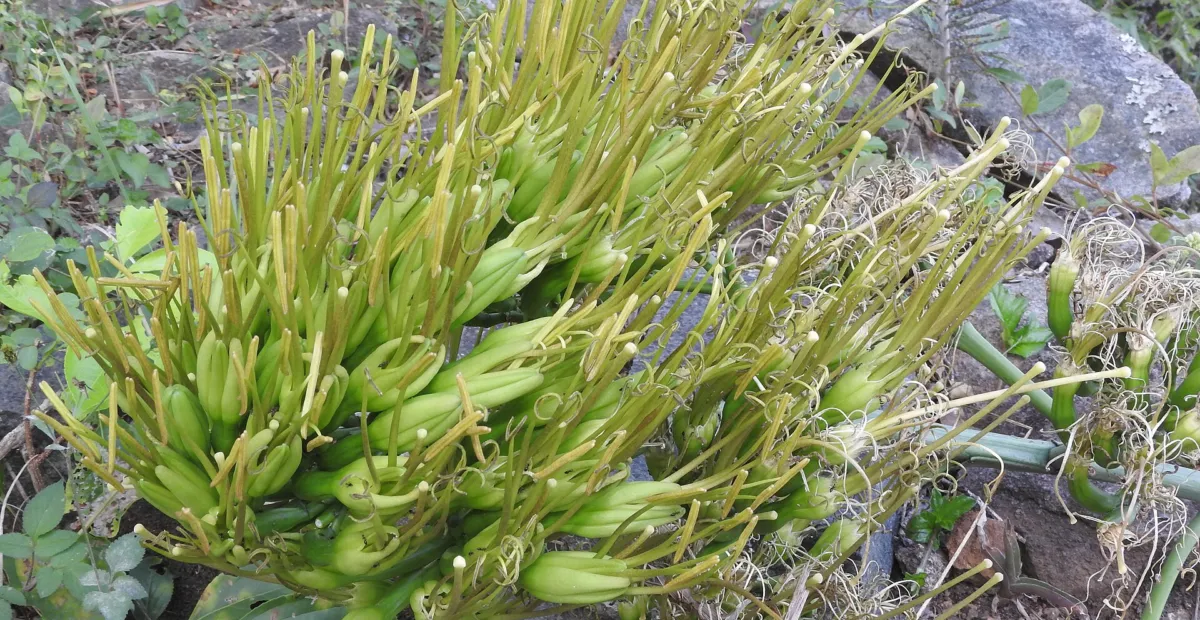
This monocarpic rosette can flower only once after reaching maturity, producing a tall, branched panicle of green to yellow, tubular flowers. The individual flowers are relatively short-lived and may be followed by capsules and bulbils. Flowering age is variable and may take many years.
Pollination and visitors
The best-supported pollination evidence comes from northwestern Mexico, where nectar-feeding bats were responsible for most measured fruit set in Agave angustifolia. Flowers may also receive visits from diurnal and nocturnal insects and other animals, but the relative importance of those visitors varies by region.
Agave angustifolia photos
Click any photo for a larger view. Source, author and license are shown separately.
Diseases and pests
Diseases
Root and crown rot are the main concerns in poorly drained soil, especially during cool or wet periods. Plant high or in raised, gritty beds, avoid standing water, and remove severely rotted tissue only with sterile tools. Good air circulation and restrained irrigation are more useful than routine fungicide applications.
Pests
Watch for agave snout weevil, scale, and mealybugs, particularly on stressed or container-grown plants. Inspect leaf bases and crowns regularly, remove isolated pests mechanically, and avoid overwatering. In areas with known snout-weevil pressure, discard badly infested plants and avoid moving contaminated soil or offsets.
Toxicity and pollen
Species-specific clinical toxicity data are limited. Agave sap is irritating and can cause skin inflammation; sharp leaf teeth and terminal spines can puncture skin or injure mouths. Avoid contact with sap, wear gloves and eye protection when cutting, and seek medical or veterinary advice after significant exposure or ingestion.
- Typical season
- No well-established U.S. airborne-pollen season is documented for this species.
- Pollination / pollen
- Animal-dispersed floral pollen
Agave angustifolia is insect- and animal-pollinated rather than a typical wind-pollinated plant, so abundant airborne pollen exposure is not expected. However, species-specific allergy studies are limited; sensitive people should still avoid handling flowers or sap if they develop symptoms.
Native habitat
Native populations occur from Mexico through Central America, especially in dry shrubland and desert-like settings. It favors bright exposure, seasonal drought, mineral soils, and rapid drainage, often in warm regions where winter freezing is limited.
Interesting fact
The species is native from Mexico through Central America and occurs mainly in dry shrubland and desert environments. Its tall flowering panicle may produce bulbils as well as seed. In studied northwestern Mexican populations, nectar-feeding bats made the greatest contribution to fruit set.
Frequently asked questions (FAQ)
The most relevant questions about this plant, with short and direct answers.
🌱Quick care
What is Caribbean Century Plant?⌄
Caribbean Century Plant is the common name provided here for Agave angustifolia, a spiny, drought-tolerant succulent that forms a tight rosette of sword-shaped leaves. It belongs to the Asparagaceae family and is commonly grown as a specimen, rock-garden, or container plant.
How much sunlight does Agave angustifolia need?⌄
Agave angustifolia grows best in full sun, with at least 6 hours of direct light daily. It can tolerate some light shade, but insufficient light may produce weaker, more open growth.
How often should I water Caribbean Century Plant?⌄
Water Caribbean Century Plant deeply, then allow the soil to dry completely before watering again. Established plants need little supplemental water, while container plants may need occasional watering during prolonged hot, dry weather.
What type of soil is best for Agave angustifolia?⌄
Use gritty, sharply drained succulent soil for Agave angustifolia. Heavy or poorly drained soil retains moisture around the roots and greatly increases the risk of root rot.
Is Agave angustifolia easy to grow?⌄
Agave angustifolia is generally easy to grow when it receives strong light, fast drainage, and limited water. Its main challenges are frost, overwatering, and injuries from the sharp leaf spines.
🌤️Environment and placement
Can Agave angustifolia grow outdoors in the United States?⌄
Agave angustifolia can grow outdoors year-round in warm, frost-free parts of the United States. In areas that receive freezes, grow it in a container or provide reliable winter protection.
Is Agave angustifolia frost hardy?⌄
Agave angustifolia is frost tender and may be damaged or killed by freezing temperatures. Move container plants indoors or protect outdoor specimens before a freeze, especially when cold weather is combined with wet soil.
What USDA zone is best for Caribbean Century Plant?⌄
Caribbean Century Plant is best suited to warm USDA-style climates where hard freezes are uncommon, generally the warmer portions of Zones 9–11. Exact performance varies with drainage, exposure, plant size, and the duration of cold.
Can Agave angustifolia grow indoors?⌄
Agave angustifolia can be grown indoors near a very bright, sunny window or under a strong grow light. Use a pot with drainage holes and water sparingly because indoor conditions dry the soil more slowly.
Can Caribbean Century Plant grow in shade?⌄
Caribbean Century Plant can tolerate some light shade, but full sun is preferable for compact, sturdy growth. Deep shade may cause stretching, reduced vigor, and a less attractive rosette.
Is Agave angustifolia drought tolerant?⌄
Agave angustifolia is highly drought tolerant once established because its thick leaves store water. Drought tolerance does not mean it should remain constantly wet during establishment or container culture.
💧Care and problems
Why is my Agave angustifolia turning soft or yellow?⌄
Soft or yellow leaves commonly indicate overwatering, poor drainage, or root rot in Agave angustifolia. Let the soil dry fully, check the roots for decay, and move the plant into a grittier, faster-draining mix if necessary.
How do I prevent root rot in Caribbean Century Plant?⌄
Prevent root rot by using sharply drained soil, a pot with drainage holes, and a watering schedule that allows the mix to dry completely. Avoid standing water in saucers and reduce watering during cool or low-light periods.
What pests attack Agave angustifolia?⌄
Agave angustifolia may be affected by agave snout weevils, mites, mealybugs, or scale. Inspect the leaf bases and crown regularly, isolate affected plants, and use a treatment labeled for the specific pest.
Why are the leaves of my Agave angustifolia drooping?⌄
Drooping leaves can result from overwatering, root damage, severe cold, or advanced age as the plant prepares to flower. Check the soil moisture and roots first, because healthy agave leaves should usually remain firm.
Should I remove dead leaves from Caribbean Century Plant?⌄
Remove completely dead or collapsed leaves with clean, sturdy tools while wearing protective gloves. Do not cut healthy leaves unnecessarily, because wounds can invite rot and the plant’s sap and spines can injure skin.
🪴Planting and repotting
How do I plant Agave angustifolia in the ground?⌄
Plant Agave angustifolia in full sun and fast-draining soil, positioning the crown at the same level it was growing in its container. Avoid low spots where rain or irrigation collects, and leave enough space for the mature rosette and its offsets.
Can Agave angustifolia grow in a container?⌄
Agave angustifolia grows well in a container with drainage holes and a gritty succulent mix. Choose a stable pot that can support the plant’s weight, and expect to repot when roots fill the container or offsets become crowded.
When should I repot Caribbean Century Plant?⌄
Repot Caribbean Century Plant during warm, active growth when the soil can dry quickly afterward. Handle the root ball carefully, use fresh sharply drained mix, and wait several days before watering if roots were disturbed.
How deep should I plant an Agave angustifolia offset?⌄
Plant an Agave angustifolia offset only as deep as needed to support its base, keeping the crown above the soil line. Planting too deeply can trap moisture around the stem and cause rot.
✂️Propagation and pruning
How do I propagate Agave angustifolia?⌄
Propagate Agave angustifolia most reliably by separating well-rooted offsets, also called pups, from the mother plant. Seed and flower-stalk bulbils may be possible, but they are less convenient and may not be available from every plant.
When should I separate Agave angustifolia pups?⌄
Separate Agave angustifolia pups when they have developed their own roots and are large enough to handle. Use clean tools, allow any cut surface to dry briefly, then plant the pup in dry, gritty soil.
Can I grow Caribbean Century Plant from seed?⌄
Caribbean Century Plant can be grown from seed, although seed propagation is slower and less predictable than using rooted offsets. Sow fresh seed in a sterile, well-drained medium and keep it lightly moist until germination.
Does Agave angustifolia produce pups?⌄
Agave angustifolia commonly produces offsets near the base, allowing the plant to continue through new rosettes after the original one flowers. Remove excess pups if the planting becomes crowded or difficult to access safely.
Should I cut off the flower stalk of Agave angustifolia?⌄
You can cut off the flower stalk after flowering if it becomes unstable or unwanted, but doing so will not prevent the flowering rosette from eventually dying. Leave it in place if you want to collect bulbils or enjoy the inflorescence.
⚠️Toxicity and safety
Is Agave angustifolia poisonous?⌄
Agave angustifolia has irritating sap that can cause skin inflammation, and its leaf spines can puncture or cut skin. Wear gloves, long sleeves, and eye protection when planting, pruning, or separating offsets.
Is Caribbean Century Plant safe around pets?⌄
Caribbean Century Plant should be kept away from pets because its irritating sap and sharp spines can cause injuries if chewed or contacted. Place it away from play areas, walkways, and locations where animals can brush against it.
Where should I avoid planting Agave angustifolia?⌄
Avoid planting Agave angustifolia beside walkways, play areas, doors, or other high-traffic spaces. The rigid leaf tips and marginal spines require a clear safety buffer, particularly in homes with children or pets.
🌸Flowering and special interest
Does Agave angustifolia die after flowering?⌄
Yes, the flowering rosette of Agave angustifolia is monocarpic and normally dies after producing its flower stalk. The plant often leaves behind basal pups or, in some cases, bulbils that can be grown as replacement plants.
How long does Agave angustifolia take to flower?⌄
Agave angustifolia may flower after several years of growth, but the timing varies substantially with climate, cultivation, and plant genetics. A mature rosette can suddenly produce a tall flower stalk near the end of its life cycle.
What does an Agave angustifolia flower stalk look like?⌄
An Agave angustifolia flower stalk rises dramatically from the center of the rosette and branches into a tall flowering structure with yellowish flowers. The stalk is a sign that the individual rosette has entered its final life stage.
What should I do when my Caribbean Century Plant starts flowering?⌄
When Caribbean Century Plant starts flowering, keep the plant safely supported, reduce unnecessary disturbance, and watch for pups or bulbils. The original rosette will eventually decline, so preserve healthy offsets if you want to continue growing it.
Similar plants
 Variegata (Agave desmettiana ‘Variegata’)Agave desmettiana 'Variegata'
 Agave filifera care guideAgave filifera
 Mediopicta Alba (Agave americana ‘Mediopicta Alba’)Agave americana 'Mediopicta Alba'
 He century pla (Agave americana) care guideAgave americana
 Havard’s Century Plant (Agave havardiana) care guideAgave havardiana
 Century plant (Agave) care guideAgave