
Blackleg (Phoma stem canker)
Plenodomus biglobosus (synonym: Leptosphaeria biglobosa)Blackleg (Phoma stem canker) overview
Plenodomus biglobosus is a fungus associated with blackleg, or phoma stem canker, of canola, oilseed rape and other Brassicaceae. It commonly produces leaf spots and upper-stem lesions later in the season and is often less aggressive than the related P. lingam. Symptoms overlap substantially, so laboratory testing may be needed for species-level confirmation and sound management decisions.
Typical conditions
Overview
Plenodomus biglobosus is one member of the blackleg pathogen complex affecting canola, oilseed rape and related crops. The disease is also known as phoma stem canker. In the United States, it has been documented in canola and specialty Brassica seed-production systems, including the Pacific Northwest.
P. biglobosus often causes later-season leaf spots and superficial upper-stem lesions, whereas the related P. lingam more frequently causes damaging basal stem cankers. This distinction is not reliable from field symptoms alone because the fungi can occur together and produce overlapping symptoms. Species confirmation generally requires culture-based, molecular or other specialized diagnostic testing.
Symptoms and identification
Symptoms may include:
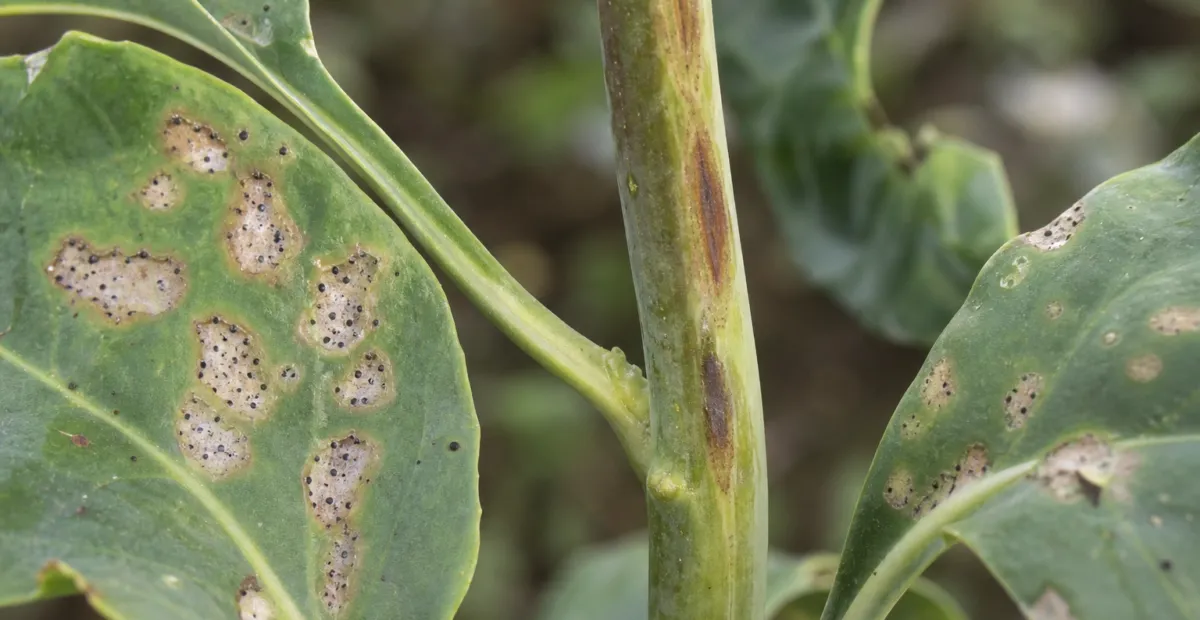
- Round to irregular pale, tan or gray leaf spots, sometimes with a darker margin.
- Small black pycnidia, appearing as pepper-like dots, embedded in leaf or stem lesions.
- Brown to gray, often superficial lesions on petioles and upper stems.
- Stem cankers that may become woody or enlarged, especially when infections progress toward the stem base.
- Premature ripening, reduced pod fill, lodging or yield loss when stem tissues are substantially girdled.
P. biglobosus is frequently associated with milder disease than P. lingam, but more damaging strains and host-specific variants have been reported. Diagnosis should not rely on lesion appearance alone.
Causes and spread
The fungus survives on infected Brassica residue and may also be carried in or on contaminated seed, depending on the host and pathogen population. Fruiting bodies in residue produce airborne ascospores during wet periods. Pycnidia in lesions produce sticky conidia that are spread mainly short distances by rain splash.
Spores infect leaves through natural openings such as stomata or through wounds. Insect feeding, hail, herbicide injury, cultivation damage and other mechanical injuries can increase infection opportunities. Volunteer canola, susceptible Brassica crops and cruciferous weeds can maintain inoculum between commercial crops.
Life cycle and persistence
After harvest, P. biglobosus persists as mycelium and fruiting bodies in infected crop debris. Moisture and moderate temperatures support maturation of pseudothecia and pycnidia. Rain can trigger release of ascospores from residue, while wet lesions release rain-splashed conidia.
Following leaf infection, the fungus may remain inconspicuous for a period before expanding through the petiole and into stem tissues. Lesions and new pycnidia develop later in the season. Infections occurring early enough, or under prolonged wet conditions, have more opportunity to reach and weaken the stem. The timing and severity of disease differ among hosts, cultivars, pathogen lineages and regional weather.
Treatment and control
Remove and destroy severely infected plants in small gardens when feasible, and do not compost diseased Brassica debris unless the composting process reliably reaches pathogen-suppressive temperatures. In commercial fields, base decisions on scouting, disease history, cultivar resistance, weather and local extension recommendations.
Fungicides are most useful as preventive or early protective treatments before the pathogen becomes established in stem tissue. They are unlikely to reverse an established stem canker. Because P. biglobosus may occur with P. lingam and field identification is difficult, confirm unusual, severe or economically important outbreaks through a plant diagnostic laboratory.
Low-impact and biological control
No reliably curative organic treatment is available once stem infection is established. Emphasize sanitation, crop rotation, residue management, clean seed, resistant cultivars and control of volunteer and weed hosts. Reduce leaf wetness where practical in garden settings by improving spacing, irrigation at the soil surface and airflow. Biological products should be considered only when they are legally registered or permitted for the intended crop and disease and when independent local evidence supports their use.
Prevention
Use an integrated approach:
- Rotate out of canola and other susceptible Brassicas for at least three years where practical, using nonhost crops such as cereals during the break.
- Plant tested, high-quality seed from reputable sources and follow applicable seed-health requirements.
- Select cultivars with appropriate blackleg resistance for the local production region, while rotating or diversifying resistance sources when possible.
- Manage volunteer canola and cruciferous weeds such as wild mustard, shepherd’s-purse, pennycress and related hosts.
- Destroy, bury or accelerate decomposition of infected Brassica residue when agronomically and environmentally appropriate.
- Scout seedlings and developing crops after wet weather, recording lesion timing and distribution.
Interesting facts
- P. biglobosus was formerly known as Leptosphaeria biglobosa.
- It is closely related to P. lingam, and both may be present in the same crop or residue.
- The pathogen is often described as weakly or moderately virulent, but virulence varies among populations and host-pathogen combinations.
- Blackleg symptoms may be visible on leaves long before the resulting stem damage becomes apparent.
- Several cruciferous weeds can act as inoculum reservoirs even when no commercial canola is being grown.
Use only fungicide products legally authorized for the specific crop and blackleg or phoma stem canker problem in the United States and in the state where the crop is grown. Follow the current label exactly, including crop, disease, rate, timing, personal protective equipment, reentry interval, preharvest interval and resistance-management requirements. Do not select products solely from recommendations for P. lingam or from another country; confirm current registration and local extension guidance before application.