
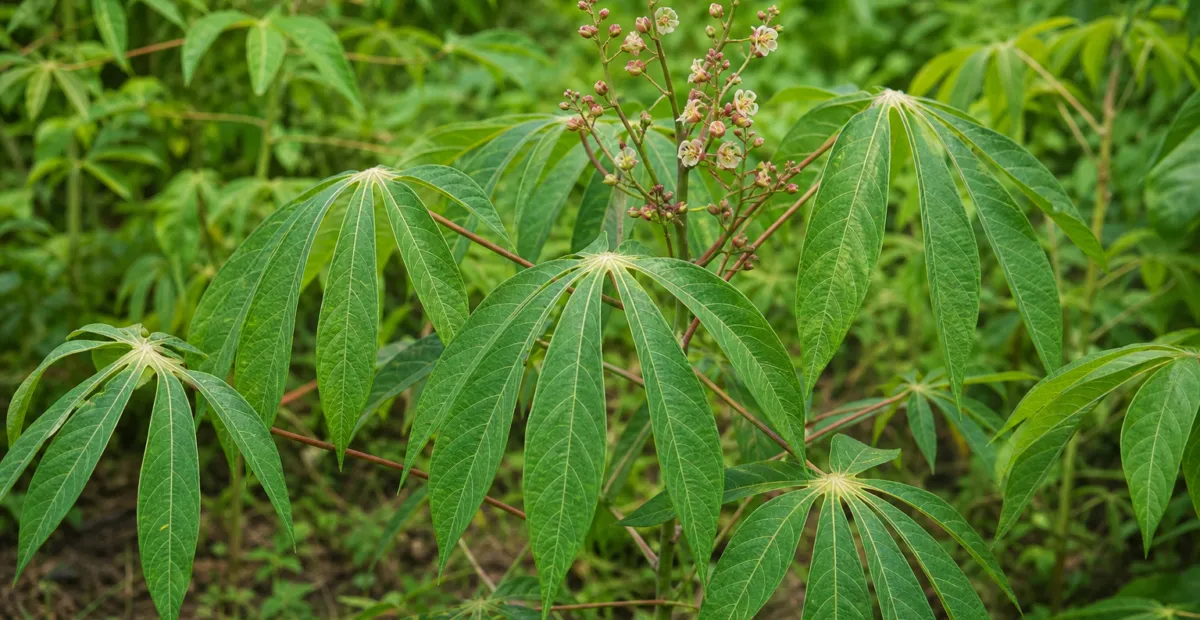
 AI-generated illustration
Cassava (Manihot esculenta) short overview
Cassava is a fast-growing tropical shrub cultivated for its starchy storage roots and, in some regions, carefully prepared leaves. In the United States it is mainly a warm-season crop or container specimen, requiring a long frost-free season and consistently warm soil. Plants establish readily from stem cuttings, tolerate short dry periods once rooted, and can be overwintered indoors where winters are too cold for outdoor growth.
Taxonomic classification
Cassava (Manihot esculenta) care guide
Light and placement
Give cassava a warm, open position with at least 6–8 hours of direct sun, ideally with a south- or southwest-facing exposure. Light afternoon shade is acceptable in very hot climates, but dense shade produces weak, stretched growth and reduces root development. Pale foliage, long internodes and sparse branching indicate insufficient light; scorched leaves or severe midday wilt suggest excessive heat combined with inadequate water.
Watering and humidity
Water deeply when the upper 1–2 inches of soil become dry, then allow excess water to drain. Keep new cuttings evenly moist during establishment, but never leave them in saturated soil. Once well rooted, cassava tolerates short dry periods, although prolonged drought can reduce root size. Reduce watering in cool weather and water less frequently indoors, especially after leaf drop.
Soil and growing medium
Use a loose, fertile, well-drained soil that allows swollen storage roots to expand without becoming waterlogged. Sandy loam or amended loam is suitable; heavy clay should be raised or improved with organic matter and coarse material. Cassava performs across a moderately broad pH range, with slightly acidic to neutral conditions generally suitable. Avoid compacted beds and poorly drained containers.
Feeding
In the ground, incorporate finished compost before planting and apply a balanced vegetable fertilizer after active growth begins. Feed lightly every 4–6 weeks during a long container season, following the product label rather than forcing lush top growth. Avoid heavy nitrogen late in the season because it can favor foliage over storage-root development. Do not fertilize dry, wilted or dormant plants.
Growth and habit
Cassava develops a single or branched woody framework from stem cuttings and produces storage roots along adventitious roots. Growth is rapid in warm weather and slows sharply with cool temperatures. Plants may branch naturally or after pruning. For manageable garden specimens, harvest selected stems or renew the plant from cuttings rather than allowing a container plant to become top-heavy.
Planting and repotting
Plant healthy, mature stem sections horizontally or at a slight angle in warm, loose soil after danger of frost has passed. Keep the cuttings evenly moist until new shoots and roots form, then gradually allow the surface to dry between waterings. Choose a site that will remain warm for at least 8–11 frost-free months if edible roots are the goal. Harvest timing depends on cultivar and climate.
Move container plants into a larger, sturdy pot when roots fill the container or growth becomes unstable. Use a free-draining mix and a container with generous drainage holes. Repot at the beginning of active growth, handling the swollen roots carefully. Because cassava can become tall and top-heavy, choose a heavy pot and avoid an oversized container that stays wet for long periods.
Propagation and pruning
Propagation
Propagate primarily from mature stem cuttings taken during active growth or at the end of the warm season. Use healthy sections about 8–12 inches long with several nodes; allow fresh cuts to dry briefly, then plant in warm, well-drained medium. Keep evenly moist until rooted. Seed propagation is used mainly for breeding because seedlings are genetically variable and slower than cuttings.
Pruning
Prune only when necessary to control height, encourage branching or harvest propagation material. Make clean cuts with sanitized tools and remove damaged or frost-killed stems after new growth begins. Avoid severe pruning during cool weather, when regrowth is slow. Wear gloves because the cut surfaces exude milky sap, which can irritate some people.
Overwintering
Before the first frost, move container plants indoors to a bright, warm location and check carefully for pests. Reduce watering during cool, low-light conditions, but do not allow the root ball to remain wet. In frost-free areas, protect the root zone with mulch and cover plants during brief cold events. Frost may cause dieback; remove damaged growth after spring regrowth begins.
Uses
Cassava is grown for starchy storage roots used in cooked foods, flour, starch and tapioca products. Young leaves are used as a cooked vegetable in some food traditions. The plant is also grown as a tropical ornamental or container specimen, including variegated forms. Raw roots, leaves and other tissues may contain cyanogenic compounds; food preparation must follow reliable culinary guidance, and cassava should not be treated as edible directly from the garden without proper processing.
Appearance
The plant has smooth green to gray-brown stems, milky sap and distinctive palmately divided leaves with narrow finger-like lobes. Leaf color ranges from medium green to gray-green, and ornamental cultivars may be variegated. The overall habit is upright and shrub-like, with branching concentrated toward the upper stem. Underground storage roots are elongated, tapered or irregularly swollen and covered by a thin brown outer layer.
Flowering
Cassava is monoecious, producing separate male and female flowers on the same plant. Female flowers are generally larger and fewer and occur lower in the inflorescence, while numerous male flowers occur above them. Female flowers commonly open before male flowers on the same inflorescence, encouraging cross-pollination. Flowering is strongly genotype- and environment-dependent and may be sparse or absent in short growing seasons.
Pollination and visitors
Cassava flowers are visited by insects and are generally regarded as insect-pollinated, with bees and wasps documented among the important visitors. The species is commonly cross-pollinated, although self-pollination can occur when male and female flowers on different branches overlap in timing. Flowering and visitor activity vary substantially by genotype and weather.
Manihot esculenta photos
Click any photo for a larger view. Source, author and license are shown separately.
Diseases and pests
Diseases
Good drainage, clean planting material and adequate spacing reduce problems. Root rots are most likely in persistently wet or compacted soil. Remove and discard severely affected cuttings or plants, avoid reusing contaminated soil, and water at the base rather than keeping foliage wet. Sanitize pruning tools and do not propagate from weak or diseased stems.
Pests
Red spider mites may occur, especially on indoor plants or during hot, dry weather. Inspect leaf undersides for stippling, webbing or fine moving specks. Improve plant hydration, rinse foliage when practical and use insecticidal soap or another labeled treatment according to directions. Remove heavily infested leaves and quarantine affected container plants.
Related diseases and pests
Only Plant Doctor profiles whose host data indicate this plant may be affected are shown here.
Toxicity and pollen
All parts of cassava can contain cyanogenic glycosides that may release hydrogen cyanide when plant tissue is damaged or improperly processed. Concentrations vary substantially among cultivars and plant parts, with bitter types generally presenting greater risk. Raw roots and leaves should not be eaten. Roots require peeling and thorough cooking or other validated processing; cooking water should be discarded when recommended by the preparation method.
- Typical season
- Variable; during flowering in warm climates
- Pollination / pollen
- Large, insect-carried pollen released from male flowers
Cassava produces pollen, but reliable United States data establishing its importance as an airborne seasonal allergen are limited. The pollen is associated with insect pollination rather than typical wind-dispersed crop pollen. Separate food-allergy reports exist for cassava proteins, but food allergy should not be conflated with airborne pollen exposure. Sensitive individuals should avoid handling or consuming material that has previously caused symptoms.
Native habitat
The species is associated with warm tropical and seasonally tropical environments, including cultivated fields, forest margins and disturbed ground. It grows best in warm soils with reliable drainage and can tolerate seasonal dryness after establishment. Its broad cultivation range reflects adaptation to tropical lowlands and some subtropical conditions, but cold limits growth and root production.
Interesting fact
Cassava is propagated commercially mainly from stem cuttings rather than from seed. Its storage roots can remain in the ground for months, but harvested roots deteriorate comparatively quickly. Cultivars are often described as sweet or bitter according to cyanogenic potential, although taste alone is not a dependable safety test. The species is one of the world’s major staple food crops.
Frequently asked questions (FAQ)
The most relevant questions about this plant, with short and direct answers.
🌱Quick care
What is cassava?⌄
Cassava (Manihot esculenta) is a tropical root crop in the Euphorbiaceae family, grown for its starchy storage roots and sometimes its leaves. It is also called yuca in the United States, but it is not the same plant as ornamental yucca.
How much sun does cassava need?⌄
Cassava grows best in full sun, receiving at least 6 hours of direct light daily. Light partial shade is tolerated, but lower light can reduce vigor and root production.
How often should I water cassava?⌄
Water cassava moderately, keeping the soil evenly moist while the plant is establishing. Once established, it tolerates drought, but prolonged dryness can slow growth and reduce storage-root development.
How fast does cassava grow?⌄
Cassava grows quickly in warm weather and generally needs at least 8 months of frost-free conditions to produce a crop. Cool or dry conditions can extend the growing period to 18 months or longer.
🌤️Environment and placement
Can cassava grow in the United States?⌄
Cassava can grow outdoors in warm parts of the United States, especially frost-free areas of USDA Zones 9–11. In cooler regions, grow it as a seasonal crop or in a container that can be protected before frost.
What temperatures can cassava tolerate?⌄
Cassava is frost-tender and does not tolerate freezing temperatures. Protect plants before the first freeze, because even brief exposure to frost can damage the foliage and stems.
Can cassava survive winter outdoors?⌄
Cassava may survive winter outdoors only where freezes are rare or absent. In colder parts of the United States, cut back and overwinter healthy plants indoors or take stem cuttings before frost.
Can cassava grow in containers?⌄
Cassava can grow in a large container with excellent drainage, full sun and enough depth for root development. Container plants are useful in cooler climates because they can be moved indoors before freezing weather.
What soil is best for cassava?⌄
Use deep, friable, well-drained loam or sandy loam for cassava. Avoid compacted or waterlogged soil, which restricts storage-root development and can encourage rot.
Does cassava tolerate poor soil?⌄
Cassava tolerates relatively poor soil, but it performs better in fertile, well-drained soil with moderate organic matter. Excessively rich soil can encourage leafy growth at the expense of storage roots.
💧Care and problems
Why are my cassava leaves turning yellow?⌄
Yellow cassava leaves can result from overwatering, poor drainage, nutrient deficiency, drought stress or normal aging of older leaves. Check soil moisture and drainage first, then look for pests or widespread symptoms on new growth.
Why is my cassava not producing roots?⌄
Cassava may produce few storage roots when it lacks warmth, receives too much shade, grows in compacted soil or is harvested too early. Provide a long, warm growing season and loose soil, and avoid excessive nitrogen fertilizer.
How much fertilizer does cassava need?⌄
Cassava usually needs only moderate feeding in reasonably fertile soil. Apply a balanced vegetable fertilizer according to its label, but avoid heavy nitrogen applications that favor stems and leaves over storage roots.
Does cassava need regular pruning?⌄
Cassava does not need regular pruning for healthy growth. Remove damaged or crowded stems when necessary, and save healthy mature stem sections if you want to propagate new plants.
What pests commonly affect cassava?⌄
Cassava can be affected by mites, whiteflies, mealybugs, scale insects and caterpillars, depending on the region. Inspect leaf undersides and new growth regularly, and use a targeted treatment labeled for edible crops when needed.
🪴Planting and repotting
When should I plant cassava?⌄
Plant cassava outdoors after the danger of frost has passed and the soil is consistently warm. In much of the United States, this means late spring, although timing varies by local climate.
How deep should cassava cuttings be planted?⌄
Plant cassava stem cuttings with the correct top end upright and bury roughly 3–6 inches of the cutting. In well-drained conditions, cuttings may be planted vertically, tilted or horizontally depending on moisture and soil texture.
How far apart should cassava plants be spaced?⌄
Space cassava about 3 feet apart for general garden production, allowing additional room between rows if plants will remain in the ground for a full season. Larger spacing can improve access and reduce competition.
Can cassava be grown from a grocery-store root?⌄
Cassava is normally propagated from mature stem cuttings rather than pieces of the edible root. Grocery-store roots are often treated, dried or no longer viable, so they are unreliable for producing plants.
When should cassava roots be harvested?⌄
Harvest cassava roots when they have reached useful size, commonly about 8–12 months after planting under warm conditions. Harvest timing varies by cultivar and climate, and roots can become tougher or more fibrous if left too long.
✂️Propagation and pruning
How do you propagate cassava from cuttings?⌄
Propagate cassava by planting healthy, disease-free sections of mature woody stem in warm, well-drained soil. Use cuttings several inches long, keep their original orientation, and maintain moderate moisture until new shoots appear.
Can cassava be grown from seed?⌄
Cassava can be grown from seed, but agricultural production relies on stem cuttings because seed germination is often poor and seedlings vary from the parent plant. Seeds are used mainly for breeding and selecting new varieties.
Can I overwinter cassava cuttings indoors?⌄
Yes, healthy cassava stem cuttings can be kept indoors through winter in a warm, bright, frost-free location. Allow cut surfaces to dry briefly, then store or root them in a barely moist medium without waterlogging.
⚠️Toxicity and safety
Is cassava poisonous when raw?⌄
Raw or improperly prepared cassava can be toxic because it contains cyanogenic compounds that may release hydrogen cyanide when plant tissue is damaged. Never eat raw cassava roots or leaves, and use a reliable preparation method for the specific cultivar.
How should cassava be prepared safely for eating?⌄
Peel cassava thoroughly and cook it completely by a reliable method such as boiling, baking or frying; discard the cooking water when appropriate. Preparation requirements vary with cultivar, and raw, bitter or wild cassava should not be eaten casually.
Are cassava leaves edible?⌄
Cassava leaves can be eaten in some culinary traditions, but they also contain cyanogenic compounds and require thorough processing and cooking. Do not eat raw leaves or assume that a low-cyanide root cultivar makes the leaves safe without preparation.
Is cassava safe for dogs, cats or livestock?⌄
Raw cassava plant parts can pose a cyanide risk to pets and livestock, particularly when eaten in quantity or improperly prepared. Keep animals away from raw roots, leaves, peels and plant trimmings.
Is cassava sap irritating to skin?⌄
Cassava sap may irritate sensitive skin, especially when plant tissue is cut or handled repeatedly. Wear gloves when taking cuttings or harvesting, and wash exposed skin and tools afterward.
🌸Flowering and special interest
Does cassava flower?⌄
Cassava can produce small flowers in branched clusters, usually after substantial vegetative growth and under favorable warm conditions. Flowering is not required for a useful root harvest, and plants grown in short or cool seasons may not bloom.
Does cassava produce edible fruit or seeds?⌄
Cassava may form small fruit containing seeds after flowering, but the crop is normally propagated from stem cuttings. Seed-grown plants are variable and are mainly useful for breeding rather than preserving a selected cultivar.
Similar plants
 Yellow lantern chili (Capsicum chinense) care guideCapsicum chinense
 Capsicum baccatum care guideCapsicum baccatum
 Serrano (Capsicum annuum ‘Serrano’)Capsicum annuum 'Serrano'
 Purple Beauty (Capsicum annuum ‘Purple Beauty’)Capsicum annuum 'Purple Beauty'
 Numex Twilight (Capsicum annuum ‘Numex Twilight’)Capsicum annuum 'Numex Twilight'
 Explosive Ember Chili Pepper (Capsicum annuum ‘Explosive Ember’)Capsicum annuum 'Explosive Ember'