
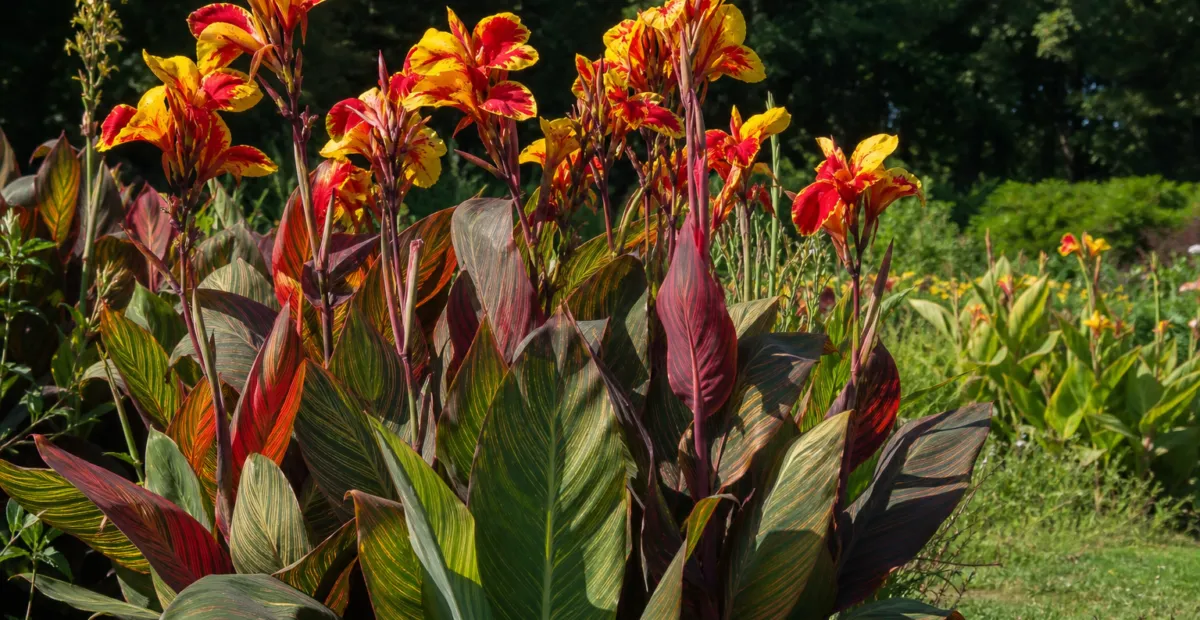
 AI-generated illustration
Canna lily (Canna ‘Cleopatra’) short overview
Canna 'Cleopatra' is an unusually variable garden canna with broad, tropical-looking leaves that may be green, bronze, red, or irregularly marked. Its flowers can appear yellow, red, or variably bicolored, sometimes changing from one stem or season to the next. The rhizomatous perennial grows vigorously in warm weather and suits sunny borders, large containers, and bold patio displays. In colder regions, lift the rhizomes before hard frost and overwinter them indoors.
Taxonomic classification
Canna lily (Canna ‘Cleopatra’) care guide
Light and placement
Give full sun for the strongest stems, richest foliage color, and best flowering; a south- or west-facing position is suitable. In very hot regions, light afternoon shade can reduce scorch. Too little light produces stretched growth and fewer flowers, while excessive reflected heat combined with dry soil can brown leaf margins.
Watering and humidity
Water deeply when the upper inch of soil begins to dry, keeping the root zone consistently moist during active growth. Container plants may need daily watering in hot weather. Reduce watering after foliage dies back and while dormant rhizomes are stored, but never allow stored rhizomes to become shriveled or wet enough to rot.
Soil and growing medium
Use fertile, moisture-retentive soil that still drains freely. A loam amended with compost is suitable, while very sandy soils need more organic matter and frequent irrigation. Cannas tolerate a broad pH range from mildly acidic through mildly alkaline, but consistent fertility and moisture are more important than precise pH adjustment.
Feeding
In the ground, incorporate compost before planting and feed during active growth with a balanced fertilizer or a bloom-oriented product according to its label. Container plants benefit from controlled-release fertilizer supplemented by occasional liquid feeding in midsummer. Stop feeding as growth naturally declines in fall or when rhizomes are being prepared for storage.
Growth and habit
Growth is upright and clump-forming, with new shoots emerging from spreading rhizomes during warm weather. The cultivar can produce noticeably different shoots within one clump. Remove weak or unwanted reversions if maintaining a preferred color pattern, while recognizing that stable uniformity is not guaranteed.
Planting and repotting
Plant outdoors after the danger of frost has passed and the soil has warmed. Set rhizomes about 4–6 inches deep with the growing eyes facing upward, and space plants about 18–24 inches apart for a full display. Water thoroughly after planting and keep the bed evenly moist while new shoots establish.
Repot container-grown plants in spring as growth resumes, using a heavy, fertile potting mix with good drainage. Move the rhizome into a container only one or two sizes larger; oversized pots stay wet longer and can encourage rot. Refresh crowded clumps by dividing the rhizomes rather than continually increasing pot size.
Propagation and pruning
Propagation
Divide rhizomes in early spring as shoots begin to develop. Separate healthy sections with at least one strong eye and replant immediately in warm, lightly moist medium. Division preserves the cultivar more reliably than seed, especially because the unusual foliage and flower patterns may not come true from seedlings.
Pruning
Remove spent flowers individually to encourage continued flowering. After frost blackens the foliage, cut stems back to the ground. In frost-free climates, remove damaged foliage as needed while leaving healthy leaves to support continued growth.
Overwintering
After frost or natural dieback, cut stems back and lift rhizomes in climates colder than about USDA Zone 7b. Allow them to dry briefly, then store them in barely moist peat-free mix, vermiculite, or leaf mold in a dark, frost-free place around 40–50°F. Recheck periodically for rot or shriveling.
Uses
Use 'Cleopatra' as a focal plant in mixed borders, tropical-style plantings, large containers, patio displays, poolside gardens, and seasonal cut-flower arrangements. Its foliage is often as important as its flowers. Although some Canna species have edible rhizomes, this ornamental cultivar should not be treated as a food crop without verified identification and preparation guidance.
Appearance
The plant has broad, banana-like leaves on stout upright stems and a distinctly tropical appearance. The defining feature is its instability: foliage may be solid green, bronze-red, or irregularly marked, while flowering stems may carry yellow, red, or mixed-color blooms. This variability is useful for identification but means nursery plants may not match exactly.
Flowering
Flowering occurs on erect stems from summer into early fall. The cultivar is notably unstable and variable: flowers may be solid yellow, solid red, or a mixture of red and yellow, and color combinations can differ among stems and seasons. Deadheading individual spent blooms can encourage a longer display.
Pollination and visitors
Canna flowers can provide nectar and floral resources for hummingbirds and other flower-visiting birds in suitable regions. Visitor activity is strongest during the warm flowering season. The evidence supports a general visitor group rather than a specific pollinator species for this named cultivar.
Diseases and pests
Diseases
Canna virus diseases may cause mottled, streaked, or distorted leaves and reduced vigor. Remove and discard badly affected plants and disinfect cutting tools between clumps; do not compost symptomatic material. Good airflow, clean planting stock, and avoiding overhead irrigation help reduce disease spread.
Pests
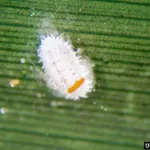
Watch for slugs, caterpillars, leafrollers, and spider mites, especially on stressed or sheltered plants. Inspect leaf undersides and rolled leaves regularly, remove pests by hand where practical, and use targeted controls only when damage is significant. Avoid excessive nitrogen, which produces soft growth attractive to sap-feeding pests.
Related diseases and pests
Only Plant Doctor profiles whose host data indicate this plant may be affected are shown here.
Toxicity and pollen
ASPCA lists canna lily as non-toxic to dogs and cats. That classification applies to the commonly cultivated garden canna group rather than proving that every preparation or large quantity is harmless. Normal gardening precautions still apply: avoid intentional ingestion, supervise children and pets, and seek professional advice if a substantial amount is eaten or symptoms occur.
- Typical season
- No well-documented U.S. airborne pollen season for this cultivar; flowers occur mainly June–October
- Pollination / pollen
- Large, animal-associated pollen; not typically wind-dispersed
Cannas are showy, animal-pollinated flowering plants rather than major wind-pollinated allergy plants. No strong evidence identifies Canna 'Cleopatra' as an important airborne pollen source in the United States, but individual sensitivities are possible and pollen exposure should not be assumed impossible.
Native habitat
Canna is associated with warm, frost-free or seasonally warm environments and performs best in rich soils with reliable moisture. Garden forms are cultivated far beyond their native American distribution. In the United States, growth is seasonal in colder regions and effectively perennial outdoors only where rhizomes can survive or be protected from freezing.
Interesting fact
This cultivar is famous for producing different foliage and flower color combinations, sometimes on the same plant. It has been described horticulturally as an unstable chimera, meaning its visible traits can vary among shoots and seasons. The name has also been confused with other similarly named cannas, including 'Yellow King Humbert'.
Frequently asked questions (FAQ)
The most relevant questions about this plant, with short and direct answers.
🌱Quick care
How do you care for Canna 'Cleopatra'?⌄
Grow Canna 'Cleopatra' in full sun, fertile moist soil, and keep it evenly watered. Protect the rhizomes from freezing, especially in USDA Zones 6 and colder.
Is Canna 'Cleopatra' easy to grow?⌄
Yes, Canna 'Cleopatra' is generally easy to grow when given warmth, sunlight, regular moisture, and fertile soil. The main extra task in cold climates is lifting and storing the rhizomes for winter.
🌤️Environment and placement
How much sun does Canna 'Cleopatra' need?⌄
Canna 'Cleopatra' performs best with at least 6 hours of direct sunlight daily. Partial shade is tolerated, but flowering and the plant’s red-and-yellow coloration may be less vigorous.
Can Canna 'Cleopatra' grow in partial shade?⌄
Yes, Canna 'Cleopatra' can grow in partial shade, particularly where afternoon heat is intense. Expect stronger growth and usually better flowering in a bright, sunny location.
What USDA hardiness zone is Canna 'Cleopatra'?⌄
Canna 'Cleopatra' is commonly listed for USDA Zones 8a–11b, although protected plantings may survive in colder areas. In Zones 7 and colder, lift the rhizomes before hard freezing for the most reliable results.
Can Canna 'Cleopatra' grow in containers?⌄
Yes, Canna 'Cleopatra' grows well in a large container and makes a tall thriller plant. Use a container with drainage holes, fertile potting mix, and enough volume to support its upright growth and spreading rhizomes.
How tall does Canna 'Cleopatra' get?⌄
Canna 'Cleopatra' typically reaches about 4 to 5 feet tall. Height can vary with sunlight, fertility, moisture, container size, and the growing season.
💧Care and problems
How often should I water Canna 'Cleopatra'?⌄
Water Canna 'Cleopatra' whenever the surface begins to dry so the soil remains evenly moist. Do not allow a container to sit in stagnant water, even though established cannas tolerate brief wet conditions.
Does Canna 'Cleopatra' need fertilizer?⌄
Yes, Canna 'Cleopatra' benefits from fertile soil and regular feeding during active growth. Apply a balanced or bloom-supporting fertilizer according to the product label, avoiding excessive nitrogen that can favor leaves over flowers.
Why is my Canna 'Cleopatra' not blooming?⌄
Insufficient sunlight, cool weather, drought, or poor nutrition are common reasons Canna 'Cleopatra' fails to bloom. Move it to a sunnier site, maintain consistent moisture, and feed it during active growth.
How do I deadhead Canna 'Cleopatra'?⌄
Remove faded flowers and developing seed pods from Canna 'Cleopatra' to keep the plant tidy and encourage continued flowering. Cut the spent flower stalk back to its base when it has finished producing blooms.
Why are the leaves of Canna 'Cleopatra' turning brown?⌄
Brown leaves on Canna 'Cleopatra' commonly result from drought, scorching sun combined with dry soil, wind, or frost damage. Check soil moisture, water deeply, and remove leaves that are completely dead.
What pests attack Canna 'Cleopatra'?⌄
Canna 'Cleopatra' may be affected by caterpillars, slugs, and spider mites, particularly in sheltered or greenhouse conditions. Inspect the undersides of leaves regularly and use the least-toxic control appropriate for the pest.
What should I do about holes in Canna 'Cleopatra' leaves?⌄
Holes usually indicate chewing pests such as caterpillars, slugs, or snails. Inspect the foliage at dusk and remove pests by hand or use a labeled treatment that is appropriate for ornamental plants.
Can Canna 'Cleopatra' tolerate wet soil?⌄
Canna 'Cleopatra' prefers consistently moist but well-drained soil and can tolerate brief periods of wetness. Prolonged stagnant water can cause rhizome rot, especially in containers or heavy clay.
🪴Planting and repotting
When should I plant Canna 'Cleopatra' rhizomes?⌄
Plant Canna 'Cleopatra' rhizomes outdoors in spring after the danger of frost has passed and the soil has warmed. In colder areas, start them indoors several weeks earlier and transplant them after temperatures stabilize.
How deep should I plant Canna 'Cleopatra' rhizomes?⌄
Plant Canna 'Cleopatra' rhizomes horizontally about 2 inches deep, with visible growing eyes facing upward when possible. Space plants about 12 to 24 inches apart depending on the desired density.
What soil is best for Canna 'Cleopatra'?⌄
Use fertile, moist but well-drained loam or amended sandy soil for Canna 'Cleopatra'. Improve heavy or compacted soil with organic matter and ensure containers have unobstructed drainage.
Can I start Canna 'Cleopatra' indoors?⌄
Yes, start Canna 'Cleopatra' indoors in a container several weeks before the outdoor planting season. Move it outside gradually after frost danger has passed to reduce transplant shock and sun damage.
How do I repot Canna 'Cleopatra' in a container?⌄
Repot Canna 'Cleopatra' when the rhizomes fill the container or growth becomes crowded. Move it into a container one size larger with fresh, well-drained potting mix, keeping the rhizomes near the same depth.
✂️Propagation and pruning
How do you propagate Canna 'Cleopatra'?⌄
Propagate Canna 'Cleopatra' mainly by dividing its rhizomes in early spring. Separate sections with at least one healthy growing eye, then plant them horizontally in warm, fertile soil.
Can Canna 'Cleopatra' be grown from seed?⌄
Canna 'Cleopatra' can produce seeds, but seedlings may not reliably reproduce the parent plant’s distinctive flower and foliage patterns. Rhizome division is the preferred method for maintaining the named cultivar.
When should I divide Canna 'Cleopatra' rhizomes?⌄
Divide Canna 'Cleopatra' rhizomes in early spring before strong new growth begins. Dividing after winter storage makes it easier to identify healthy eyes and establish new plants.
Should I cut back Canna 'Cleopatra' in fall?⌄
After frost blackens the foliage, cut Canna 'Cleopatra' back to a few inches above the soil before lifting or heavily mulching it. In frost-free climates, remove damaged foliage while allowing healthy growth to continue.
How do I overwinter Canna 'Cleopatra' in cold climates?⌄
After the first killing frost, cut back Canna 'Cleopatra', lift the rhizomes, and store them in barely moist peat-free mix or similar packing material in a cool, frost-free place. Do not let them freeze or dry out completely.
Can Canna 'Cleopatra' stay in the ground over winter?⌄
Canna 'Cleopatra' may remain outdoors in mild regions where the ground does not freeze deeply, especially with a thick layer of dry mulch. In colder USDA Zones, lifting the rhizomes is safer than relying on winter protection.
Can I overwinter Canna 'Cleopatra' in a pot?⌄
Yes, you can overwinter Canna 'Cleopatra' in a pot by moving it to a frost-free location after cutting back the foliage. Keep the dormant rhizomes cool and only slightly moist, avoiding both freezing and waterlogged soil.
⚠️Toxicity and safety
Is Canna 'Cleopatra' poisonous to dogs?⌄
Canna 'Cleopatra' is considered non-toxic to dogs by the ASPCA. Even non-toxic plants can cause mild stomach upset if eaten, so discourage pets from chewing the foliage or rhizomes.
Is Canna 'Cleopatra' poisonous to cats?⌄
Canna 'Cleopatra' is considered non-toxic to cats by the ASPCA. Prevent ingestion where possible because any plant material may cause digestive upset in individual animals.
🌸Flowering and special interest
When does Canna 'Cleopatra' bloom?⌄
Canna 'Cleopatra' generally blooms from summer until frost when grown in warm, sunny conditions. Regular moisture, adequate nutrition, and removal of spent flowers can help extend the flowering period.
What color are Canna 'Cleopatra' flowers?⌄
Canna 'Cleopatra' is known for variable flowers that may be yellow with red markings, red, or combinations of red and yellow. Individual plants and flower stems can show different color patterns.
Why does my Canna 'Cleopatra' have different flower colors?⌄
Different flower colors are a characteristic feature of Canna 'Cleopatra', not necessarily a sign of a problem. A single plant may produce yellow, red-marked, red, or mixed blooms on different stems.
Does Canna 'Cleopatra' have unusual foliage?⌄
Yes, Canna 'Cleopatra' is valued for foliage that can display green leaves with burgundy or reddish striping. The intensity and pattern may vary with the individual plant and growing conditions.
Similar plants
 Yellow lantern chili (Capsicum chinense) care guideCapsicum chinense
 Capsicum baccatum care guideCapsicum baccatum
 Serrano (Capsicum annuum ‘Serrano’)Capsicum annuum 'Serrano'
 Purple Beauty (Capsicum annuum ‘Purple Beauty’)Capsicum annuum 'Purple Beauty'
 Numex Twilight (Capsicum annuum ‘Numex Twilight’)Capsicum annuum 'Numex Twilight'
 Explosive Ember Chili Pepper (Capsicum annuum ‘Explosive Ember’)Capsicum annuum 'Explosive Ember'