
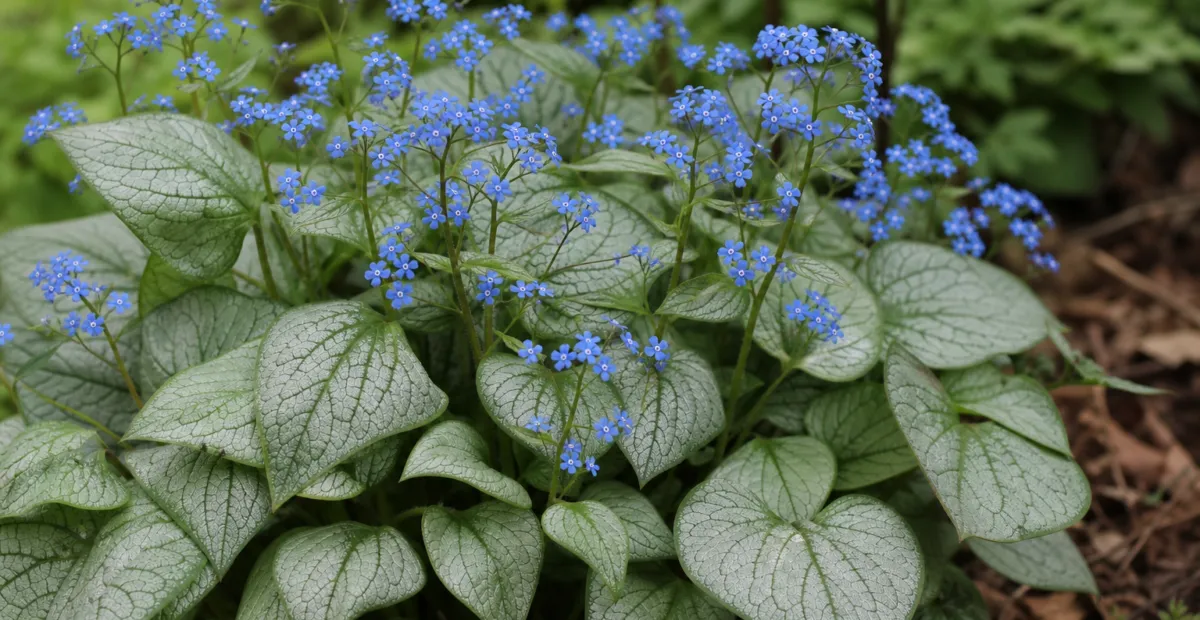
Brunnera macrophylla short overview
Brunnera macrophylla is a shade-loving, clump-forming herbaceous perennial grown for its large, rough-textured heart-shaped leaves and airy sprays of small blue flowers in spring. It performs best in cool, consistently moist, well-drained soil enriched with organic matter, especially beneath open tree canopies or along shaded borders. The species spreads gradually by creeping rhizomes and offers dependable foliage interest after flowering, although hot afternoon sun and dry soil can cause leaf scorch and decline.
Taxonomic classification
Brunnera macrophylla care guide
Light and placement
Place in bright open shade, dappled shade, or a site with gentle morning sun and afternoon protection. East- or north-facing borders and woodland edges are dependable choices. Prolonged hot afternoon sun can scorch the leaves, while very deep shade may reduce flowering and produce a looser display. Pale, stretched growth usually indicates insufficient light; bleached or browned leaf margins suggest excessive sun or heat.
Watering and humidity
Water deeply when the upper soil surface begins to dry, keeping the root zone evenly moist rather than constantly saturated. Newly planted clumps need regular irrigation through their first growing season; established plants still require supplemental water during summer drought. Apply mulch without burying the crown to reduce evaporation and moderate soil temperature. Dry soil commonly causes browning, tattered foliage and premature seasonal decline.
Soil and growing medium
Use fertile soil with abundant organic matter, good drainage and reliable moisture retention. Loam or clay amended with compost is suitable, provided excess water can drain away. Avoid sharply drying, sandy sites unless irrigation and organic amendments are dependable. The species tolerates a broad pH range from slightly acidic through slightly alkaline, so routine liming is unnecessary unless a soil test indicates a need.
Feeding
In spring, top-dress the planting with a thin layer of finished compost or use a balanced, slow-release perennial fertilizer according to the label. Heavy feeding is unnecessary and may encourage soft, overly lush growth. Do not fertilize drought-stressed, heat-stressed or newly transplanted plants until they have resumed active growth. Mulch and soil improvement are generally more valuable than repeated liquid feeding.
Growth and habit
Plants form a slowly expanding mound and gradually make a useful shade groundcover through creeping rhizomes. Growth is usually moderate, with foliage developing strongly after the spring bloom. Crowded clumps can be divided when they become congested or the center loses vigor. In hot climates, maintaining cool, moist roots is essential for preserving the foliage through late summer.
Planting and repotting
Plant after the soil can be worked in spring or several weeks before hard frost in fall. Set the crown level with the surrounding soil and spread the roots through amended ground without burying the crown. Water thoroughly after planting and maintain even moisture while roots establish. Leave enough space for the clump to broaden, and mulch lightly to keep the root zone cool.
Grow in a wide container with drainage holes and a moisture-retentive but aerated potting mix. Repot or divide when roots fill the container or the clump becomes crowded, preferably in spring or early fall. Replant the crown at its former depth, water thoroughly and shelter the container from intense afternoon heat while it re-establishes.
Propagation and pruning
Propagation
Divide established clumps in spring after flowering or in early fall, ensuring each division has healthy roots and a crown. Seed propagation is possible, and plants may self-seed modestly in favorable conditions, but seedlings may not reproduce the exact traits of named cultivars. Use division for the most predictable garden results.
Pruning
Remove spent flower stalks after blooming if a tidier appearance is desired. Cut away badly scorched, torn or declining leaves during the growing season. In late fall, leave healthy foliage until it collapses naturally, then remove dead material before new growth begins. Avoid unnecessary hard cutting while plants are actively establishing.
Overwintering
Plants are reliably hardy in the ground through much of USDA Zones 3–8. After foliage dies back, remove only collapsed material and apply a light mulch in exposed or very cold sites. Container plants experience colder root temperatures than plants in the ground; move pots to a sheltered location or protect the container with insulating material during severe freezes.
Uses
Useful in woodland gardens, shaded perennial borders, understory plantings, cottage-style beds and moist shade groundcovers. It also works in large containers placed in protected shade, provided the potting mix does not dry quickly. The foliage provides season-long ornamental value, while spring flowers offer a modest early-season resource for visiting insects. It is grown as an ornamental, not as a culinary or medicinal plant.
Appearance
The species is recognized by large basal leaves that are broadly heart-shaped, dark green, rough and hairy, with smaller upper leaves on flowering stems. Slender, branched stalks rise above the foliage and carry airy sprays of blue, forget-me-not-like flowers with pale centers. Unlike many cultivars, the species typically has plain green foliage rather than silver overlay or variegated markings.
Flowering
Flowering usually begins in mid-spring, with small blue corolla-like flowers arranged in open, branched racemes above the leaves. The flowers resemble those of forget-me-nots but are carried on taller, more open stems. Bloom may continue into early summer in favorable conditions, especially where plants remain cool and adequately watered.
Pollination and visitors
The open blue flowers are documented as nectar- and pollen-bearing and are visited by bees. Available horticultural records support bees as the characteristic visitor group; evidence is not strong enough here to assign a particular bee species or to add butterflies, moths or hoverflies.
Brunnera macrophylla photos
Click any photo for a larger view. Source, author and license are shown separately.
Diseases and pests
Diseases
Serious disease problems are uncommon under suitable conditions. Prevent crown and root problems by avoiding stagnant water, burying the crown or overcrowding. Improve air movement around dense plantings and water the soil rather than repeatedly wetting foliage. Remove badly damaged leaves and clean up debris at season’s end if foliar spotting develops.
Pests
Slugs and snails are occasional pests, especially where foliage remains continuously damp and shaded. Inspect plants at night or after rain, remove hiding places and use proportionate controls labeled for the crop and site if necessary. Heat, drought and excessive sun more often cause serious damage than insects. Deer and rabbits generally show little interest in the rough leaves.
Toxicity and pollen
Authoritative species-specific toxicity evidence for humans and pets is limited. Do not treat the absence of a documented poisoning record as proof of edibility or complete safety. Prevent children and animals from chewing ornamental plant material, and seek professional medical or veterinary advice if a substantial amount is eaten or symptoms occur.
- Typical season
- Spring, typically April–May in much of the United States
- Pollination / pollen
- Insect-dispersed pollen; not typically released in large airborne clouds
Brunnera is insect-pollinated, so its pollen is generally transferred at the flower rather than released as a conspicuous wind-borne cloud. That lowers, but does not eliminate, exposure potential. Sensitive people may still react to direct contact with flowers or foliage, and individual allergy responses vary. Avoid rubbing the face after handling and wash hands after gardening.
Native habitat
In its native range, Brunnera macrophylla occurs in cool, moist woodland and mountain environments, commonly in humus-rich soils with partial shade. Its garden performance reflects those conditions: roots prefer steady moisture and cool soil, while leaves are vulnerable to hot sun, drought and prolonged summer heat.
Interesting fact
The genus name Brunnera honors the Swiss botanist Samuel Brunner. The species is rhizomatous and can form broad clumps without becoming a fast, aggressive spreader. Its common horticultural appeal comes from the contrast between coarse heart-shaped leaves and delicate blue racemes. The leaf texture is rough and hairy, a feature associated with the old bugloss name.
Frequently asked questions (FAQ)
The most relevant questions about this plant, with short and direct answers.
🌱Quick care
How do you care for Brunnera macrophylla?⌄
Grow Brunnera macrophylla in partial to full shade, consistently moist soil, and a sheltered location protected from hot afternoon sun. Use organically rich, well-drained soil and mulch around the plant to help conserve moisture and keep roots cool.
Is Brunnera macrophylla an evergreen perennial?⌄
Brunnera macrophylla is usually a deciduous herbaceous perennial, although leaves may persist longer in mild climates. The plant dies back or declines after hard frost and regrows from its crown in spring.
How big does Brunnera macrophylla get?⌄
Brunnera macrophylla typically grows about 12 to 18 inches tall and 18 to 30 inches wide. Cultivars can differ, so check the mature size of a named selection before planting.
What USDA hardiness zones can grow Brunnera macrophylla?⌄
Brunnera macrophylla is generally hardy in USDA Zones 3 through 8. Performance can decline in hot, humid regions, especially where summers are long and the soil dries quickly.
🌤️Environment and placement
Does Brunnera macrophylla need shade?⌄
Yes, Brunnera macrophylla performs best in partial shade to full shade, especially with morning light and afternoon protection. Too much direct sun can scorch or brown the leaves, particularly during hot, dry weather.
Can Brunnera macrophylla grow in deep shade?⌄
Brunnera macrophylla can grow in deep shade, but flowering and foliage density may be reduced. Bright, filtered light or a few hours of gentle morning sun usually produces better growth without exposing the leaves to damaging afternoon heat.
Can Brunnera macrophylla grow in full sun?⌄
Brunnera macrophylla is not usually suited to full sun, especially in warm parts of the United States. It may tolerate more sun in cool climates if the soil remains consistently moist, but prolonged afternoon exposure commonly causes leaf scorch.
What soil is best for Brunnera macrophylla?⌄
The best soil for Brunnera macrophylla is moist, organically rich, well-drained loam or clay. Improve poor soil with compost, but avoid locations that stay waterlogged because saturated conditions can encourage crown or root problems.
Can Brunnera macrophylla grow in clay soil?⌄
Yes, Brunnera macrophylla can grow in clay soil if it drains adequately and contains sufficient organic matter. Amend compacted clay with compost and avoid planting where water remains pooled after rain.
How much water does Brunnera macrophylla need?⌄
Brunnera macrophylla needs consistently moist soil, especially while establishing and during summer dry spells. Water deeply when the soil surface begins to dry, while maintaining good drainage to prevent prolonged saturation.
Can Brunnera macrophylla grow near a pond or stream?⌄
Yes, Brunnera macrophylla is well suited to a shady pond, stream, woodland, or rain-garden edge if the soil is moist but not permanently waterlogged. Provide shade and avoid planting directly in standing water.
💧Care and problems
Why are Brunnera macrophylla leaves turning brown?⌄
Brown edges or patches on Brunnera macrophylla leaves are most often caused by dry soil, hot afternoon sun, or heat stress. Increase moisture, add mulch, and provide more shade; poorly drained soil can also cause decline if browning is accompanied by soft or rotting crowns.
Why is my Brunnera macrophylla wilting?⌄
Wilting Brunnera macrophylla usually indicates insufficient moisture, excessive heat, or root damage from poor drainage. Check the soil several inches below the surface, water thoroughly if dry, and move future plantings to a cooler, consistently moist site.
Does Brunnera macrophylla need fertilizer?⌄
Brunnera macrophylla usually needs little fertilizer when grown in organically rich soil. A spring application of compost or a balanced slow-release fertilizer is generally sufficient; excessive fertilizer can produce weak, overly lush growth.
Should you mulch Brunnera macrophylla?⌄
Yes, mulch Brunnera macrophylla with a thin layer of compost, shredded leaves, or fine bark. Keep mulch away from the crown, and use it to moderate soil temperature and slow moisture loss rather than to cover the plant’s growing point.
What pests eat Brunnera macrophylla?⌄
Brunnera macrophylla has few serious pest problems, but slugs and snails may occasionally chew the foliage in moist, shady gardens. Remove hiding places, improve garden sanitation, and use a locally appropriate control if damage becomes significant.
Is Brunnera macrophylla deer resistant?⌄
Brunnera macrophylla is generally considered deer resistant because its rough, bristly leaves are unpalatable. Deer resistance is not absolute, however, and browsing can still occur when food is scarce.
Is Brunnera macrophylla rabbit resistant?⌄
Brunnera macrophylla is generally avoided by rabbits because of its coarse foliage. No plant is completely rabbit-proof, so protect young plants if local rabbit pressure is high.
Does Brunnera macrophylla spread aggressively?⌄
Brunnera macrophylla spreads gradually by short creeping rhizomes and usually forms a manageable clump rather than an aggressive groundcover. It may also self-seed in favorable conditions, especially if spent flower heads are left in place.
🪴Planting and repotting
When is the best time to plant Brunnera macrophylla?⌄
Plant Brunnera macrophylla in spring or early fall, when temperatures are moderate and soil moisture is reliable. Water newly planted divisions or nursery plants regularly until they develop an established root system.
How far apart should Brunnera macrophylla be planted?⌄
Space Brunnera macrophylla about 18 to 30 inches apart, depending on the cultivar’s mature width and whether you want the plants to form a continuous mass. Avoid burying the crown when planting.
Can Brunnera macrophylla be grown in a container?⌄
Yes, Brunnera macrophylla can grow in a container if the pot has drainage holes, stays cool, and holds moisture without becoming waterlogged. Place the container in partial or full shade and check moisture frequently during warm weather.
How do you transplant Brunnera macrophylla?⌄
To transplant Brunnera macrophylla, lift the clump carefully, preserve as much of the root system as possible, and replant it immediately at the original depth. Water thoroughly and keep the soil consistently moist while the plant reestablishes.
✂️Propagation and pruning
How do you propagate Brunnera macrophylla?⌄
Division is the most reliable way to propagate Brunnera macrophylla. Divide an established clump in early spring as growth begins or in early fall, ensuring each section has a healthy crown and roots, then replant and water promptly.
Can Brunnera macrophylla be grown from seed?⌄
Yes, Brunnera macrophylla can be grown from seed and may self-sow in suitable gardens. Seedlings from named cultivars may not retain the parent’s silver or variegated foliage, so division is preferred for keeping cultivar characteristics.
When should Brunnera macrophylla be divided?⌄
Divide Brunnera macrophylla in early spring as new growth emerges or in early fall. Avoid dividing during hot, dry weather, and keep newly separated sections evenly moist until they are rooted and growing strongly.
Should Brunnera macrophylla be deadheaded?⌄
Deadheading Brunnera macrophylla is optional but can improve its appearance and reduce self-seeding. Remove spent flower stalks after blooming, while leaving healthy foliage in place to support the crown.
When should Brunnera macrophylla be cut back?⌄
Remove damaged or declining leaves whenever needed, and cut the plant back after frost or when summer foliage becomes unattractive. In cold climates, avoid removing all foliage too early if it would leave the crown exposed before winter.
⚠️Toxicity and safety
Is Brunnera macrophylla toxic to people or pets?⌄
There is no confirmed toxicity classification for Brunnera macrophylla in the provided plant records. Because reliable safety data can vary by source and cultivar, do not intentionally ingest it and contact a medical or veterinary professional if it is eaten.
🌸Flowering and special interest
When does Brunnera macrophylla bloom?⌄
Brunnera macrophylla usually blooms in early to mid-spring, with flowering sometimes continuing into early summer. Its small blue flowers have white centers and resemble true forget-me-nots.
What color flowers does Brunnera macrophylla have?⌄
Brunnera macrophylla produces small, bright blue flowers with white centers. The flowers appear in airy sprays above the heart-shaped foliage and are especially noticeable in shady spring gardens.
Why is my Brunnera macrophylla not blooming?⌄
Brunnera macrophylla may fail to bloom because of excessive shade, drought stress, transplant shock, or young age. Give it bright filtered light, consistent moisture, and time to establish; mature plants generally flower in spring.
Does Brunnera macrophylla attract pollinators?⌄
Yes, the spring flowers of Brunnera macrophylla can attract bees and other pollinators. Its value is greatest in woodland, shade, and cool-season pollinator gardens where few plants are blooming early in the year.