
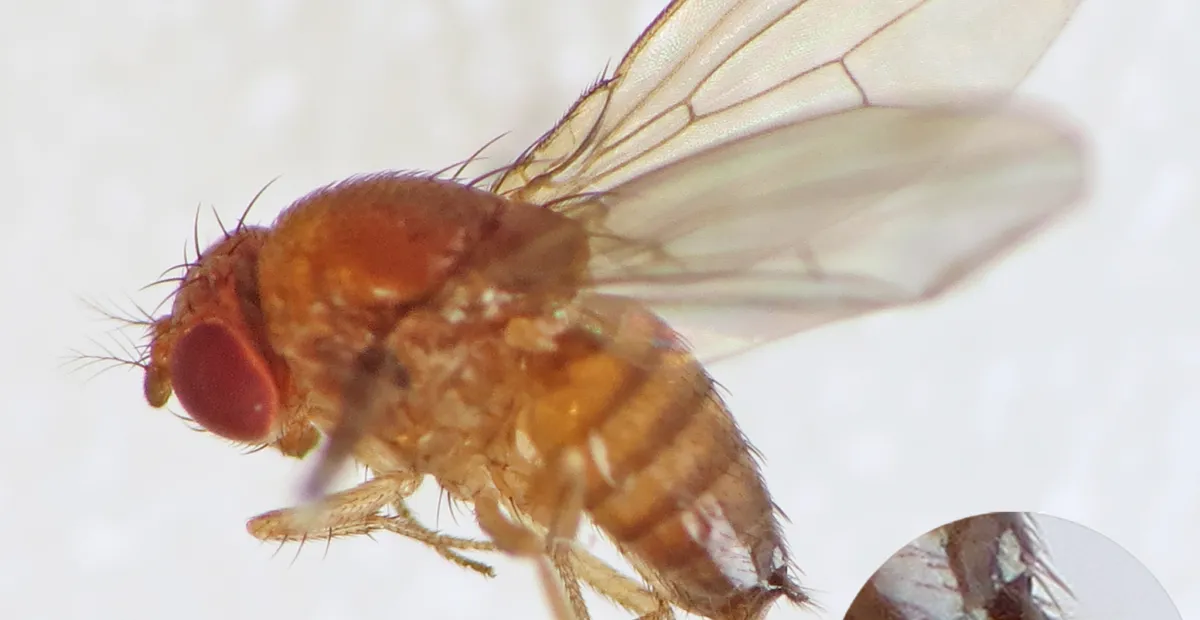
Spotted-wing drosophila
Drosophila suzukii MatsumuraSpotted-wing drosophila overview
Spotted-wing drosophila, Drosophila suzukii, is an invasive fruit-fly pest of ripening soft-skinned fruit in the United States. Unlike common vinegar flies, females can pierce firm, marketable fruit and lay eggs inside. Larvae feed within berries and cherries, causing softening, collapse, sour odors and rapid secondary decay. Early monitoring, frequent harvest and strict sanitation are central to control.
Typical conditions
Overview
Spotted-wing drosophila (SWD), Drosophila suzukii, is a serious pest of small fruits, cherries and other soft-skinned fruit in many parts of the United States. Adults are small, typically about 0.08–0.12 inch long. Males have a dark spot near the tip of each wing; females lack the wing spots but have a large, saw-like ovipositor.
It differs from common vinegar flies because it can lay eggs in ripening, undamaged fruit rather than relying mainly on cracked, overripe or fermenting fruit. Correct identification may require a hand lens, microscope or confirmation by an extension diagnostic service, especially for females and other small Drosophila species.
Symptoms and identification
Symptoms are usually seen in fruit rather than leaves or stems.
- Tiny oviposition scars or depressions, sometimes with a central puncture, on ripening fruit.
- Soft, watery or collapsing berries and cherries; fruit may leak juice or develop a sour, fermented odor.
- Small white, legless larvae inside fruit, often detected by cutting fruit open or using a salt-water flotation test.
- Secondary invasion by other vinegar flies, yeasts and decay organisms after the fruit tissue is damaged.
- Fruit may appear acceptable at harvest but deteriorate rapidly during storage or transport.
Causes and spread
Adult females spread the pest by flying into fruit plantings and laying eggs in ripening fruit. Populations build where susceptible fruit remains on plants, harvest is delayed, or fallen and cull fruit is left on the ground. Dense, humid canopies, shaded woodland edges and nearby wild berry hosts can provide favorable refuges. Larvae and pupae develop in infested fruit; adults then disperse locally and may be moved longer distances in infested fruit or plant material.
Life cycle and persistence
Females lay eggs beneath the fruit skin, usually as fruit begins to color and soften. Larvae feed inside the fruit, pass through three larval stages and may pupate inside the fruit or drop to the soil or ground surface. Development is temperature dependent; under favorable conditions the egg-to-adult cycle can be completed in about 7–13 days, allowing overlapping generations during the growing season. Activity often increases from early summer through late summer and fall, although timing varies by climate and crop. Adults can survive winter in milder regions, while cold-region populations may be reduced or recolonize from surrounding areas.
Treatment and control
Confirm infestation before treating. Hang baited monitoring traps near susceptible fruit and inspect fruit regularly for eggs or larvae. Remove and destroy infested fruit because insecticides do not reliably kill larvae protected inside fruit. During harvest, combine frequent picking, sanitation and exclusion with any legally labeled intervention that is justified by monitoring and local crop guidance. Protect pollinators by avoiding applications to blooming plants and by following all label restrictions and preharvest intervals.
For home gardens, fine-mesh exclusion and sanitation are often the most dependable measures. Commercial growers should use crop-specific, locally adapted monitoring thresholds and recommendations from their state extension service or crop advisor.
Low-impact and biological control
- Use fine insect netting as a physical barrier, installed before fruit becomes susceptible and maintained without gaps.
- Remove ripe, overripe and fallen fruit at least every day or two during peak pressure.
- Use apple-cider-vinegar or other validated baited traps for detection and trend monitoring, not as a stand-alone population-control method.
- Maintain clean harvest areas and promptly chill harvested fruit where appropriate to slow deterioration.
- Conserve resident predators and parasitoids by reducing broad-spectrum insecticide use. Experimental and classical biological-control programs involving parasitoids such as Ganaspis spp. are being evaluated, but effectiveness and availability vary by region.
- Organic-approved materials may be available for some crops, but authorization, efficacy and harvest restrictions vary; verify the current U.S. label and organic certification requirements.
Prevention
- Begin monitoring when fruit starts to color and continue through the end of harvest.
- Harvest frequently and remove fully ripe fruit promptly; do not leave overripe fruit on the plant.
- Collect and destroy or securely dispose of dropped, damaged and cull fruit. Do not place infested fruit in open compost.
- Keep plantings open enough to improve air movement and reduce humid shaded refuges where practical.
- Use fine insect-exclusion netting before fruit ripens, securing seams and edges. Mesh must be sufficiently fine to exclude SWD; install after pollination where necessary.
- Monitor woodland edges, wild blackberries, honeysuckles and other nearby fruiting hosts, while avoiding unnecessary removal of beneficial habitat.
Interesting facts
- The female’s serrated ovipositor allows egg laying in firm, ripening fruit—a key reason this species is more damaging than ordinary vinegar flies.
- Male wing spots are useful for field recognition, but females require closer examination and can be confused with other Drosophila species.
- Infested fruit can deteriorate quickly because feeding wounds facilitate microbial decay; a sour or fermented odor is common.
- SWD populations may develop several overlapping generations in one season, making small delays in harvest or sanitation highly consequential.
- Monitoring fruit at field edges and checking for eggs or very small larvae can detect developing infestations earlier than waiting for obvious fruit collapse.
Use pesticides only when monitoring and crop risk justify treatment, and only products currently legally authorized in the United States for spotted-wing drosophila on the specific crop being grown. Follow the current label exactly, including application rate, timing, worker-protection requirements, pollinator precautions, resistance-management instructions and preharvest interval. Do not use a product merely because it is labeled for another fruit fly, crop or state. Insecticides primarily target exposed adults before egg laying and will not reliably control larvae already inside fruit; rotate labeled modes of action according to current state extension guidance.