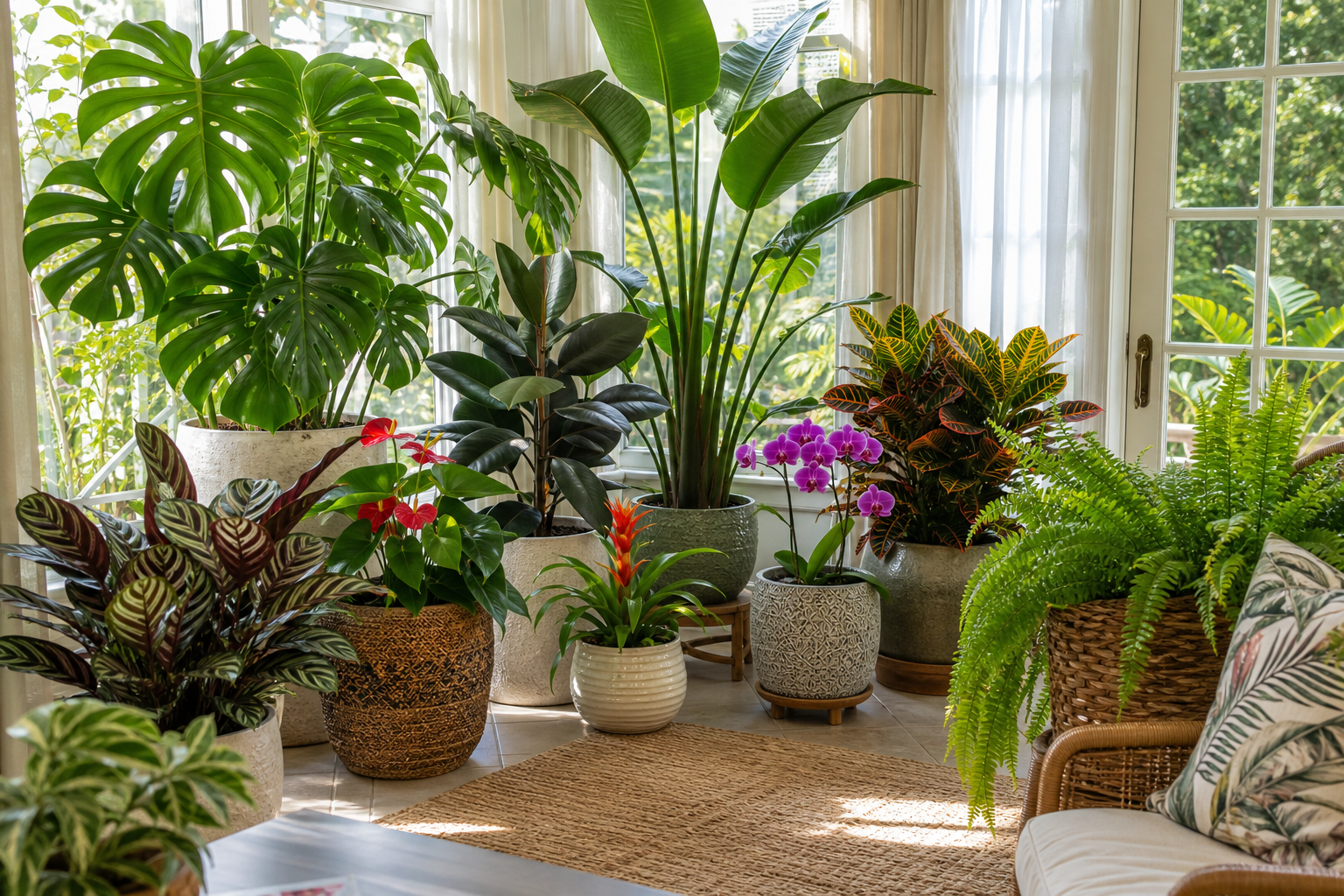
A bright sunroom is one of the best places in the house to grow plants with serious tropical drama. Warm temperatures, generous daylight, and room for large containers can turn an ordinary glass-filled space into a layered jungle of glossy leaves, bold patterns, arching fronds, and unexpected flowers.
You do not need a conservatory or years of gardening experience to make it work. The secret is to match each plant with the light it can actually handle, use containers with drainage holes, and adjust watering as the season changes. Start with one or two statement plants, then build outward with smaller plants that enjoy the same conditions.
Before You Shop: Read Your Sunroom
“Sunny” does not always mean every plant should sit directly against the glass. South- and west-facing windows can become intensely hot, especially in summer, while east-facing rooms usually provide gentler morning light. Even in a bright room, light levels drop quickly as you move away from the window.
Watch the room for a full day before choosing your plants. Notice where direct sun falls, where the light becomes filtered, and whether the room overheats in the afternoon. Sheer curtains, adjustable blinds, or a few feet of distance from the glass can protect foliage from scorching.
- Bright, filtered light: ideal for monstera, bird of paradise, anthurium, bromeliads, and many orchids.
- Bright light with some direct sun: a good choice for croton, rubber plant, and banana.
- Medium or protected light: better for calathea and fern varieties.
- Hot glass and dry air: keep foliage from touching windows and avoid heating or air-conditioning vents.
10 Exotic Plants for a Lush Indoor Jungle
1. Monstera deliciosa
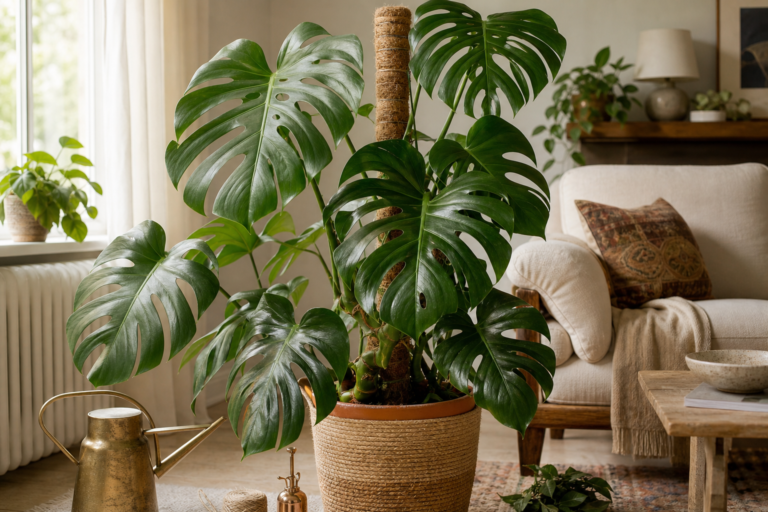
Few plants create an instant jungle effect like the Swiss cheese plant. Mature leaves develop deep splits and holes, while the vigorous vines can climb a moss pole, trellis, or sturdy support. A young plant works well on a stand; an established specimen can become the room’s main focal point.
Give monstera bright, indirect light and a loose, well-drained potting mix. Water thoroughly when the upper couple of inches of mix feel dry, then empty the saucer. In a bright, warm sunroom, the plant may need watering more often during spring and summer than it does in winter.
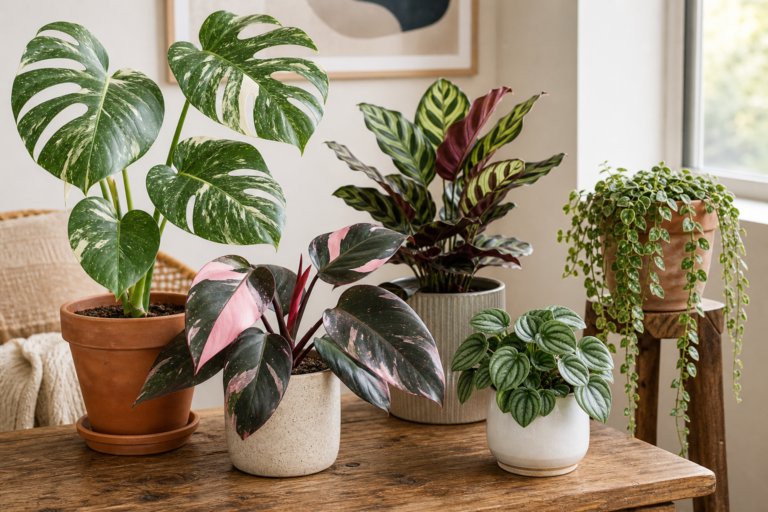
Choose between a standard green monstera, which generally grows more vigorously, and a variegated form, whose pale markings are striking but can mean slower growth and a greater need for good light.
2. Bird of Paradise
Bird of paradise brings architectural height and oversized leaves that move beautifully in a breeze. Strelitzia reginae stays more manageable and may produce orange-and-blue flowers when mature, while Strelitzia nicolai develops a taller, banana-like silhouette and can eventually outgrow many rooms.
Place it in the brightest part of the sunroom, introducing it to stronger direct sunlight gradually if it has been grown in lower light. Let the surface of the potting mix dry somewhat between thorough waterings, and rotate the container every few weeks so the plant grows evenly.
Expect occasional leaf splits. In nature, this helps large leaves cope with wind; it is not automatically a sign of poor care.
3. Rubber Plant
With thick, glossy leaves and an upright habit, the rubber plant is a polished choice for a jungle-inspired room. The classic green form is dependable, while cultivars such as ‘Tineke’ and ‘Ruby’ offer cream, pink, or burgundy tones.
Rubber plants prefer bright, indirect light, although they can handle some gentle morning sun. Variegated types usually need brighter conditions to maintain their markings. Water when the top inch or two of soil feels dry, and wipe the broad leaves occasionally to remove dust and help the plant look its best.
4. Banana Plant
A potted banana plant delivers instant vacation energy. Its long leaves unfurl quickly in warm conditions, making it an excellent seasonal centerpiece. Dwarf cultivars are easier to manage indoors than full-size bananas, but even compact types need space and strong light.
Set a banana near the brightest window and keep the potting mix evenly moist during active growth without leaving the roots in standing water. Large leaves lose moisture quickly, so check the soil more often than you would for a rubber plant. In winter, growth slows and watering should usually decrease.
Banana leaves can tear or develop brown edges in dry air. Grouping plants, running a humidifier, and keeping the plant away from drafts can help create steadier conditions.
5. Calathea
Calatheas bring intricate patterns to the lower layers of your plant collection. Depending on the variety, leaves may resemble brushstrokes, zebra stripes, fishbones, or rattlesnake markings. Their foliage also moves in response to the daily light cycle, adding a little theater to the room.
These plants prefer filtered or indirect light rather than harsh sun. Keep the soil consistently lightly moist, but never waterlogged, and use a container with excellent drainage. Calatheas are especially sensitive to sudden changes in temperature, humidity, and watering, so place them in a stable spot.
Compare a compact rattlesnake plant with a larger ‘Orbifolia’ type before buying. The former can fit on a shelf, while the latter needs generous horizontal space for its broad, round leaves.
6. Anthurium
Anthurium combines glossy foliage with long-lasting, waxy flower structures in shades of red, pink, white, orange, or purple. What looks like a flower is actually a colorful spathe surrounding a slender spadix, but you do not need botanical expertise to appreciate the effect.
Give anthurium bright, indirect light. Too little light may reduce flowering, while strong direct sun can damage the leaves. Water when the upper part of the mix begins to dry, then let excess water drain completely.
A chunky, airy mix works well because the roots need both moisture and oxygen. If the plant is sold in a decorative cachepot, make sure the inner pot has drainage and never allow collected water to remain around the roots.
7. Bromeliad
Bromeliads offer sculptural rosettes, colorful bracts, and a surprisingly wide range of shapes. Guzmania and neoregelia are popular choices for indoor displays, with neoregelia often offering dramatic leaf bands and spots.
Most bromeliads prefer bright, filtered light. Water the potting mix when it begins to dry, but avoid keeping it constantly soggy. Some tank-forming bromeliads hold water in the central cup of the rosette; refresh that water regularly and avoid treating the cup as a substitute for healthy root-zone drainage.
Bromeliads are excellent for filling gaps beneath taller plants because many remain relatively compact. Their bold colors also provide contrast in a mostly green collection.
8. Moth Orchid
A moth orchid, or Phalaenopsis, adds an elegant flowering note to the leafy jungle. It does not need the same amount of floor space as a banana or bird of paradise, so place it on a plant stand, side table, or narrow shelf near an east-facing window.
Use an orchid potting medium rather than ordinary garden soil. Water thoroughly when the medium has dried somewhat, then allow it to drain fully. Avoid leaving the roots submerged or letting water sit in the crown where the leaves meet.
White, pink, yellow, and spotted cultivars are widely available. A plant with firm leaves, healthy roots, and several unopened buds often gives you a longer display than one already in full bloom.
9. Croton
If your sunroom needs color, croton is hard to overlook. Its leathery leaves can combine green, yellow, orange, red, and burgundy, especially when the plant receives plenty of light.
Place croton in bright light with protection from abrupt temperature swings. Allow the top of the soil to dry slightly before watering thoroughly. Croton may drop leaves after a sudden move or change in conditions, so acclimate it gradually when bringing it home or relocating it within the room.
Use croton as a visual accent rather than grouping several highly colorful plants together. One patterned specimen can make a stronger design statement than a crowded collection.
10. Boston Fern
Every jungle needs a softer texture, and Boston fern supplies it with long, arching fronds. Hang one in a basket, place it on a pedestal, or use it to soften the edge of a plant bench.
Boston fern prefers bright, indirect light and evenly moist soil. Check it frequently, especially when the sunroom is warm or the plant is hanging high where air circulates more freely. It may struggle in very dry winter air, so a humidifier or grouping plants together can be more effective than occasional misting alone.
Choose a standard Boston fern for a full, classic silhouette or a compact cultivar if you have limited space. Remove fully brown fronds at the base to keep the plant tidy.
A Simple Watering System That Uses Real Measurements
Calendar-based watering rarely works because a sunroom changes dramatically with weather, season, pot size, and sunlight. Instead, create a small log for the first month. Write down the date, plant, pot size, soil condition, and whether water drained from the bottom.
For a more precise trial, weigh a small plant immediately after a thorough watering and again when the top two inches of mix are dry. A kitchen scale works for small pots; for large containers, simply lift the pot and record whether it feels light, medium, or heavy. Repeat the observation for two or three cycles before establishing a routine.
- Water slowly until a little excess drains from the bottom.
- Empty the saucer or decorative outer pot after watering.
- Check soil moisture about 2 inches below the surface rather than judging only by appearance.
- Expect plants in bright light, porous clay pots, or small containers to dry faster.
- Reduce watering when winter light and growth decline, but do not let moisture-loving plants remain bone-dry for long periods.
As a useful comparison, a banana may need checking every few days during a hot summer spell, while a rubber plant may go longer between waterings. That is only a starting observation, not a fixed schedule. The plant and its potting mix should make the final decision.
Build the Jungle in Layers
Arrange the room as you would a garden border. Put the tallest plants at the back or in corners, medium plants at eye level, and trailing or low-growing plants near the front. Use plant stands to create height without buying only enormous specimens.
Repeat a few colors and textures for a collected look. For example, combine the large split leaves of monstera with the striped foliage of calathea, the colorful bracts of a bromeliad, and the fine texture of a fern. Leave enough space between containers for air movement and routine inspection.
Seasonal Care for a United States Sunroom
In spring, increase watering gradually as daylight and growth return. This is also a good time to repot plants that have become root-bound, moving them up only one pot size at a time. Begin feeding actively growing plants with a balanced houseplant fertilizer at half strength, following the product label.
Summer may bring the fastest growth, but it can also bring overheated glass and rapidly drying pots. Use sheer curtains during the strongest afternoon sun, rotate containers, and check moisture more frequently. If you move plants outdoors, acclimate them slowly; a plant that thrives in filtered indoor light can scorch when suddenly placed in full outdoor sun.
In fall, inspect plants carefully before bringing any outdoor specimens inside. Keep new arrivals separate from your established collection for two to three weeks while you look for insects or other problems. Once winter arrives, expect slower growth, lower indoor humidity, and less frequent watering.
Start Small, Then Let the Jungle Grow
The most successful sunroom jungles are built over time. Begin with one reliable statement plant, such as monstera or rubber plant, add a colorful croton or bromeliad, and finish with a fern or orchid for contrast. As you learn how quickly each pot dries, your care becomes easier and more accurate.
Choose plants for the conditions you have rather than trying to recreate a rainforest perfectly. With bright filtered light, good drainage, measured watering, and a little attention to seasonal changes, your sunroom can become a lush, welcoming retreat in every season.